
Plants
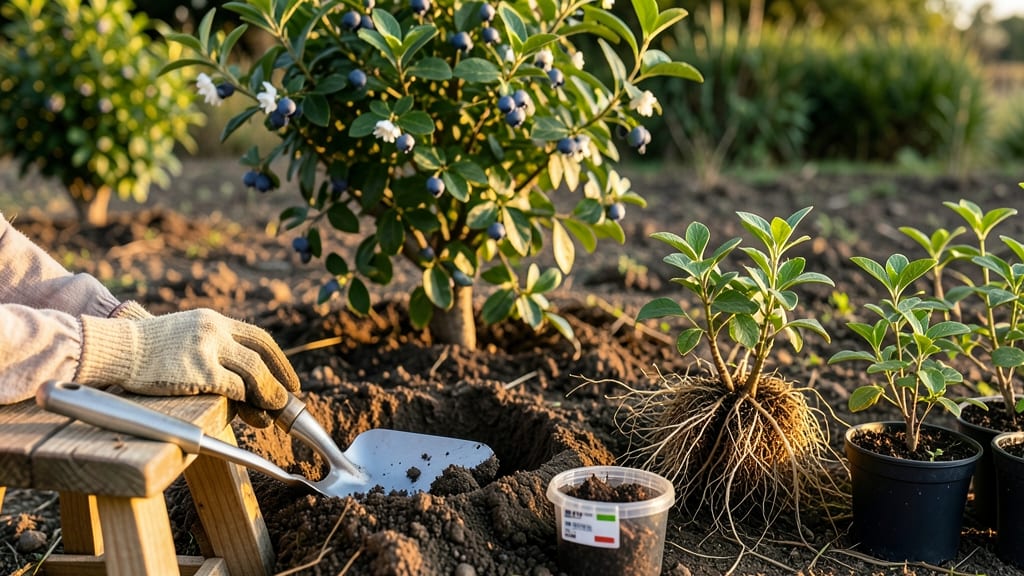
Planting blueberry bushes in North Carolina at the right time ensures a bountiful harvest 🫐 — aim for late winter to early spring or fall, when chill hours and frost-free windows align.
North Carolina’s climate is anything but one-size-fits-all. In the Mountains, where frosts linger into April, planting too early risks killing tender roots. Meanwhile, on the Coastal Plain, heat arrives early, making late-spring plantings a recipe for stress. Even the Piedmont’s 600+ chill hours demand careful variety selection.
Soil prep is half the battle: blueberries refuse to thrive in alkaline dirt. Amending with sulfur or pine needles to hit pH 4.5-5.5 is non-negotiable. And don’t overlook mulch — a thick layer of pine straw mimics the acidic forest floor they evolved in.
Below, I break down the exact planting windows by NC region, the best varieties for your chill hours, and how to avoid the three mistakes that wreck harvests every year.
NC chill-hour zones: matching blueberry varieties to your region
North Carolina’s diverse climate—from the Coastal Plain to the Mountain region—creates distinct chill-hour zones that dictate which blueberry varieties will thrive in your yard. Chill hours, the number of hours below 45°F a plant experiences, are critical for blueberries to produce fruit.
In NC, chill-hour requirements range from 400 hours in the warmest zones to 1,000+ hours in the coolest mountain areas.
Choosing the wrong variety for your zone can mean no berries despite your best efforts.
For example, a Southern Highbush variety like 'Climax' needs only 300-400 chill hours and will fail in the Mountains, while a Rabbiteye like 'Tifblue' requires 700-1,000 chill hours and won’t fruit in the Coastal Plain. Let’s match your region to the perfect blueberry bush.
To determine your exact chill hours, check your local NC State Extension office or use a chill-hour calculator like the one from the USDA. Simply input your ZIP code, and it’ll provide your precise chill-hour total.
For example, Raleigh typically sees 600-700 chill hours, while Asheville averages 800-900 hours.
If you’re unsure about your zone, observe your existing plants. Azaleas and rhododendrons thrive in high-chill areas, while camellias prefer lower chill. This natural indicator can help you narrow down your blueberry options before planting.
For instance, if your yard hosts thriving azaleas, you’re likely in a high-chill zone and should opt for Rabbiteye varieties.
Another critical factor is frost timing. In NC’s Coastal Plain, late frosts can linger into March, while mountain regions may see frost as late as April.
Planting bare-root bushes in late winter (February-March) gives roots time to establish before the growing season, but avoid planting too early—you risk frost damage to new growth. Container-grown bushes, however, can be planted in fall (September-October) for a head start.
For Southern Highbush varieties like 'Climax,' focus on zones with 400-600 chill hours. These bushes produce large, sweet berries and are ideal for Coastal NC and the Piedmont. In contrast, Rabbiteye varieties like 'Tifblue' are better suited for Mountain regions with 800+ chill hours.
They’re more cold-hardy and produce firm, flavorful berries perfect for fresh eating or baking.
One common mistake is assuming all blueberries are the same. Half-High varieties, like 'Chandler,' bridge the gap between Southern Highbush and Rabbiteye, making them ideal for the Piedmont. These bushes grow 4-6 feet tall and produce medium-sized berries with excellent flavor.
If space is limited, consider dwarf varieties like 'Top Hat,' which thrive in containers and can be grown in urban gardens.
Pro tip: If you’re planting multiple varieties, space them 10-15 feet apart to prevent cross-pollination issues. While some blueberries are self-pollinating, others benefit from nearby pollinators. Adding native pollinator plants like azaleas or blueberry companion plants like ferns can boost your harvest.
Just ensure your soil stays acidic (pH 4.5-5.5)—blueberries are picky about their growing conditions!
Optimal planting windows by NC region: frost-free timing & soil prep
North Carolina’s three distinct regions—Coastal Plain, Piedmont, and Mountains—each demand different planting strategies for blueberry bushes. The last frost dates vary dramatically, from early March in the Coastal Plain to late April in the Mountains.
Timing isn’t just about frost; it’s about matching your bushes to your region’s chill-hour requirements and preparing soil with the right acidity.
For Southern Highbush varieties (like 'Climax'), aim for fall planting in September-October, while Rabbiteye types (like 'Tifblue') thrive when planted in late winter (February-March).
Container-grown bushes offer more flexibility, letting you plant up to 6 weeks before your last frost, but bare-root plants need cooler soil to establish roots—so wait until dormancy ends.
📅 Planting Window: September 15 - October 15 (fall) or February 1 - March 15 (spring). Soil warms faster here, so avoid planting bare-root bushes after March 15—they’ll struggle with heat stress.
📅 Planting Window: September 1 - October 10 (fall) or March 1 - April 15 (spring). This region’s unpredictable early springs make fall planting safer—roots establish before winter chill.
📅 Planting Window: September 1 - October 1 (fall) or April 1 - May 1 (spring). Later frosts delay spring planting—wait until soil reaches 45°F and danger of frost has passed.
Soil prep is non-negotiable for blueberries. Test your soil’s pH (aim for 4.5-5.5)—NC’s native soils are often alkaline. Amend with sulfur or peat moss to lower pH, and mix in compost for organic matter.
In the Coastal Plain, where soils are sandy, add 2-3 inches of compost to retain moisture, while Mountain regions may need extra drainage if clay is present.
Mulch heavily with pine needles or wood chips (3-4 inches) to retain moisture and acidify soil over time. In the Piedmont, where early springs can swing from frost to 80°F in weeks, use black plastic mulch in spring to warm soil faster.
For container bushes, plant in acid-loving mixes and water with rainwater (tap water can raise pH over time).
Pro tip: Mark your last frost date on your calendar—NC State Extension’s Frost/Freeze Probability Maps are your best friend. If you’re unsure, err on the side of fall planting; blueberry bushes establish roots more reliably when planted in cooler weather.
And always water deeply after planting to reduce transplant shock in NC’s variable climate.
🌱