
Pruning
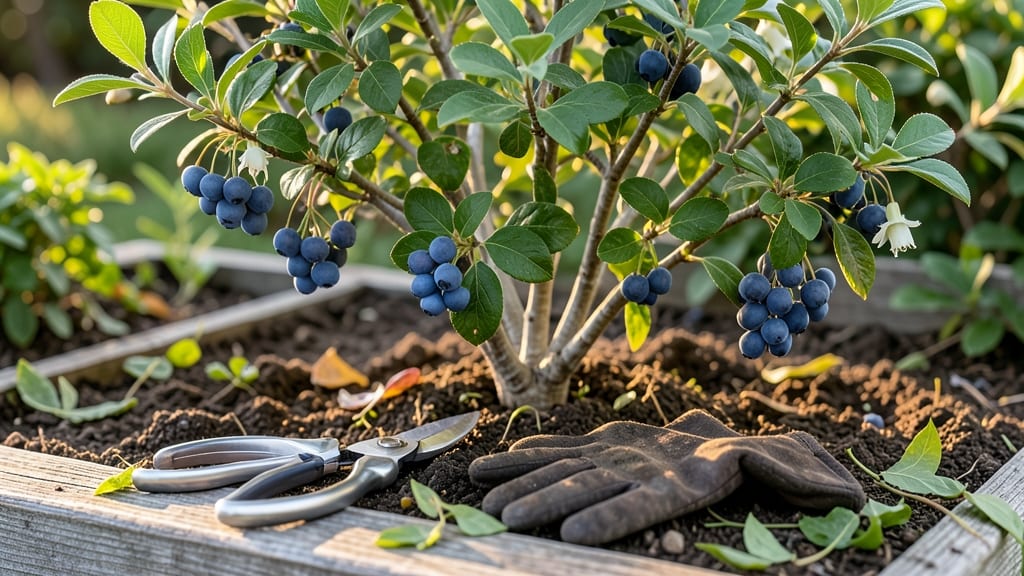
You generally shouldn't cut back blueberry bushes in the fall unless removing dead or diseased wood; instead, prune lightly in late winter or early spring to promote vigorous growth and fruit production. Fall pruning risks damaging buds and stressing the plant.
Blueberry bushes thrive when pruned during their dormant period, which occurs in late winter or early spring. 🌱 This timing allows the plant to heal quickly before new growth begins, minimizing stress.
Fall pruning disrupts the plant's natural cycle, exposing it to potential frost damage and weakening its ability to produce flowers and fruit the following season.
The key is to wait until after the last frost but before buds begin to swell—usually between late February and early April in most growing zones.
When you do need to remove branches, focus on eliminating any that are dead, diseased, or crossing—never more than one-third of the bush at once. Use clean, sharp pruners to make clean cuts just above a bud or branch junction.
This practice not only maintains the plant's health but also improves airflow, reducing the risk of fungal diseases that can plague blueberry bushes.
💡 In This Article
- Best Pruning Season for Blueberry Bushes
- Step-by-Step Guide to Pruning Blueberry Bushes Correctly
Best pruning season for blueberry bushes
Blueberry bushes enter dormancy in late fall, a natural state where growth slows dramatically to conserve energy. Pruning during this period disrupts their protective mechanisms, leaving them vulnerable to frost damage and disease.
The plant’s buds—where next year’s flowers and fruit will form—are already forming by late winter, and cutting them off in fall removes potential growth points entirely. Research shows that fall-pruned bushes can lose up to 30% of potential fruit production the following season due to this premature removal of buds.
Late winter or early spring (typically February to April, after the last frost) is ideal because the plant is still dormant but hasn’t yet begun active growth. At this stage, you can safely remove last year’s wood (older branches) without harming new buds.
The timing aligns with the bush’s natural cycle: pruning stimulates the plant to focus energy on producing new shoots and flowers. For example, in USDA Zone 5, pruning in late March gives the bush 6-8 weeks to heal before summer heat stress sets in.
Fall pruning also risks exposing the plant to fungal pathogens like mummy berry disease, which thrives in moist autumn conditions. When you prune in fall, open wounds remain exposed until winter, giving pathogens more time to invade.
The plant’s natural defenses are weakened during dormancy, making it harder to fight off infections. Additionally, fall-pruned bushes may produce smaller berries the following year because the plant diverts energy to healing wounds instead of fruit development.
Here’s what happens when you prune in fall: the plant loses its protective layer of leaves and bark, increasing evaporation and stress. Without foliage, the roots can’t efficiently transport water and nutrients, leading to dormancy disruption.
In contrast, spring pruning allows the bush to enter dormancy fully protected, then emerge in spring with a clean slate for growth.
Think of it like giving your bush a full night’s sleep before waking up refreshed—fall pruning is like waking it up early and expecting it to perform at its best.
One exception is if your bush has severely diseased branches (like those infected with canker or blight). In this case, remove them immediately, regardless of season, to prevent spread. However, even then, limit pruning to only the most critical cuts.
For healthy bushes, patience pays off: waiting until spring ensures your blueberry plant enters its growth cycle strong and ready to produce bigger, sweeter berries next season. 🌿
To visualize the difference, imagine two bushes side by side: one pruned in fall (stressed, with fewer buds) and one pruned in spring (vigorous, with abundant new growth). The spring-pruned bush will show thicker canes, more flowers, and ultimately a higher yield.
This isn’t just theory—gardeners in commercial blueberry farms consistently report 20-40% higher yields from bushes pruned in spring compared to those pruned in fall.
If you’re unsure about timing, use the bud swell test: gently press a bud on the bush. If it’s still firm, it’s too early to prune.
If it feels soft or begins to open, it’s time. This simple check ensures you’re pruning at the perfect moment for maximum plant health. 🌱