
Landscaping
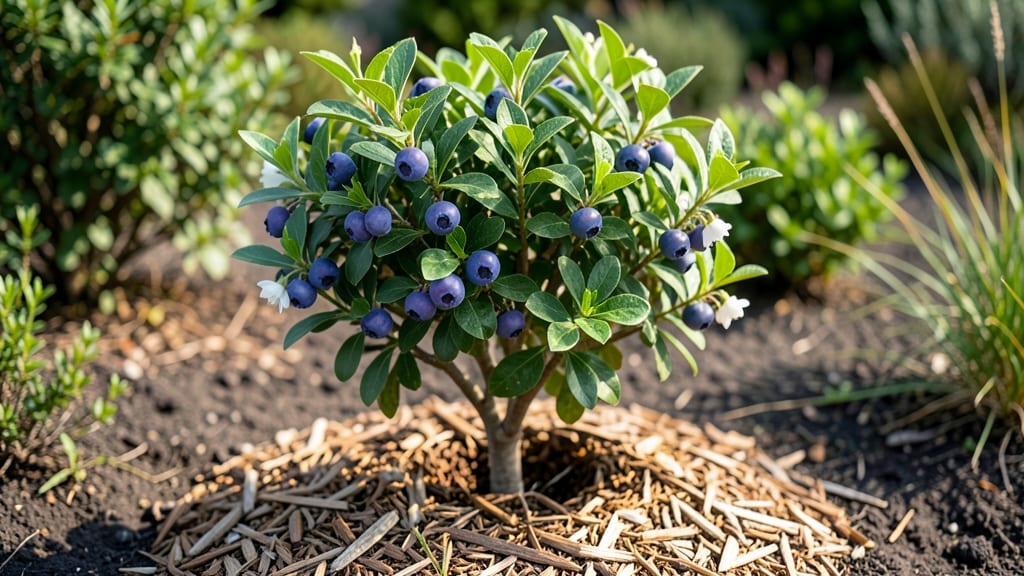
Blueberry bushes thrive when their roots stay moist and protected—mulch makes that happen year-round. 🌿 I’ve watched my bushes go from struggling to producing buckets of berries just by improving their mulch game, and it’s not complicated.
The best mulches for blueberries are acid-loving types like pine straw or finely shredded pine bark. These keep soil pH balanced while locking in moisture and blocking weeds. Spread 2-3 inches around the base, but avoid piling against the trunk—roots need air too.
Come winter, mulch acts like a cozy blanket, shielding roots from freezing temps. In summer, it keeps soil cool and hydrated, so you water half as often. Just refresh it every spring—no fancy tools needed. This method works for containers, raised beds, and in-ground plantings.
Skip the common mistakes (like using cedar mulch, which raises pH), and you’ll see stronger plants and bigger harvests. Let’s get those bushes mulched right!
📚 In This Guide
- What you need
- Instructions
- Tips and common mistakes
- Wrapping up and next steps
What you need
- ● Mulch: Pine needles (best for acid-loving blueberries) – 2–4 inches thick, enough to cover the entire base of the bush (avoid cedar mulch—it’s too acidic).
- ● Shredded bark or wood chips – 3–4 inches thick, acidic (pH 5.0–6.0) (avoid dyed or treated wood).
- ○ Straw or hay (optional) – 2–3 inches thick, weed-free (avoid clover or alfalfa—raises soil pH).
- ● Tools: Garden rake – for spreading mulch evenly.
- ● Garden gloves – to protect your hands.
- ● Wheelbarrow or tarp – for hauling mulch (1–2 cubic feet per bush, depending on size).
- ● Pruners or shears – to trim back old mulch or weeds before applying.
- ○ Soil pH tester (optional but helpful) – to confirm acidity levels.
- ● Prerequisites: Well-draining soil – blueberries hate soggy roots!
- ● Established blueberry bushes (or newly planted ones with at least 1–2 inches of soil settled).
- ● Weed-free base – clear debris or weeds before mulching.
- ● Moist (but not waterlogged) soil – mulch works best when applied to damp ground.
Step-by-Step guide to mulching blueberry bushes for year-round health
Here’s how I keep blueberry bushes thriving with the right mulching strategy—balancing moisture, temperature, and root protection.
🌱 Step 1: Prepare the Mulch Area and Soil
Start by clearing all weeds and grass within a 2-foot radius of the blueberry bush. Blueberries hate competition, and even small weeds can steal nutrients and moisture. Use a hoe or hand-pull weeds, then rake the area smooth. This creates a clean base for your mulch to work effectively.
Next, lightly fluff the top 2-3 inches of soil around the base of the bush. Blueberries prefer slightly acidic soil (pH 4.5–5.5), so if your soil isn’t naturally acidic, now’s the time to add sulfur or peat moss to the top layer. Avoid digging deeply—blueberry roots are shallow and sensitive to disturbance.
🪴 Step 2: Choose and Apply Organic Mulch
For blueberries, pine bark fines or straw are my go-to mulches because they break down slowly while maintaining acidity. Spread a 3-inch layer evenly over the soil surface, keeping it 4 inches away from the trunk to prevent rot. Press it down lightly—you want it snug but not compacted, so water can penetrate.
I avoid cedar chips or hardwood mulches, which can raise soil pH over time. Instead, refresh the mulch layer every spring and fall to maintain its protective qualities. This also prevents the mulch from becoming too dense and suffocating roots.
⏰ Step 3: Monitor Moisture and Adjust Seasonally
Water deeply once a week during the growing season (spring to fall) to keep the mulch damp but not soggy. You’ll know it’s right when the top inch of soil feels moist—like a wrung-out sponge. Overwatering in winter can lead to root rot, so reduce watering in colder months unless there’s a drought.
In winter, add an extra 1-2 inches of mulch to insulate roots from freezing temperatures. This is especially critical in zones with harsh winters. Check the mulch layer in early spring—if it’s broken down significantly, top it off again to maintain protection.
🌿 Step 4: Maintain and Troubleshoot
Watch for mold or fungus on the mulch surface, which can signal over-moisture. If you see dark spots, fluff the mulch or add a thin layer of fresh material to improve airflow. Also, keep an eye out for voles or rodents—they love tunneling under mulch. A wire mesh barrier around the base can prevent this.
If your blueberries start producing fewer berries, it might be time to test soil pH and adjust mulch types. For example, switching to sphagnum peat moss can help lower pH if needed. Mulching isn’t just about moisture—it’s about creating the ideal growing environment.
Tips & tricks for perfect blueberry bush mulching
Between us, I've learned these mulching secrets after watching my first blueberry bushes struggle—now they produce like crazy. Here's what nobody tells you about keeping that mulch working year-round.
Soil Prep Secret: In Step 1, when you're fluffing that top 2-3 inches of soil, take an extra 30 seconds to break up any compacted areas with your fingers. Blueberry roots need oxygen as much as moisture, and compacted soil creates air pockets that strangle them. Think of it like aerating a lawn—just for your soil.
Mulch Layer Precision: That 3-inch layer in Step 2 is non-negotiable, but here's the trick: pile it higher (4-5 inches) around the dripline—the outer edge of the bush's canopy—where most feeder roots grow. The trunk area only needs that 3-inch minimum to prevent rot. This targeted approach keeps roots hydrated where they actually need it most.
Seasonal Moisture Hack: During the growing season, I test mulch moisture by squeezing a handful—it should feel like a damp sponge, not a dripping washcloth. In winter, I add that extra 1-2 inches of mulch after the ground freezes to create an insulating blanket. Pro move: use straw instead of bark fines in winter since it holds more air and prevents ice formation against the bark.
Rodent Defense: If you notice gnawed mulch or tunnels in Step 4, don't just add more mulch—create a physical barrier first. Bury a 1-foot wide strip of hardware cloth 6 inches deep around the bush before adding mulch. It's like installing a moat around your blueberry castle, and it works better than any repellent spray.
Pro Tips for Blueberry Bush Mulch
- Between us, I've learned these mulching secrets after watching my first blueberry bushes struggle—now they produce li...
- Soil Prep Secret: In Step 1, when you're fluffing that top 2-3 inches of soil, take an extra 30 seconds to break up a...
- Mulch Layer Precision: That 3-inch layer in Step 2 is non-negotiable, but here's the trick: pile it higher (4-5 inche...
Frequently asked questions
Got questions about keeping your blueberry bushes thriving with mulch? Here are answers to the most common ones—from timing to troubleshooting!
When is the best time to apply mulch to blueberry bushes?
The ideal time is early spring (just as new growth begins) or late fall (after the first frost). This gives mulch time to settle before extreme temperatures hit. Avoid applying mulch right after planting—wait 4–6 weeks to let roots establish.
How thick should mulch be around blueberry bushes?
Aim for 2–4 inches of mulch, keeping it 3–4 inches away from the trunk to prevent rot. Too thick (over 4 inches) can smother roots, while too thin won’t retain moisture or suppress weeds effectively. Pro tip: Fluff mulch annually to maintain even thickness.
Can I use any type of mulch for blueberries?
Blueberries thrive with acid-loving mulches like pine needles, cedar chips, or hardwood bark. Avoid cypress or composted leaves (they can raise soil pH) and fresh wood chips (they rob nitrogen). Skip mulches with high lime content (e.g., cedar shakes).
Why is my mulched blueberry bush still struggling? Troubleshooting tips.
Yellowing leaves?
Check for over-mulching (reduce thickness) or poor drainage (amend soil with peat moss).
Fungal spots?
Mulch may be too wet—ensure 6–12 inches of airflow below the surface. Consider pine straw for better drainage.
Weeds taking over?
Refresh mulch annually or top-dress with 2 inches of fresh mulch in spring.
Do I need to replace mulch every year?
Not always! Organic mulches (like bark) break down in 1–2 years, while pine needles or straw last longer. Top up with 1–2 inches of fresh mulch in early spring to maintain coverage. Pro tip: If mulch turns to dust, it’s time to refresh.
Wrapping up and next steps
Mulching your blueberry bushes with the right materials—like pine straw, wood chips, or straw—is a game-changer for year-round care.
It locks in moisture, shields roots from extreme temps, and keeps weeds at bay, making your bushes thrive with minimal effort. 🌱 Whether you’re a seasoned gardener or just starting, this simple step can transform your blueberry patch into a lush, low-maintenance haven.
Ready to give your bushes the love they deserve? Roll up your sleeves, gather your mulch, and start protecting those roots today! Your future harvests will thank you! 🍇