
Pests and Diseases
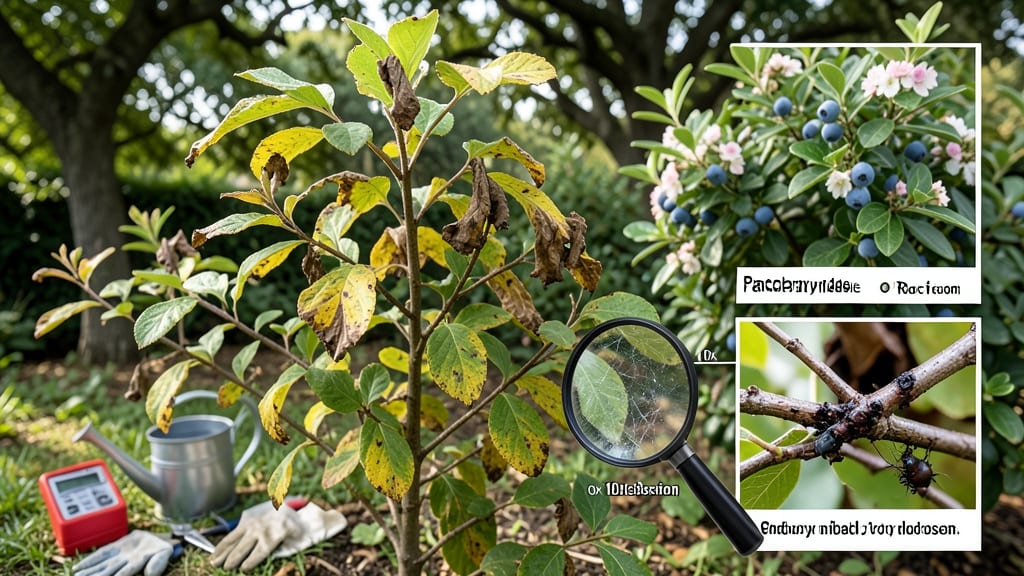
What's wrong with my blueberry bush? That silent scream of yellow leaves, brown tips, and no berries isn’t just bad luck—it’s a cry for help. 🌿 I’ve nursed back dozens of struggling bushes, and the fixes are simpler than you’d think, starting with the right diagnosis.
The first step is identifying whether your plant’s stress comes from soil, pests, or something else entirely.
Most problems trace back to two culprits: acidic soil that’s too old or a lack of nutrients. Blueberries demand pH 4.5-5.5—any higher, and they starve. Brown tips often mean underwatering or salt buildup from tap water, while yellow leaves could signal iron deficiency or root rot.
I’ve even seen powdery mildew mimic nutrient issues until I wiped the leaves with neem oil.
The good news? You’ll see improvement within 4-6 weeks of adjusting soil pH, watering properly, and pruning dead branches. A quick soil test (or vinegar splash test) tells you everything you need to know.
By summer, your bush could be back to producing pint-sized berries—if you catch the issues now.
This isn’t just about saving this season’s crop—it’s about setting your bush up for years of reliable harvests. Let’s break down the fixes step by step, so you’re not guessing anymore.
Root Causes Behind Blueberry Struggles
Blueberry bushes are resilient, but they’re not invincible. When your bush starts showing signs of distress—yellow leaves, brown tips, or a sudden lack of berries—it’s usually a cry for help from one (or more) of these underlying issues.
Understanding the why behind the symptoms is the first step to saving your bush. Let’s break down the most common culprits and the science behind them.
Blueberries are acid-loving plants (they thrive in pH 4.5–5.5), and when soil conditions stray from this range, they suffer. Here’s how it happens:
- Alkaline Soil (High pH 🧪)
Soil with a pH above 6.0 locks out essential nutrients like iron, manganese, and zinc—even if they’re present. Without these, leaves turn yellow (a condition called chlorosis) because chlorophyll production grinds to a halt. Brown tips may also appear as the plant struggles to transport water and nutrients.
- Compacted or Poor-Draining Soil 💦
Blueberries hate "wet feet." If soil doesn’t drain well, roots suffocate from lack of oxygen, leading to root rot. This causes stunted growth, wilting, and—you guessed it—fewer (or no) berries. Overwatering or heavy clay soil are common triggers.
- Nutrient Deficiencies 🍽️
Even acidic soil can lack critical nutrients. For example:
- Nitrogen (N) deficiency: Pale yellow leaves (older leaves first) and slow growth.
- Phosphorus (P) deficiency: Dark green leaves with purple stems and poor flowering.
- Potassium (K) deficiency: Brown leaf edges (like "scorched" tips) and weak stems.
Pro Tip: Test your soil’s pH with a home kit (or send a sample to a lab). If pH is off, amend with peat moss or sulfur to lower it. For compacted soil, mix in compost or pine bark fines to improve aeration. 💡
Pests don’t just nibble—they steal your bush’s energy, leaving behind damage that mimics nutrient deficiencies or disease. Here’s how they sabotage your blueberries:
- Spider Mites 🕷️
These tiny arachnids (not insects!) suck plant sap, causing stippled, yellowed leaves and fine webbing on the undersides. Severe infestations lead to premature leaf drop, weakening the bush for next year’s crop.
- Japanese Beetles 🐞
Adult beetles chew notches in leaves and flowers, while larvae (grubs) munch on roots. Result? Skeletonized leaves (leaves with holes) and stunted growth. They’re most active in summer, when berries should be forming.
- Blueberry Maggots 🐛
Larvae of the blueberry maggot fly burrow into ripe berries, causing them to drop prematurely or rot. Infested berries may have tiny holes and a foul smell. These pests thrive in humid, warm conditions.
- Scale Insects 🛡️
These sap-sucking pests attach to stems and leaves, excreting a sticky honeydew that attracts sooty mold (a black fungal growth). Infested bushes show stunted growth and yellowing leaves, especially in spring.
Pro Tip: Inspect leaves and stems regularly (especially undersides!). For mites, spray with a strong jet of water or use neem oil. For beetles, handpick them into soapy water. 🪰 Prevent maggots by using floating row covers during flowering.
Fungi thrive in moist, warm conditions and can turn your healthy blueberry bush into a sad, diseased shadow. Here’s how to spot them:
- Botrytis Blight 🍇
This fungus attacks flowers and fruit, causing them to mold and rot (gray, fuzzy growth). It’s most active in spring during wet weather. Infected buds may fail to open, leading to no berries.
- Mummy Berry 🏺
A devastating fungal disease that overwinters in mummified berries on the ground. In spring, it releases spores that infect new flowers, turning them into black, shriveled "mummies". Result? Zero fruit for the season.
- Anthracnose 🌧️
This fungus causes dark, sunken spots on leaves, stems, and berries. Leaves may curl and drop early, while berries develop cracked, discolored patches. It spreads via splashing rain or overhead watering.
- Root Rot 🌊
Caused by Phytophthora or Pythium fungi, this disease thrives in waterlogged soil. Roots turn brown and mushy, and the bush wilts suddenly even when soil is moist. Leaves may yellow and drop.
Pro Tip: Prevent fungal issues by:
- ✅ Watering at the base (avoid overhead sprinklers).
- ✅ Removing fallen leaves/berries (especially mummified ones) in fall.
- ✅ Spacing bushes properly (3–6 feet apart) for airflow.
- ✅ Using fungicides (like copper-based sprays) if your region is prone to these diseases. 🛡️
Blueberries are hardy, but they have limits. Extreme or sudden changes in their environment can trigger distress symptoms:
- Too Much Sun 🔥
While blueberries need full sun (6+ hours/day), intense afternoon heat (especially in dry climates) can cause leaf scorch. You’ll see brown, crispy edges on leaves, similar to nutrient burn.
- Winter Damage ❄️
Young bushes or those in cold climates may suffer winter burn if
Quick Fixes For Common Issues
Reviving your blueberry bush starts with identifying the root cause—and then taking action! Below, we’ve mapped out practical, step-by-step solutions for the most common problems, from nutrient deficiencies to pests and diseases. Each fix includes prevention tips to keep your bush thriving long-term.
Cause: Nitrogen, magnesium, or iron deficiency—or soggy soil. Fix It Fast:
- Test Your Soil 🧪
- Grab a soil test kit (or send a sample to your local extension office) to check pH and nutrient levels. Blueberries love acidic soil (pH 4.5–5.5).
- If the pH is too high, add sulfur or peat moss to lower it gradually (never raise pH above 6.0).
- Fertilize Correctly 🌱
- For nitrogen deficiency (pale yellow leaves): Use an acid-loving plant fertilizer (like 10-10-10 or a blueberry-specific blend) in early spring.
- For magnesium deficiency (yellow between veins): Sprinkle Epsom salt (1 tbsp per gallon of water) every 2–3 weeks until leaves green up.
- For iron deficiency (yellow new growth): Apply chelated iron or use iron sulfate granules in the soil.
- Adjust Watering 💧
- Overwatering? Let the top 2–3 inches of soil dry out between waterings. Improve drainage by amending soil with compost or perlite.
- Underwatering? Water deeply 1–2 times per week (more in extreme heat). Mulch with pine needles or wood chips to retain moisture.
✨ Prevention Tip: Mulch annually with pine bark or sawdust to maintain acidity and moisture. Avoid fresh wood chips, which can rob nitrogen.
Cause: Dry air, underwatering, or fertilizer/salt damage. Fix It Fast:
- Check the Roots 🌊
- Gently loosen soil around the base to see if roots are dry or mushy. If dry, water thoroughly until it drains from the bottom.
- If roots are mushy, your bush may have root rot—trim affected roots and repot in fresh, well-draining soil.
- Hydrate & Humidify 💦
- For indoor bushes: Mist leaves daily or place a tray of water nearby.
- For outdoor bushes: Water early in the morning to reduce evaporation. Use drip irrigation for consistent moisture.
- Flush the Soil 🚿
- If brown tips appeared after fertilizing, leach excess salts by watering heavily for 10–15 minutes. Repeat weekly until new growth appears.
💡 Pro Tip: Brown tips on new leaves? It’s likely underwatering. Brown tips on older leaves? Check for salt buildup or fluoride damage (common near roads).
Cause: Lack of pollinators, wrong pruning, or an old bush. Fix It Fast:
- Hand-Pollinate 🐝
- Blueberries are self-pollinating but benefit from help. On a dry day, use a soft paintbrush to transfer pollen from flower to flower.
- Attract bees by planting lavender, thyme, or borage nearby.
- Prune for Productivity ✂️
- When to prune: Late winter or early spring before new growth starts.
- How to prune:
- Remove dead, diseased, or crossing branches.
- Cut back last year’s fruit-bearing wood by ⅓ to encourage new growth.
- Thin out overcrowded canes to improve airflow.
- Fertilize for Fruit Set 🍓
- Apply a balanced fertilizer (10-10-10) in early spring and a low-nitrogen, high-phosphorus fertilizer (like 5-10-10) at bloom time to support fruit development.
- Give It Time (or Replace It) ⏳
- Blueberry bushes take 2–3 years to bear fruit. If your bush is older than 10 years, it may be past its prime. Consider replacing it or propagating from cuttings.
🎯 Prevention Tip: Plant multiple varieties (like ‘Bluecrop’ + ‘Duke’) for cross-pollination. Avoid pruning in fall or winter, as it can invite disease.
Cause: Tiny invaders sucking sap or chewing leaves. Fix It Fast:
- Blast Them Off 💦
- Spider mites or aphids? Spray leaves with a strong stream of water to knock them off. Repeat every 3–4 days.
- Japanese beetles? Handpick them into soapy water in the morning.
- Use Natural Pesticides 🌿
- Neem oil (1 tsp + 1 quart water + drop of dish soap): Spray every 5–7 days until pests are gone.
- Insecticidal soap (for soft-bodied pests like aphids).
- Diatomaceous earth (food-grade only): Sprinkle around the base to deter crawling pests.
- Encourage Predators 🐞
- Ladybugs, lacewings, and birds love eating pests. Plant dill, fennel, or marigolds nearby to attract them.
🔥 Prevention Tip: Mulch heavily with pine straw to deter beetles. Prune regularly to remove hiding spots for pests.
Cause: Humid weather, poor airflow, or wet foliage. Fix It Fast:
- Improve Airflow 🌬️
- Thin out branches to reduce crowding. Space bushes 3–5 feet apart.
- Remove mulch from the base of the plant to prevent moisture buildup.
- Fungicide Treatment 🛡️
- Preventative spray: Mix 1 tbsp baking soda + 1 tsp dish soap + 1 gallon water. Spray every 7–10 days during humid weather.
- For severe infections: Use a copper fungicide (follow label instructions).
- Clean Up Debris 🧹
- Remove fallen leaves, fruit, and mulch from around the bush. Dispose of them in the trash (not compost)—they can harbor spores.
🌡️ Prevention Tip: Water at the base (not overhead) and avoid late-season fertilization, which promotes new growth susceptible to disease.
Final Reminder: Most blueberry problems are preventable with proper care! Monitor your bush weekly, adjust care as seasons change, and soon you’ll be bursting with juicy berries instead of brown leaves. 🍇💚
Frequently asked questions
Why are my blueberry leaves turning yellow?
Yellow leaves usually mean your soil is too alkaline (pH above 5.5) or lacks iron/manganese. Test your soil—if pH is high, amend with sulfur or peat moss. For iron deficiency, use chelated iron or Epsom salt (for magnesium). Yellowing often starts between leaf veins first.
What causes brown tips on blueberry leaves?
Brown tips appear from underwatering, fluoride damage (near roads), or salt buildup from tap water/fertilizer. Flush soil with water for 10-15 minutes to leach salts. Mulch with pine needles to retain moisture and acidity. Check if tips are on new (underwatering) or old leaves (salt/fluoride).
Why isn't my blueberry bush producing berries?
No berries often mean poor pollination, old age (>10 years), or nutrient deficiencies. Hand-pollinate with a paintbrush if bees are scarce, or plant a second variety nearby. Fertilize with low-nitrogen, high-phosphorus (like 5-10-10) at bloom time. Young bushes take 2-3 years to fruit—be patient!
How do I know if my blueberry bush has root rot?
Root rot causes sudden wilting even when soil feels moist, plus yellowing leaves and mushy brown roots. Stop watering immediately and trim affected roots. Repot in fresh, well-draining soil with perlite or sand. Prevent it by ensuring proper drainage and avoiding soggy conditions.
What should I do if I see white powder on my blueberry leaves?
That's likely powdery mildew, a fungal disease. Improve airflow by pruning crowded branches and remove infected leaves. Spray with a mix of 1 tbsp baking soda + 1 tsp dish soap + 1 gallon water every 7-10 days. Water at the base (not overhead) to prevent spread.