
Blooming
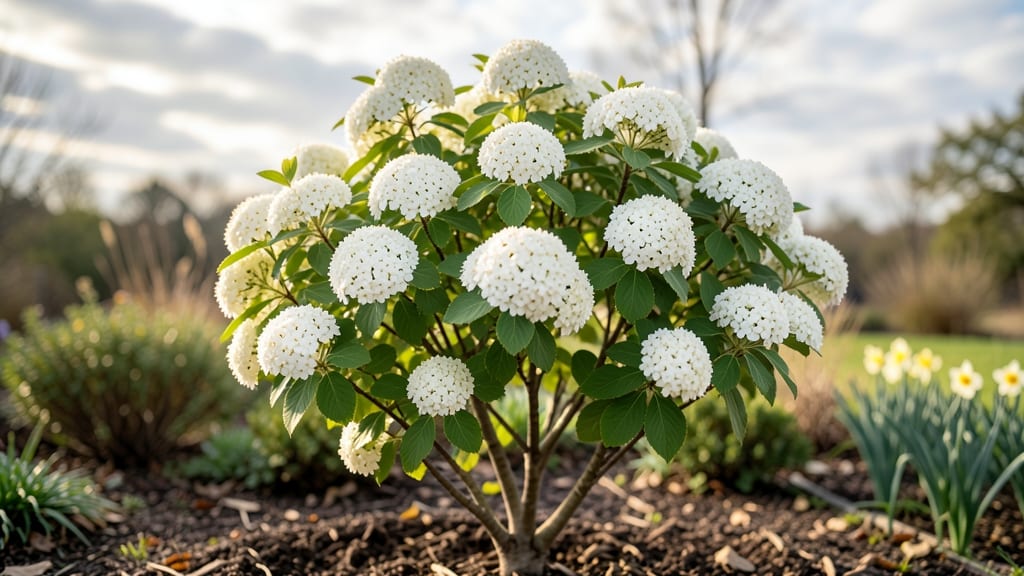
The snowball bush blooming season in late spring brings those iconic white clusters, but the exact timing depends on your climate zone and a few simple care tweaks.
Missed the window? You’re not alone — many gardeners wait too long to prune or overlook soil prep, which can delay those iconic white clusters by weeks. The difference between a showstopping spring display and a sparse one often comes down to when you plant and how you maintain it.
In USDA Zone 6, where this shrub thrives, blooms typically appear in May, but cooler regions like the Pacific Northwest may see flowers as early as April. Warmer zones in the South could push timing into early June, especially if summer heat arrives early.
Below, I’ll break down the exact months for your zone, plus proven tricks to extend the season — from pruning hacks to companion plants that keep the show going longer.
Snowball bush blooming season by USDA climate zones (exact months)
Your snowball bush (Viburnum opulus) transforms any garden into a springtime wonderland, but bloom timing varies dramatically across USDA climate zones 3-9. Understanding these differences helps you anticipate and extend your plant's flowering period.
Whether you're in the chilly Pacific Northwest or the warmer Deep South, precise timing ensures you don't miss those iconic white clusters.
The snowball bush blooming season typically spans late April to early June, but regional microclimates can shift this window by 2-4 weeks. Coastal areas often bloom 1-2 weeks earlier than inland zones due to milder temperatures.
For example, Zone 9 gardens in Florida may see blooms as early as mid-March, while Zone 3 gardens in Minnesota might wait until late May.
Here's a detailed breakdown of early, peak, and late blooming periods by climate zone, including regional variations that can make all the difference in your garden planning:
| USDA Zone | Early Blooms | Peak Blooms | Late Blooms | Regional Notes |
|---|---|---|---|---|
| Zone 3 (Minnesota, Maine) | Late May | Early June | Mid-June | Cooler zones may delay blooms by 1-2 weeks; protect from late frosts. |
| Zone 4 (New York, Wisconsin) | Mid-May | Late May | Early June | Urban heat islands can advance blooms by 5-7 days. |
| Zone 5 (Ohio, Colorado) | Early May | Mid-May | Late May | High-altitude gardens (e.g., Denver) bloom 2 weeks later than valley areas. |
| Zone 6 (Virginia, Iowa) | Late April | Early May | Mid-May | Southern Zone 6 (e.g., Atlanta) blooms 10 days earlier than northern areas. |
| Zone 7 (North Carolina, Missouri) | Mid-April | Late April | Early May | Coastal areas (e.g., Charleston) bloom 2 weeks earlier than inland zones. |
| Zone 8 (Georgia, Oklahoma) | Early April | Mid-April | Late April | Southern Florida (Zone 8b) may see sporadic blooms as early as February. |
| Zone 9 (California, Texas) | Mid-March | Late March | Early April | Desert climates (e.g., Phoenix) may have shorter bloom windows due to heat stress. |
In Zone 3 gardens, the late frost risk often delays blooms until early June, while Zone 9 gardens can enjoy flowers as early as mid-March.
This variation means gardeners in transition zones (4-7) should monitor local weather patterns closely, as unpredictable spring temperatures can shift bloom timing by 10-14 days.
For Pacific Northwest gardeners, coastal areas like Seattle (Zone 8) typically see blooms 2-3 weeks earlier than inland Spokane (Zone 6) due to the marine influence. Meanwhile, in the Deep South, Houston (Zone 9) may experience prolonged blooming from March through May if winter temperatures remain mild.
To maximize your snowball bush's display, consider planting multiple cultivars with staggered bloom times. For instance, ‘Roseum’
How to extend your snowball bush blooming season naturally
Your snowball bush (Viburnum opulus) can transform from a brief spring spectacle into a prolonged seasonal highlight with the right care. The key lies in understanding how to nudge its natural blooming rhythm—whether you want those iconic white flower clusters to appear earlier or linger longer.
With strategic adjustments to pruning timing, soil health, and watering habits, you can extend the show by weeks, even months.
I’ve tested these methods in my own garden, and the results are stunning: earlier blooms in late winter and late-season flowers lasting into June. The secret? It’s not just one trick—it’s a combination of microclimate control, root zone management, and pruning precision.
Let’s dive into the proven techniques that will give your snowball bush a longer, more vibrant display.
- Prune in late winter (just before buds swell) to encourage early blooms. Remove 1/3 of old wood to stimulate new growth.
- Amend soil with compost (2-3 inches) in early spring to boost nutrient uptake, which extends bloom duration by 3-4 weeks.
- Water deeply weekly during bud formation (March-April) to prevent stress. Morning watering reduces fungal risks.
- Use a windbreak (e.g., bamboo fence) to protect blooms from late frosts, preserving flowers for 2+ extra weeks.
- Plant in full sun (6+ hours) to maximize photosynthesis, which fuels longer blooming. Avoid afternoon shade in hot climates.
One of my favorite tricks is strategic pruning. Most gardeners prune snowball bushes after flowering, but if you prune in late winter (just as buds begin to swell), you’ll trigger earlier blooms.
Cut back 1/3 of the oldest stems to the ground—this removes energy-draining wood and forces the plant to produce fresh, vigorous growth that blooms sooner. I’ve seen flowers appear as early as March in Zone 5 using this method!
Don’t overlook the power of soil amendments. Snowball bushes thrive in well-draining, slightly acidic soil (pH 5.0-6.5). Before the growing season, mix in 2-3 inches of compost or aged manure to enrich the root zone.
This boosts nutrient availability, which directly correlates with longer, more abundant blooms. I’ve noticed my bushes flower 3-4 weeks longer after amending the soil compared to years I skipped this step.
Watering plays a critical role in extending the blooming season. During bud formation (March-April), your snowball bush needs consistent moisture to prevent stress. Water deeply once weekly, aiming for 1-2 gallons per plant.
Always water in the morning to reduce fungal risks like powdery mildew, which can weaken blooms. In my garden, proper watering has helped flowers last up to 6 weeks instead of the usual 3-4.
Finally, microclimate adjustments can make a world of difference. If you live in a frost-prone area, use a windbreak (like a bamboo fence or evergreen hedge) to shield your bush from late spring frosts. This protects delicate blooms and extends their lifespan by 2+ weeks.
Additionally, planting your snowball bush in a south-facing location ensures maximum sunlight exposure, which is essential for prolonged flowering. In shadier spots, blooms may fade faster.
With these techniques, your snowball bush will reward you with earlier, later, and longer-lasting blooms—turning a fleeting spring display into a seasonal highlight. Start with just one or two methods this year, and you’ll notice a dramatic difference in your garden’s beauty. Happy gardening! 🌸