
Pruning
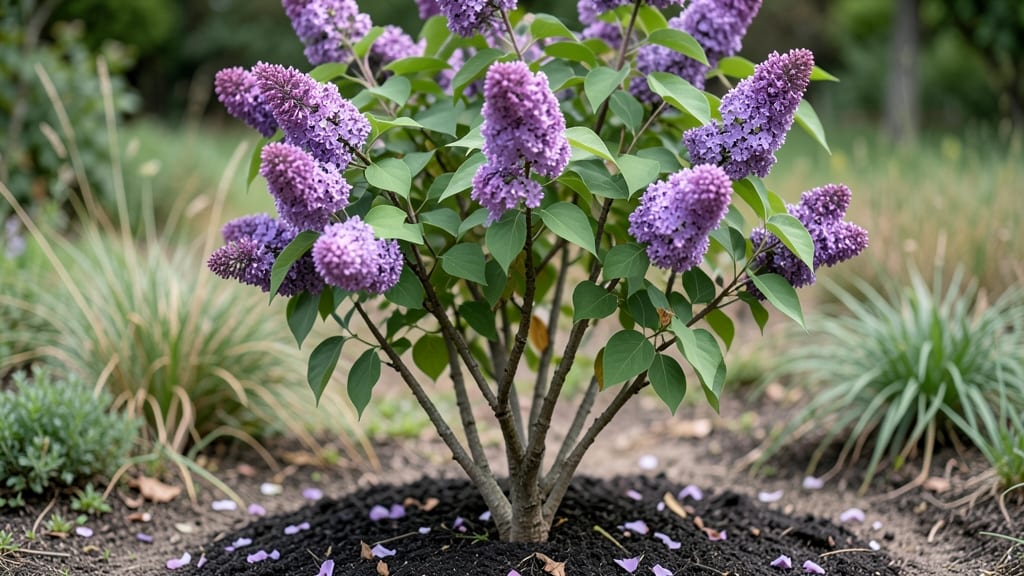
Identifying a lilac bush starts with those unmistakable fragrant purple spikes that perfume the spring air. 🌸 The moment you spot clusters of small, tubular flowers on woody stems, you're likely looking at a lilac—but there's more to confirm before you prune or plant.
I've spent years distinguishing these from mock orange or privet, and the key lies in the leaves, bark, and growth pattern.
The leaves are the first clue: lilacs have opposite leaves (two leaves emerging at each node) that are oval-shaped with smooth edges. Run your fingers along the stem—if you feel a slight zigzag pattern where leaves attach, that's your confirmation.
The bark, though not always visible, is typically gray-brown and develops a rough texture with age, unlike the smoother bark of privet.
Once you've confirmed the leaves and flowers, check the growth habit: lilacs grow in multi-stemmed shrubs that can reach 10-15 feet tall, with a rounded, bushy form.
Common varieties like 'Katherine Higginbotham' or 'Sensation' have slightly different flower colors (purple, white, or pink), but all share that signature fragrance and leaf arrangement.
If you're still unsure, compare it to a mock orange (which has single flowers and glossy leaves) or privet (with simple, untoothed leaves and tiny white flowers). With these visual cues, you'll never mistake a lilac again—and you'll be ready to prune, propagate, or admire it with confidence.
📚 In This Guide
- What you need
- Instructions
- Tips and common mistakes
- Wrapping up and next steps
What you need
- ● Hand Lens or Magnifying Glass – A 10x magnification lens helps inspect fine details like leaf arrangement, flower clusters, and bark texture.
- ● Pruning Shears – Bypass pruners (sharp, clean, and 2-4 inch blades) for safely trimming small branches if needed.
- ● Gloves – Garden gloves (nitrile or leather) to protect hands from thorns or rough bark.
- ● Notebook & Pen – To jot down observations like leaf shape, flower color, and growth habits.
- ● Field Guide or Plant ID App – A printed guide (like National Audubon Society Field Guide) or a mobile app (e.g., PlantNet, iNaturalist) for quick comparisons.
- ● Measuring Tape or Ruler – A 6-inch ruler or flexible tape to measure leaf length, spacing, and flower clusters.
- ○ Camera (Optional but Helpful) – A smartphone with a macro mode to capture close-ups of leaves, buds, and bark for later reference.
- ● Pruning Saw – For thicker branches (over ½ inch) if you plan to collect samples.
- ● Plastic Bags or Ziploc Bags – To preserve leaf or flower samples for further ID confirmation.
- ● Spray Bottle with Water – Helps highlight leaf veins or textures if the plant is dry.
- ● Lilac-Specific Field Guide – Books like "Lilacs: A Guide to Cultivated Species" for advanced identification.
- ● Garden Twine or Tags – If marking lilac bushes in your yard for future reference.
Step-by-Step Guide to identifying a lilac bush
Here’s how to spot a lilac with confidence—no botanist degree required.
🌿 Step 1: Look for Opposite Branching and Heart-Shaped Leaves
Lilacs grow in a classic pyramid shape, but the real giveaway is their leaf arrangement. Run your fingers along a stem and feel for pairs of leaves growing directly across from each other—that’s called opposite branching. Most other shrubs have leaves alternating along the stem.
The leaves themselves are another dead giveaway: smooth-edged, heart-shaped, and about 2-4 inches long. Rub one between your fingers—lilac leaves are slightly fuzzy on the underside. If you see glossy leaves, you’re probably looking at a different shrub.
💜 Step 2: Check for Fragrant Purple Flower Spikes
The most obvious clue is the flowers, but timing matters. Lilacs bloom in late spring, typically April to May, and their flowers grow in dense, upright clusters called panicles. These spikes can be 4-8 inches long and packed with tiny, tubular blossoms in shades of purple, white, pink, or lavender.
Here’s the real test: crush a few blossoms between your fingers. That sweet, intoxicating fragrance is unmistakable. If you’re unsure, take a deep sniff—lilacs smell like spring in a bottle. No scent? It’s probably not a lilac.
☀️ Step 3: Examine the Bark and Buds
Lilac bark is smooth and grayish when young but develops a slightly scaly texture as it matures. Look for oval-shaped buds along the branches—these are another key feature. The buds are plump, pointed, and often covered in fine hairs.
If you find a shrub with smooth bark, opposite leaves, and those distinctive buds, you’re likely dealing with a lilac. For extra confirmation, snap off a small twig and look at the pith (the center of the stem). Lilac pith is white and chambered—it’ll look like a honeycomb when sliced open.
✂️ Step 4: Rule Out Look-Alikes
False lilacs (like syringa) can fool you, but they’re not true lilacs. True lilacs belong to the Syringa vulgaris species and have four petal-like structures (called corollas) per flower. False lilacs often have only two or three. Count the petals—if it’s not four, it’s not a classic lilac.
Another trick: lilacs have no thorns. If you see sharp spines on the branches, it’s definitely not a lilac. Also, lilacs don’t produce berries or fruit—if you spot those, you’re looking at a different shrub entirely.
🌱 Step 5: Confirm with a Leaf Rub Test
This is my favorite trick for instant identification. Take a leaf and rub it gently on a white piece of paper. Lilac leaves leave a faint, powdery residue because of their waxy coating. If the paper stays clean, it’s probably not a lilac.
Here’s the final check: lilacs are hardy and thrive in USDA Zones 3-7. If you’re in a warmer climate and see a shrub matching all these clues, it might still be a lilac—just a cold-hardy variety. But if you’re in Zone 8 or higher, double-check with a local nursery.
Tips & tricks for perfect lilac identification
These simple tricks will help you spot a lilac bush like a pro—no green thumb required.
Leaf Texture Test: The fuzzy underside of lilac leaves is a game-changer. When you rub a leaf between your fingers in Step 1, pay close attention to that subtle fuzziness. It's not just about the shape—this texture is unique to lilacs. If the leaf feels smooth and glossy, you're likely looking at something else, like a syringa or privet. This quick check can save you from misidentifying bushes that look similar but aren't true lilacs.
Seasonal Timing Secret: The April to May bloom window in Step 2 is critical. Lilacs are early bloomers, and their flowers are a dead giveaway. If you're examining a shrub outside this window, the leaves and buds become your best friends. In winter, look for those distinctive oval buds—they're like nature's calling card. These buds are plump and hairy, unlike the smooth buds of many other shrubs.
Petal Counting Trick: In Step 4, when you're ruling out look-alikes, count those petal-like structures carefully. True lilacs have four corollas per flower, while false lilacs often have fewer. This might seem tedious, but it's the most reliable way to distinguish between true and false lilacs. Grab a magnifying glass if needed—it's worth the extra effort for accurate identification.
Climate Confirmation: The USDA Zones 3-7 reference in Step 5 is your final clue. If you're in a warmer climate, don't automatically dismiss a shrub that matches all other criteria. Some cold-hardy varieties thrive in Zones 8 and beyond. When in doubt, consult your local nursery—they can help you identify cold-hardy lilac varieties that might be growing in your area.
Pro Tips for Identify Lilac Bush
- These simple tricks will help you spot a lilac bush like a pro—no green thumb required.
- Leaf Texture Test: The fuzzy underside of lilac leaves is a game-changer.
- Seasonal Timing Secret: The April to May bloom window in Step 2 is critical.
Frequently asked questions
Got questions about spotting a lilac bush? You’re not alone! Here are some of the most common queries—and their answers—to help you confidently ID these fragrant beauties in your yard or beyond.
Why does my lilac bush have no flowers this year?
Lilacs often take a year or two to recover after heavy blooming. Over-pruning, stress (like drought or poor soil), or age can also delay flowers. Check for healthy green leaves—if they’re thriving, give it time! If the bush is old (over 15 years), it may be past its peak. Pro tip: Fertilize in early spring and water deeply during dry spells to encourage blooms next season.
When is the best time to identify lilacs by their leaves?
Spring and summer are ideal! Lilacs have distinctive opposite leaves (two leaves per stem, like a mirror image) year-round, but their heart-shaped or oval shape and smooth edges are easiest to spot when they’re fresh. Winter’s bare branches can still help—look for buds along the stems (lilacs bloom from these).
Can I confuse lilacs with other purple-flowering shrubs?
Common look-alikes include wisteria (longer, drooping clusters; compound leaves), butterfly bush (ferny leaves, spiky flowers), and deutzia (smaller flowers, toothed edges). Lilacs stand out with their dense, upright spikes and opposite leaves. Quick trick: Crush a leaf—lilacs smell sweetly herbal, while others may have no scent or a different aroma.
What do I do if my lilac bush has brown leaves or spots?
Brown spots or wilting often signal fungal diseases (like powdery mildew) or pests (e.g., borers). Prune affected branches 1 inch below the damage and sterilize tools with rubbing alcohol. Improve airflow by thinning dense growth, and water at the base (not overhead) to reduce humidity. For severe cases, use a fungicide labeled for lilacs in early spring.
Are there lilac varieties without purple flowers?
Yes! While purple is classic, lilacs come in pink (e.g., ‘Katherine Havemeyer’), white (e.g., ‘White Swan’), and even lavender-blue (e.g., ‘Sensation’). Their leaves and growth habits stay the same—opposite, heart-shaped foliage and fragrant blooms. Fun fact: Some varieties, like ‘Miss Kim,’ are dwarf-sized (3–4 feet tall), making them great for small gardens!
Wrapping up and next steps
Now that you’ve mastered the art of spotting a lilac bush—from its fragrant purple blooms and opposite leaves to its distinctive growth habit—you’re ready to embrace these garden stars! 🌸 Whether you’re pruning, planting, or simply admiring, recognizing lilacs will make your gardening journey even more rewarding. Next up: Dive into pruning tips to keep your lilacs thriving for years to come!