
Shrubs
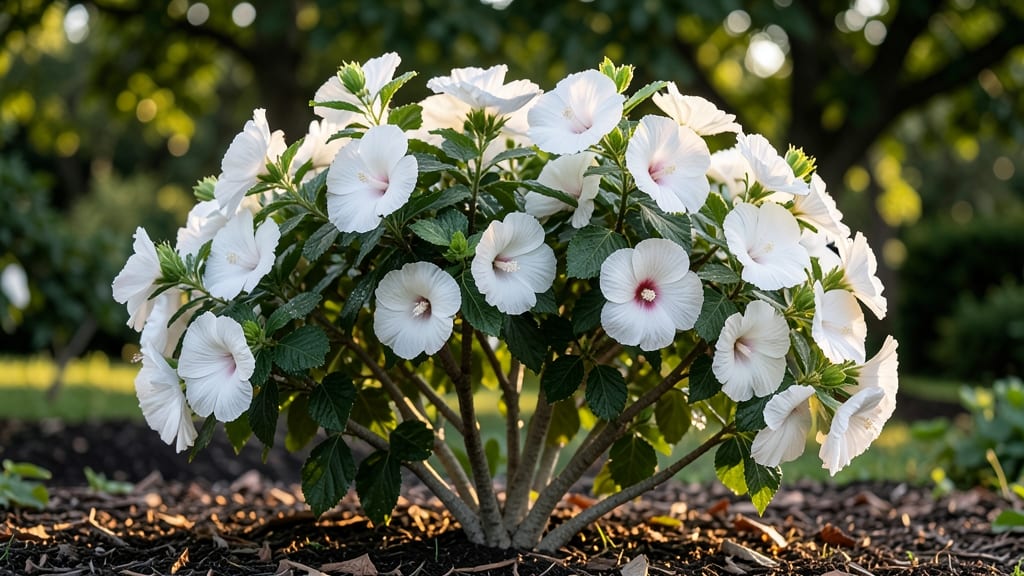
The white Rose of Sharon bush (Hibiscus syriacus) brings effortless elegance to any garden, with fragrant blooms that last from summer through fall—and sometimes even winter. 🌸 I fell in love with it when I spotted one thriving in my neighbor’s yard, its branches heavy with pure-white flowers that hummingbirds adored.
Unlike fussy shrubs, this one handles neglect, drought, and even urban pollution with surprising grace.
Plant it in full sun where it gets at least 6 hours of light daily, and it rewards you with 3-4 feet of lush, arching branches that create a stunning focal point.
The secret to its longevity? Minimal pruning—just shape it lightly after blooming or in late winter, and it keeps flowering year after year with almost no effort. Perfect for low-maintenance gardeners who still want drama.
📚 In This Guide
- What you need
- Instructions
- Tips and common mistakes
- Wrapping up and next steps
What you need
- ● White Rose of Sharon plant: 1-2 healthy nursery-grown bushes (3-5 feet tall, bare-root or potted). Pro tip: Look for Hibiscus syriacus varieties like 'Annabelle' or 'White Chiffon' for reliable white blooms!
- ● Well-draining soil: Mix of native soil + 2-3 inches of organic compost or aged manure (1 cubic yard per bush). 💡 Amend clay soil with perlite or sand for better drainage.
- ● Fertilizer: Balanced granular fertilizer (10-10-10), 2-3 lbs per bush.
- ○ Optional: Slow-release organic fertilizer (e.g., bone meal or fish emulsion) for nutrient boosts.
- ● Mulch: 2-3 inches of shredded bark, pine straw, or wood chips (spread in a 3-foot radius around the base).
- ● Watering supplies: Garden hose with adjustable nozzle or drip irrigation system.
- ● Garden tools: Trowel or spade (for planting).
- ● Pruning shears (sharp, sterilized—✨ clean blades prevent disease!).
- ● Gloves (gardening or heavy-duty).
- ● Location: Full sun (6+ hours/day) to partial shade (morning sun + afternoon shade). 🌡️ Avoid soggy spots—this shrub hates "wet feet"!
- ● Spacing: Plant bushes 5-8 feet apart (allows airflow and growth).
- ○ Optional (but helpful): Soil test kit (to check pH—ideal range: 6.0-7.0).
- ● Epsom salt (1 tbsp per foot of bush height, annually, for magnesium).
- ● Stakes or cages (if your bush is young or top-heavy).
- ● Patience: White Rose of Sharon grows slowly but rewards you with decades of blooms! 🌸
- ● Commitment to minimal pruning: Just 1-2 light cuts per year (we’ll cover this in the care guide!).
- ● Knowledge of hardiness: Zones 4-9 (check your local climate—this shrub thrives in cold winters!).
Step-by-Step instructions for planting and caring for White Rose of Sharon bush
Here's how to establish your shrub for those stunning, low-maintenance blooms that keep coming back.
🌱 Step 1: Choose the Perfect Planting Location
White Rose of Sharon thrives in full sun to partial shade, with at least 6 hours of direct sunlight daily. I always pick a spot with morning sun and afternoon shade to prevent leaf scorch—especially in hot climates. The shrub tolerates a range of soil types but performs best in well-draining, slightly acidic soil with a pH between 6.0 and 7.0.
Dig a hole twice as wide and just as deep as the root ball. Loosen the soil at the bottom of the hole to encourage root spread. If your native soil is heavy clay, mix in 2-3 inches of compost to improve drainage. This helps prevent root rot, which can be fatal to newly planted shrubs.
🪴 Step 2: Plant with Proper Spacing and Support
Space your shrubs 6-8 feet apart to allow for mature growth and airflow, which reduces disease risk. White Rose of Sharon grows upright but can reach 10-12 feet tall, so consider planting it near a fence or wall for support if needed. I always plant mine against a sturdy trellis or lattice for extra stability, especially in windy areas.
Place the shrub in the hole so the top of the root ball sits 1 inch above ground level. This prevents water from pooling around the base, which can cause rot. Backfill with native soil, tamping gently as you go to remove air pockets. Water deeply right after planting to settle the soil and eliminate gaps.
☀️ Step 3: Water and Mulch for Establishment
Water your newly planted shrub deeply once a week for the first 2 months, providing 1-2 inches of water each time. You'll know it's getting enough when the soil feels 2-3 inches deep and moist to the touch. Overwatering is a common mistake—White Rose of Sharon is drought-tolerant once established, so let the top 1-2 inches of soil dry out between waterings.
Apply a 2-3 inch layer of mulch around the base, keeping it 6 inches away from the trunk to prevent rot. I use shredded bark or wood chips, which break down slowly and improve soil structure over time. This mulch layer helps retain moisture, regulate soil temperature, and suppress weeds—all while protecting the roots from extreme temperatures.
✂️ Step 4: Prune for Shape and Encourage Blooms
Prune your White Rose of Sharon in late winter or early spring, before new growth begins. Remove any dead, diseased, or crossing branches first—this keeps the shrub healthy and open to airflow. I like to shape mine into a loose, rounded form by cutting back 1/3 of the oldest stems to the ground each year. This rejuvenates the plant and encourages new, vigorous growth.
After the first flush of blooms, you can lightly trim to maintain shape, but avoid heavy pruning in summer. The shrub blooms on both old and new wood, so pruning too aggressively can reduce next year's flowers. Watch for leggy growth—if stems stretch too far, cut them back to a strong lateral branch to promote bushier growth.
🌿 Step 5: Maintain Through the Seasons
Fertilize in early spring with a balanced, slow-release fertilizer (10-10-10 or similar). Spread it evenly over the root zone and water it in well. Avoid high-nitrogen fertilizers, which encourage leafy growth at the expense of flowers. I also add a handful of bone meal to the soil in late winter to boost phosphorus, which supports blooming.
Monitor for pests like aphids or spider mites, which can weaken the shrub. A strong spray of water usually removes them, but for severe infestations, use an insecticidal soap. Deadhead spent blooms in fall to keep the shrub tidy, but leave some seed heads for winter interest. In colder climates, protect young shrubs with a thick layer of mulch over the roots during winter to prevent frost heave.
Tips & tricks for perfect White Rose of Sharon bush care
Between us, these simple adjustments will help your shrub thrive with minimal fuss—no green thumb required.
Soil Testing Tip: Before planting, test your soil's pH using a simple kit available at garden centers. If your soil measures below 6.0, amend it with powdered lime (following package instructions) to raise the pH gradually. I've seen Rose of Sharon plants struggle in overly acidic soil, even with proper watering—this one adjustment makes all the difference. The goal is that 6.0-7.0 range mentioned in Step 1.
Planting Depth Secret: That 1-inch elevation above ground level in Step 2 isn't just about drainage—it's also about preventing crown rot. I've learned this the hard way after planting too deep in heavy clay soil. Use a level or straight board to check depth before backfilling. Pro tip: Mark your shovel with masking tape at the 1-inch point for future reference.
Watering Wisdom: The 2-inch watering guideline in Step 3 works perfectly with a simple rain gauge or even a tuna can buried near your plant. Fill it with water, then measure how much drains away in 24 hours—that's your soil's absorption rate. Adjust your weekly watering accordingly, especially in clay soils where water pools instead of draining.
Pruning Strategy: When you're cutting back those 1/3 of oldest stems in Step 4, look for stems with a diameter thicker than a pencil—they're the ones that need pruning to encourage new growth. I mark these with a piece of twine before cutting to avoid accidentally removing too much. This targeted approach keeps your shrub bushier without sacrificing next year's blooms.
Pro Tips for White Rose Of Sharon Bush
- Between us, these simple adjustments will help your shrub thrive with minimal fuss—no green thumb required.
- Soil Testing Tip: Before planting, test your soil's pH using a simple kit available at garden centers.
- Planting Depth Secret: That 1-inch elevation above ground level in Step 2 isn't just about drainage—it's also about preventing crown rot.
Frequently asked questions
Got questions about keeping your White Rose of Sharon bush thriving? You’re not alone! Here are answers to the most common concerns—from pruning to pests and everything in between.
When is the best time to prune my White Rose of Sharon bush?
The ideal time to prune is late winter or early spring, just before new growth begins. This helps shape the bush and encourages vibrant blooms. Avoid pruning in fall—it can stimulate tender new growth that won’t survive winter. For minimal pruning, simply remove dead or crossing branches to maintain airflow.
How cold-hardy is the White Rose of Sharon, and does it need winter protection?
This beauty is extremely cold-hardy, thriving in USDA zones 5-9. In colder climates (zone 5), mulch the base with 3-4 inches of organic mulch (like shredded bark) to insulate roots. No additional winter protection is typically needed unless you’re in an exposed, windy area—then a light burlap wrap can help.
What pests or diseases should I watch for, and how do I treat them?
Common issues include:
- Aphids or spider mites: Spray with a soapy water solution (1 tsp mild dish soap per quart of water) or introduce ladybugs for natural control.
- Powdery mildew: Improve airflow by pruning dense areas and apply neem oil as a preventive spray.
- Japanese beetles: Handpick them or use milky spore for long-term prevention.
Always remove affected leaves and dispose of them in the trash—not compost—to prevent spread.
Can I grow White Rose of Sharon in a container, or is it better in the ground?
While it’s not ideal for containers (they prefer to spread), you can grow them in large pots (at least 18–24 inches wide) for 2–3 years. Use a well-draining potting mix and repot every 2–3 years. For long-term success, plant in the ground where roots can spread freely—this bush loves space!
Why isn’t my White Rose of Sharon blooming as much as it should?
Less blooming often stems from:
- Over-fertilizing with high-nitrogen: Use a balanced 10-10-10 or 5-10-5 fertilizer in early spring.
- Too much shade: Plant in full sun (6+ hours/day) for optimal blooms.
- Poor pruning timing: Prune after blooming (late summer) to encourage next year’s flowers.
- Stress from drought or root-bound conditions: Water deeply 1–2 times per week during dry spells.
Give it patience—some bushes take 2–3 years to reach full bloom potential!
Wrapping up and next steps
The White Rose of Sharon bush is a dream for gardeners seeking effortless beauty—its stunning blooms thrive with minimal fuss, making it a standout addition to any landscape.
With the right care (like well-draining soil and occasional pruning), you’ll enjoy year-round interest and a low-maintenance shrub that rewards patience with vibrant color. Whether you’re a seasoned gardener or just starting, this bush proves that easy care doesn’t mean sacrificing impact!
Ready to transform your garden? Plant your White Rose of Sharon bush today and watch your outdoor space flourish with minimal effort—your future self (and neighbors!) will thank you. 🌸