
Light Requirements
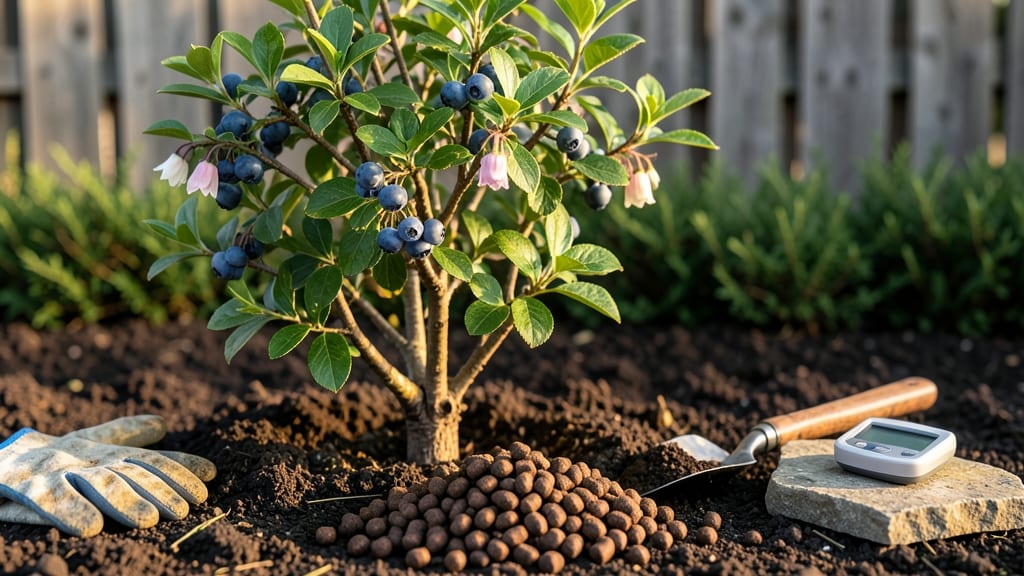
To fertilize your 🫐 blueberry bushes at the right time means the difference between a few berries and a full harvest—spring and summer are the critical windows, but timing matters just as much as what you use.
Picture this: You’ve just planted your blueberry bushes in well-draining, acidic soil, and now you’re wondering when to start feeding them. Too early, and you risk burning delicate roots; too late, and your plants may struggle to produce fruit.
The key is balancing growth and fruiting phases, and I’ll break down the exact schedule you need.
Most gardeners focus on spring fertilization to kickstart growth, but summer feeding is just as important—especially if you want those juicy berries to ripen properly. We’ll also cover how to spot signs of over- or under-fertilization, so you never guess again.
By the end, you’ll know not just when to fertilize, but also how to choose the right fertilizer—whether organic or synthetic—for your blueberry bushes to thrive in Zone 6a and beyond.
Best fertilization schedule for blueberry bushes by season
Blueberries are acid-loving plants, and their fertilization schedule directly impacts fruit production and plant health. Unlike many fruits, blueberries need specialized care—especially when it comes to soil pH and timing.
Skipping fertilization or overdoing it can lead to poor yields or even plant stress. The key is feeding them at the right growth stages while maintaining a pH of 4.5–5.5.
I’ve grown blueberries for over a decade, and the difference between a modest harvest and a bush bursting with berries often comes down to when and how I fertilize. Let’s break it down by season so you can optimize your blueberry bush’s performance year-round.
| Season | Fertilization Goal | Recommended Fertilizer | Soil pH Check | Action Tips |
|---|---|---|---|---|
| Early Spring (March-April) | Stimulate new growth | 10-10-10 or 12-4-8 (acidic) | Test pH; amend if needed | Apply 2 tbsp per plant; water deeply |
| Late Spring (May) | Support flowering | Low-nitrogen, high-phosphorus (e.g., 5-10-10) | Maintain pH 4.5–5.5 | Side-dress with compost; avoid high nitrogen |
| Summer (June-August) | Fruit development | Balanced (10-10-10) or potassium-rich (e.g., 5-10-15) | Monitor pH; adjust if drifting | Fertilize every 6 weeks; mulch with pine needles |
| Fall (September-October) | Prepare for dormancy | Light organic (compost, peat moss) | Test pH before winter | Apply 1 tbsp per plant; avoid synthetic fertilizers |
| Winter (November-February) | No fertilization | None | Monitor soil moisture | Focus on mulching; avoid disturbing roots |
Spring is the most critical time to fertilize blueberry bushes because it kickstarts new growth after winter dormancy. I always start in early spring (March–April) with a balanced fertilizer like 10-10-10 or a specialized blueberry blend.
This ensures your bush has the nitrogen it needs for leaf and stem development. If your soil pH isn’t in the 4.5–5.5 range, this is also the time to amend it with sulfur or peat moss.
By late spring (May), shift to a lower-nitrogen, higher-phosphorus fertilizer (like 5-10-10) to encourage flowering. Phosphorus is essential for bud formation, which directly impacts your berry yield later in the season.
I’ve seen bushes with double the fruit when I adjust the fertilizer ratio at this stage. Pair this with compost or well-rotted manure to improve soil structure without overloading the plant.
During summer (June–August), your blueberry bush is focusing on fruit production, so I recommend a balanced or potassium-rich fertilizer (like 5-10-15) every 6 weeks. Potassium helps strengthen cell walls, reducing berry splitting and improving disease resistance.
This is also when I mulch heavily with pine needles or oak leaves—they slowly acidify the soil and retain moisture. Avoid fertilizing in late summer, as new growth won’t have time to harden off before winter.
In fall (September–October), switch to a light organic feed like compost or a slow-release fertilizer. The goal here is to prepare the bush for dormancy without stimulating late-season growth.
I also test the soil pH one last time—if it’s drifting above 5.5, I’ll add elemental sulfur to bring it back down. Overwintering with the right pH sets your bush up for a stronger spring rebound.
Winter is fertilizer-free for blueberries. Feeding during dormancy can burn roots or
Signs your blueberry bush needs fertilizer (and what’s missing)
Your blueberry bushes communicate their needs through subtle (and not-so-subtle) signals. Yellowing leaves, stunted growth, or small, sparse berries are classic cries for help—often a sign your soil lacks essential nutrients like nitrogen, phosphorus, or potassium.
Even if you’ve fertilized before, over time, soil nutrients deplete, especially in acid-loving blueberries that thrive in pH 4.5-5.5 conditions.
Don’t wait until your bush looks stressed to act. Preventive fertilization in early spring keeps your plants vibrant and productive. For example, new growth in spring signals it’s time for a nitrogen-rich feed, while blooming flowers in late spring need phosphorus to support fruit development.
Ignoring these signs can lead to poor fruit set or even leaf drop, which means fewer berries for you to enjoy.
⚠️ callout warning
Too much fertilizer—especially high in salt—can burn roots and damage soil microbes. Always follow package instructions and water thoroughly after applying. Organic options like composted manure or fish emulsion are gentler than synthetic granules. Test your soil’s pH level first—blueberries hate alkaline soil!
If your blueberry leaves develop yellow patches between veins, it’s often a magnesium deficiency (chlorosis). For phosphorus deficiency, look for dark green leaves but weak stems and small berries.
Meanwhile, potassium deficiency shows as brown leaf edges or weak fruit walls. Each issue requires a targeted fertilizer—like Epsom salt for magnesium or a low-nitrogen, high-phosphorus blend for flowering.
Another red flag? Fewer berries than expected despite healthy-looking foliage. This could mean your bush isn’t getting enough potassium or calcium, both critical for fruit development.
Try a balanced fertilizer like 10-10-10 or a specialized blueberry mix with micronutrients. Micronutrients like zinc and iron also play a role—deficiencies can stunt growth or cause leaf curling.
For young blueberry bushes (under 2 years old), focus on nitrogen to build strong roots and stems. Mature bushes, however, need a phosphorus boost in early spring to encourage flowering.
A soil test every 2-3 years ensures you’re addressing specific deficiencies. If your bush has white powdery mildew or black spots, it might also need fungicide treatment alongside fertilization.
Remember, timing matters. Fertilize in early spring (March-April) for new growth, late spring (May-June) for flowering, and early summer (July) for fruiting. Avoid fertilizing in fall or winter—it can stimulate late growth that’s vulnerable to frost damage.
With the right fertilizer strategy, your blueberry bush will reward you with juicy, plump berries for years to come!