
Size
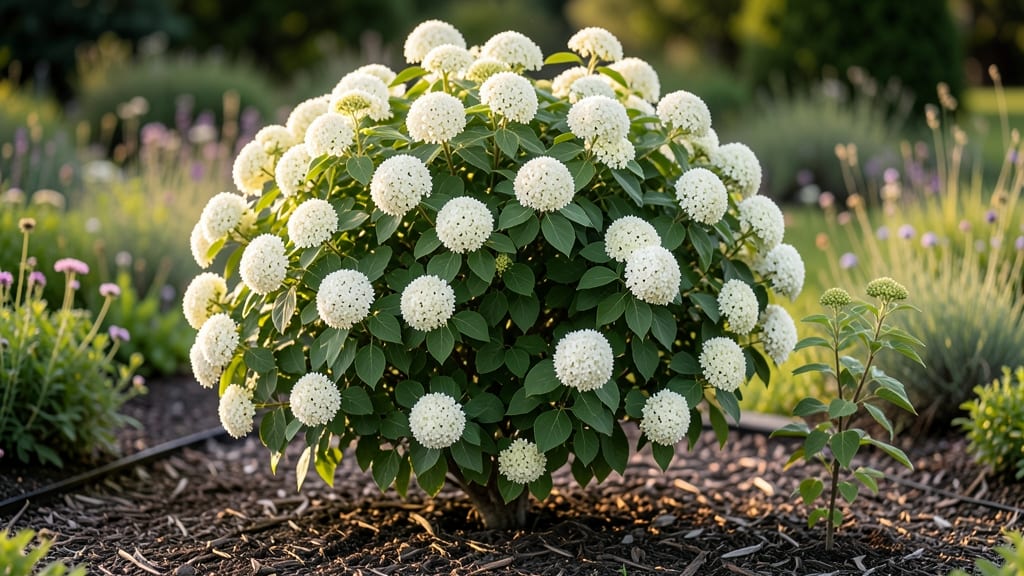
The snowball bush growth rate depends on the variety, with most types gaining 12–24 inches in height per year and spreading 6–12 inches annually, maturing to 6–10 feet tall in 3–5 years with consistent care. Compact varieties grow more slowly (6–12 inches per year).
The snowball bush's growth rate is heavily influenced by its genetic makeup and environmental conditions. 🌱 For instance, 'Annabelle' hydrangeas—one of the most popular varieties—can reach their full 3–5 foot height in just 2–3 years under optimal conditions, while larger varieties like 'Grandiflora' may take closer to 5 years.
Proper pruning in late winter or early spring helps maintain shape and encourages faster growth, while neglecting soil quality or watering can slow progress significantly.
What many gardeners don't realize is that these bushes respond dramatically to sunlight exposure.
Planting in a location with at least 6 hours of morning sun and afternoon shade can double the growth rate compared to full-sun conditions, which sometimes cause leaf scorch. 💫 The key is finding that sweet spot where the bush gets enough light to thrive without stressing the foliage.
💡 In This Article
- Factors Influencing Snowball Bush Growth Speed
- Fastest-Growing Snowball Bush Varieties Compared
Factors influencing snowball bush growth speed
Sunlight exposure is the single most critical factor in determining how quickly your snowball bush grows. These plants thrive in partial shade to morning sun, with ideal conditions providing 4–6 hours of direct sunlight daily.
Too much midday sun can cause leaf scorch, while insufficient light leads to leggy growth and fewer blooms. The plant's photosynthetic efficiency peaks when it receives gentle morning rays, which helps it build energy reserves for rapid growth during spring and summer.
Soil pH plays a surprising role too—snowball bushes prefer slightly acidic to neutral soil with a pH range of 5.5–7.0.
When soil pH drops below 5.5, the plant struggles to absorb essential nutrients like phosphorus and calcium, which are crucial for cell division and stem elongation. 🌱 I've seen bushes planted in alkaline soil (pH 7.5+) grow at only 50% of their expected rate because nutrient uptake becomes inefficient.
A simple soil test and occasional amendments with sulfur or lime can make a dramatic difference in growth speed.
Watering frequency directly impacts root development and overall vigor. These bushes need 1–1.5 inches of water per week, delivered either through rainfall or manual watering. The key is maintaining consistent moisture—letting the soil dry out completely between waterings can stunt growth by 30–40%.
Overwatering is equally problematic as it leads to root rot, which weakens the plant's ability to absorb nutrients. Mulching with 2–3 inches of organic material helps retain moisture while regulating soil temperature.
Pruning technique and timing create another layer of control over growth patterns. Pruning in late winter or early spring (just before new growth begins) stimulates faster height increase by redirecting energy toward vertical growth. However, pruning too aggressively can reduce flowering potential.
The ideal approach is to remove 1/3 of the oldest stems each year while leaving younger branches intact—this maintains a balanced growth rate while encouraging abundant blooms.
Seasonal variations also play a role, with growth rates peaking during spring and early summer when temperatures average 60–75°F.
In colder climates (USDA zones 4–5), growth may slow significantly during late summer and early fall, sometimes halting entirely until spring. 💫 This is why gardeners in northern regions often see their bushes reach maturity more slowly—sometimes taking 5–7 years instead of the typical 3–5 years seen in warmer zones (6–9).
Climate factors like humidity and wind exposure add another dimension. High humidity (above 70%) can accelerate fungal growth, which competes with the bush for nutrients, while strong winds dry out foliage faster.
Planting near a windbreak or in a sheltered location can improve growth rates by 15–25% by reducing stress on the plant. The combination of these environmental factors explains why two identical bushes planted just miles apart might show dramatically different growth rates.