
Planting
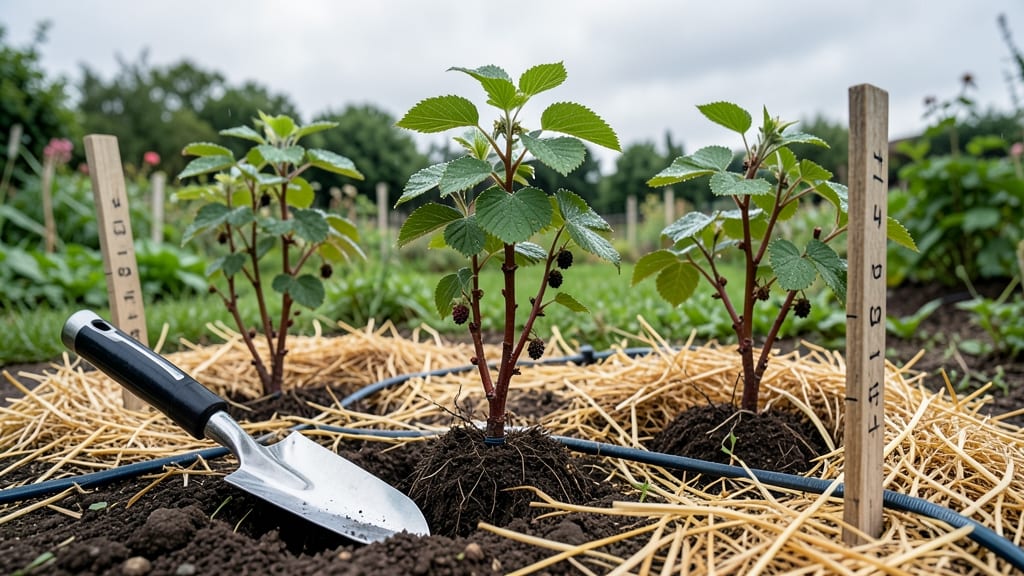
Planting blackberry bushes the right distance apart ensures bigger harvests, fewer pests, and easier maintenance—and how far apart should blackberry bushes be planted depends on whether you’re growing thornless or traditional varieties.
Struggling to maximize your blackberry harvest? The secret isn’t just in the soil or sunlight—it’s in the spacing. Plant blackberry bushes 🫐 too close, and you’ll get tangled vines and tiny berries.
Too far apart, and you’ll waste space. Here’s the exact spacing science you need for a thriving blackberry patch.
Most gardeners overlook how spacing affects airflow and sunlight, which directly impacts fruit size and disease resistance. A well-planned layout also makes pruning and harvesting easier while preventing overcrowding that smothers new canes.
Below, I break down the ideal spacing for trailing vs. erect varieties, how to adjust for trellises or small gardens, and the 3 most common mistakes that ruin yields before they even start.
Optimal blackberry bush spacing by variety: trailing vs. erect types
Blackberries are a gardener’s dream, but their spacing needs can make or break your harvest. Trailing varieties like 'Triple Crown' sprawl aggressively, while erect types such as 'Cheyenne' grow upright.
Getting this right ensures better airflow, larger berries, and easier maintenance. Let’s break down the science behind spacing for both types.
Proper spacing isn’t just about fitting plants into your garden—it’s about giving each bush room to thrive. Crowded bushes compete for nutrients and sunlight, leading to smaller, less flavorful berries.
Meanwhile, overly spaced plants waste garden real estate. The key is balancing plant-to-plant distance with row spacing to maximize yield without sacrificing quality.
Here’s the critical difference: trailing blackberries need 6-8 feet between plants and 8-10 feet between rows, while erect varieties can handle 4-6 feet between plants and 6-8 feet between rows. This distinction ensures your bushes have the space to grow their natural shape without smothering each other.
Why does variety matter? Trailing types spread horizontally, so they need extra room to prevent vine tangling and disease spread from poor airflow. Erect varieties grow more vertically, so they tolerate closer spacing—but only if you provide sturdy trellis support. Both types benefit from well-drained soil and full sun exposure, but their spacing needs reflect their growth habits.
| Variety Type | Plant-to-Plant Distance | Row Spacing | Sunlight Needs | Airflow Priority | Best For |
|---|---|---|---|---|---|
| Trailing (e.g., 'Triple Crown', 'Natchez') | 6-8 feet | 8-10 feet | Full sun (6+ hours) | High (prevents mildew) | Large gardens, fences, arbors |
| Erect (e.g., 'Cheyenne', 'Arapaho') | 4-6 feet | 6-8 feet | Full sun (6+ hours) | Moderate (with trellis) | Small gardens, containers, trellises |
| Thornless (e.g., 'Chester', 'Ouachita') | 5-7 feet | 7-9 feet | Full sun (6+ hours) | High (prevents rot) | Family-friendly gardens, urban yards |
For thornless varieties, like 'Chester' or 'Ouachita', spacing is slightly tighter—5-7 feet between plants—because their gentler growth habit makes them easier to manage in smaller spaces.
However, they still need 7-9 feet between rows to prevent overcrowding. Thorny varieties can handle closer spacing if you’re okay with more aggressive pruning and weed control.
If you’re growing multiple blackberry varieties, consider planting them in separate rows to avoid cross-pollination issues. For example, place trailing types along a fence or trellis and erect varieties in dedicated rows for easier harvesting.
This also helps reduce pest spread, as crowded plants attract more insects and diseases.
One common mistake is ignoring the mature size of your blackberry bushes. A 3-year-old plant can spread 6-10 feet wide, so cramming them too close now will lead to pruning headaches later.
Plan for their full growth potential from day one, and you’ll avoid the stress of replanting or aggressive pruning down the road.
How to adjust spacing for different garden layouts and soil conditions
Your blackberry bushes need space to thrive, but that spacing changes depending on your garden layout and soil conditions. In a raised bed, for example, you’ll need tighter spacing than in an open-ground row.
Meanwhile, poor-draining soil or sloped terrain might require adjustments to prevent waterlogging or erosion. Let’s break down how to adapt spacing for your unique setup.
For raised beds, reduce the standard spacing by 20-30%. Instead of planting thornless blackberries 4-5 feet apart, space them 3-4 feet apart. This works because raised beds provide better drainage and root aeration, allowing plants to grow more compactly.
Just ensure your bed is at least 4 feet wide to accommodate two rows with proper airflow.
If you’re growing blackberries in containers, prioritize container size over spacing. Use pots that are at least 18-24 inches deep and 12-18 inches wide per plant. For multiple plants in one container, space them 12-18 inches apart—but limit to 3-4 plants per container to avoid competition.
Containers dry out faster, so mulch heavily to retain moisture.
⚠️ Common Spacing Mistakes to Avoid
Planting in full shade: Blackberries need 6+ hours of sun. Shady spots lead to small berries and weak canes. If your yard is shady, choose tolerant varieties like 'Chester' but still space them 5-6 feet apart for airflow.
Ignoring root spread: Blackberry roots spread 3-4 feet wide. Planting too close causes root competition, stunting growth. Dig a trench 12 inches deep and 18 inches wide before planting to encourage root expansion.
Overcrowding on slopes: On sloped terrain, plant uphill-downhill rows with 6-8 feet spacing to prevent erosion. Use terracing if the slope is steep, and space plants 4 feet apart within each terrace.
When planting near trellises, arbors, or fences, adjust spacing based on the support structure. For trellis-supported blackberries, space plants 2-3 feet apart along the trellis line, with 5-6 feet between rows. This ensures vines have room to spread horizontally while climbing vertically.
If using an arbor or fence, plant 3-4 feet apart in a single row, leaving 4 feet of clearance from the structure for easy harvesting.
To fix overcrowding in existing patches, start by pruning back canes to reduce bush size. Remove 1/3 of the oldest canes each year to encourage new growth. For severe overcrowding, dig up and transplant half the bushes to a new location, spacing them 5-6 feet apart.
If transplanting isn’t an option, thin out canes to leave only the healthiest 6-8 canes per bush, which improves airflow and sunlight penetration.
For poor-draining soil, increase spacing to 6-8 feet apart to prevent root rot and fungal diseases. Amend the soil with compost and sand to improve drainage, and plant on mounds or raised beds if possible.
If your soil is clay-heavy, add organic matter like leaf mold or peat moss to create better root conditions.
Remember, proper spacing isn’t just about harvest size—it’s about plant health, ease of maintenance, and long-term productivity. Take the time to adjust for your garden’s unique conditions, and your blackberry bushes will reward you with juicy, abundant berries for years to come. 🫐