
Pruning
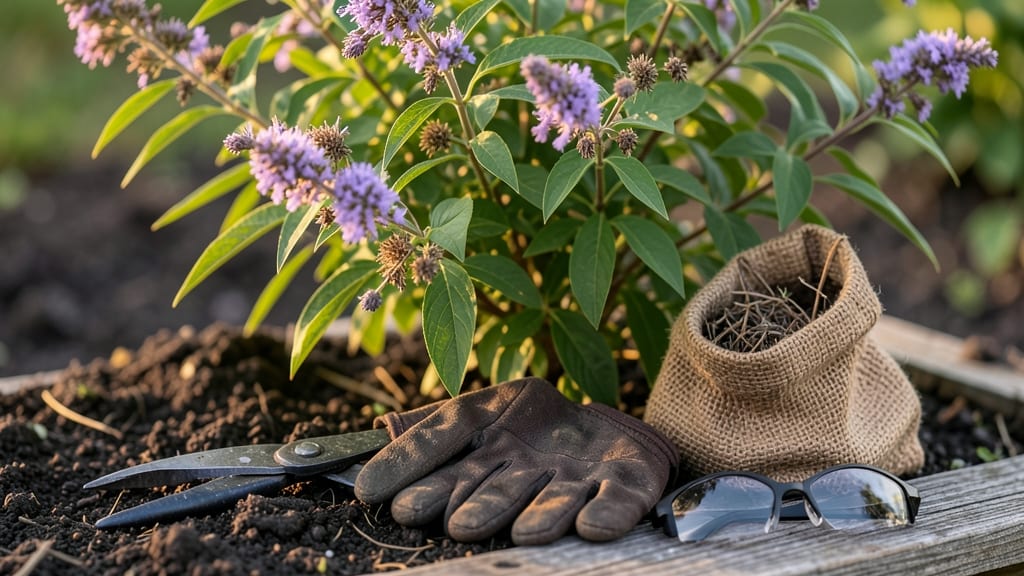
Summer pruning butterfly bush is the secret to keeping those purple plumes blooming until frost. ✂️ I’ve learned that cutting back in July—not spring—stops leggy growth and triggers fresh, vibrant flowers for late-season color.
The key is timing: too early and you lose blooms; too late and the plant won’t recover in time.
You’ll need clean, sharp pruners (sterilized with rubbing alcohol), gloves to protect from thorny stems, and a sunny day to work. Focus on removing one-third of the oldest stems at the base—these are the ones crowding out new growth.
For bushier plants, trim back 6-12 inches from the top of remaining stems to encourage branching.
After pruning, give your butterfly bush a deep watering to help it recover, and feed with a balanced fertilizer to support new shoots. Within 3-4 weeks, you’ll see fresh green growth and—if timed right—another wave of blooms by fall.
The plant will thank you with denser foliage and fewer pests, too.
This method works for both mature bushes and younger plants, though adjust the cuts based on size. For container-grown butterfly bushes, prune slightly lighter to avoid stress. The goal? A bush that stays compact, blooms longer, and looks intentional—not wild. Let’s get those shears ready!
📚 In This Guide
- What you need
- Instructions
- Tips and common mistakes
- Wrapping up and next steps
What you need
- ● Sharp pruning shears – Bypass pruners (4-6 inch blades) for clean cuts on smaller stems.
- ● Loppers – For thicker branches (8-10 inch blades, rated for 1.5-inch cuts).
- ● Hand pruners – Anvil-style (for stubborn deadwood, but avoid for live cuts).
- ● Disposable gloves – Nitrile or leather (to protect from thorns and sap).
- ● Disinfectant – 70% isopropyl alcohol or rubbing alcohol (to sterilize tools between cuts).
- ● Heavy-duty trash bags – 20-gallon capacity (for debris removal).
- ● Pruning saw – Curved blade (8-10 inches) (only if branches exceed 2 inches in diameter).
- ● Hose with nozzle – To rinse sap from tools and clean cuts.
- ● Plant food – Balanced 10-10-10 or slow-release granules (apply post-pruning for a growth boost).
- ● Mulch – Shredded bark or pine straw (2-3 inches deep) to retain moisture.
- ● Safety glasses – If dealing with large, thorny branches.
- ● Choose a mild, overcast day (avoid extreme heat or wind).
- ● Water the bush 24 hours before pruning (soaked soil = easier cuts).
- ● Check local butterfly/moth activity—delay pruning if pollinators are active on flowers.
Step-by-Step instructions for pruning butterfly bush in summer
Here's how I refresh my butterfly bush each summer—keeping blooms abundant and the plant vigorous.
✂️ Step 1: Remove Dead or Damaged Wood First
Start by scanning the entire plant for any branches that are brown, mushy, or showing signs of disease. These are your first targets—dead wood won’t regrow and can spread pathogens to healthy stems. Use clean, sharp pruners to cut back to a healthy green section or the main stem.
I like to make these cuts at a slight angle, about ¼ inch above a leaf node or outward-facing bud. This encourages new growth in the right direction. If you’re unsure whether a branch is dead, gently scratch the bark with your fingernail—if it’s green underneath, it’s still alive and should stay.
✂️ Step 2: Thin Out Overcrowded Branches
Butterfly bushes often grow dense, which reduces airflow and invites pests. Look for branches that cross or rub against each other—these need to go. Select the thinner or weaker of the two crossing stems and cut it back to the main trunk or a strong lateral branch.
Real talk: This step is where most people hesitate, but trust me—your plant will thank you. Aim to leave about ⅓ of the plant’s oldest wood intact. You’ll see new shoots emerge from the base within weeks, signaling the plant is rejuvenating.
☀️ Step 3: Lightly Prune to Encourage New Blooms
For summer blooming, focus on cutting back only 10-20% of the plant’s total growth. Select the oldest stems first—these are the ones that produced last year’s flowers. Cut them back to about 6-12 inches above the ground, depending on the plant’s size and vigor.
Here’s the thing—avoid heavy pruning now. Butterfly bushes bloom on both old and new wood, so aggressive cuts in summer can reduce next year’s flowers. Instead, watch for spent flower clusters and trim them back to the nearest leaf node. This redirects the plant’s energy into fresh blooms.
✂️ Step 4: Clean Up and Sterilize Tools
After pruning, wipe down your tools with rubbing alcohol to prevent spreading disease between cuts. Toss any large clippings into the trash—don’t compost them if they show signs of disease. Smaller, healthy trimmings can go in your yard waste or compost bin.
I always finish by giving the plant a light drink of water to help it recover from the stress of pruning. Avoid fertilizing right after—wait until new growth appears, usually within 2-3 weeks. This ensures the plant uses its energy for healing, not feeding new shoots.
Tips & tricks for revitalizing your butterfly bush
Here's what nobody tells you about keeping your butterfly bush thriving—these are the little details that make all the difference.
Pruning Angle Matters: In Step 1, when cutting dead wood, make sure to angle your cuts about ¼ inch above a leaf node or outward-facing bud. This isn't just about aesthetics—it's about directing new growth where you want it. I've seen people make straight cuts, and while it works, angled cuts give you better control over where those fresh shoots will emerge. Think of it like guiding traffic—you want growth flowing outward, not inward where it might get crowded.
The ⅓ Rule for Renewal: Step 2's advice about leaving ⅓ of the oldest wood might seem counterintuitive, but trust me on this. I learned this the hard way after accidentally removing too much and watching my bush struggle to recover. That ⅓ of old wood provides stability and stores nutrients that help fuel new growth. It's like keeping your savings account open while you build new investments—you need that foundation to thrive.
Summer Pruning Strategy: When you're working through Step 3, remember that butterfly bushes bloom on both old and new wood. That means you're not just pruning for this year's flowers—you're setting up next year's display too. The 10-20% rule is your safety net. Cut back too much now, and you might sacrifice next summer's spectacular blooms. I've seen people get so excited about this year's flowers they over-prune, only to be disappointed with sparse blooms the following season.
Tool Care is Plant Care: After you've finished all your cuts in Step 4, don't just toss your tools in the sink. Take that extra 30 seconds to wipe them down with rubbing alcohol—it's a disease prevention game-changer. I've had to replace pruners after they spread powdery mildew because I skipped this step. Your tools are like your hands for the plant; keeping them clean means healthier cuts and a happier bush. And for the love of gardening, don't compost diseased clippings—you'll just be inviting trouble back to your garden.
Pro Tips for Pruning Butterfly Bush In Summer
- Here's what nobody tells you about keeping your butterfly bush thriving—these are the little details that make all the difference.
- Pruning Angle Matters: In Step 1, when cutting dead wood, make sure to angle your cuts about ¼ inch above a leaf node or outward-facing bud.
- The ⅓ Rule for Renewal: Step 2's advice about leaving ⅓ of the oldest wood might seem counterintuitive, but trust me on this.
Frequently asked questions
Got questions about summer pruning for your Buddleja? You’re not alone! Here are answers to the most common concerns to keep your butterfly bush thriving—without the guesswork.
Can I prune butterfly bush in summer without killing it?
Yes! Light pruning in summer (after blooms fade) is safe and even encourages more flowers next season. Just avoid heavy cuts—stick to removing 1/3 of the plant max to avoid stress. Pro tip: Prune in the morning when plants are hydrated to reduce shock.
When is the exact best time to prune in summer?
Wait until after the first flush of summer blooms (usually June–July) to prune. This gives pollinators time to visit flowers first! For late-summer bloomers, prune just after the last flowers fade to prompt new growth. Never prune in extreme heat (above 90°F)—opt for cooler days.
Should I cut back dead or dying branches now?
Deadheading (snipping spent blooms) and removing brown, mushy, or diseased stems in summer keeps the plant healthy. Use clean, sharp shears to cut just above a leaf node (where new growth appears). Warning: If branches are completely hollow, they’re likely beyond saving—remove them at the base.
What if my butterfly bush gets bugs after pruning?
Summer pruning can attract pests like aphids or spider mites, but don’t panic! Neem oil or insecticidal soap sprays (applied in the evening) work gently. For severe infestations, hose down the plant with water to dislodge pests. Prevent future issues by pruning on dry, wind-free days to avoid stressing the plant.
Is there a better alternative to summer pruning?
If you’re nervous about summer cuts, late winter/early spring pruning (before new growth starts) is the safest option. However, summer pruning boosts fall blooms—just be gentle! For minimalists, deadheading only (removing faded flowers) still encourages more blooms without heavy maintenance.
Wrapping up and next steps
Pruning your butterfly bush in summer isn’t just about tidying up—it’s a game-changer for vibrant blooms and healthier growth! 🌿 By mastering the 3 key cuts (deadheading, shaping, and light rejuvenation), you’ll keep your bush thriving all season long.
Don’t wait—grab those shears and give your plant the love it deserves!
Ready to level up your gardening skills? Start by marking your bush’s growth zones (yes, it’s easier than it sounds!) and plan your next pruning session. Your butterfly bush—and the pollinators—will thank you!