
Pruning
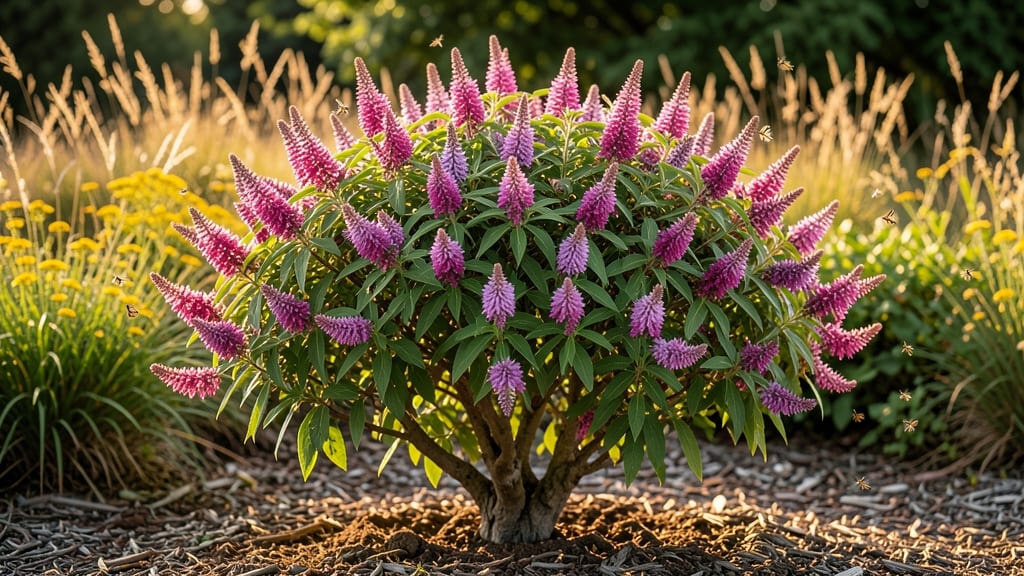
The multi-color butterfly bush transforms your garden into a living rainbow. ✨ Its layered blooms—lavender, pink, and white—create a showstopping display that keeps pollinators buzzing from early summer until frost. This isn’t just another shrub; it’s a season-long spectacle that turns heads and attracts butterflies like a magnet.
The key to its magic lies in strategic placement. Pair it with lavender for a soothing purple contrast or tuck it near coneflowers for a cottage-garden charm. The variegated foliage adds texture even when flowers fade, ensuring year-round interest.
I’ve seen mine become the centerpiece of my pollinator patch, drawing monarchs and hummingbirds in waves. You’ll love how it softens borders while adding height and drama. The blooms open in layers, creating depth that flat plantings can’t match.
Prune lightly after flowering to encourage next year’s abundance—no heavy cuts needed—and watch it bounce back with even more vibrant color. Perfect for mixed borders, wildflower gardens, or even container plantings. Let’s make your landscape the talk of the neighborhood with this pollinator powerhouse that never stops delivering.
📚 In This Guide
- What you need
- Instructions
- Tips and common mistakes
- Wrapping up and next steps
What you need
- ● Pruning shears: Bypass pruners (sharp, clean, and disinfected with rubbing alcohol to prevent disease). Quantity: 1 pair.
- ● Loppers: For thicker stems (1–2 inches in diameter). Quantity: 1 pair.
- ● Garden gloves: Heavy-duty, cut-resistant (e.g., leather or reinforced fabric). Quantity: 1 pair.
- ○ Disposable pruning bags: Optional but handy for collecting debris and reducing mess. Quantity: 1–2 bags.
- ● Hand saw: For thick, woody stems (if your bush is mature). Quantity: 1.
- ● Rubbing alcohol (70% isopropyl) or bleach solution: For sterilizing tools between cuts. Quantity: Small bottle or spray.
- ○ Marking twine or flags: To tag stems for future reference (optional but useful for layered pruning). Quantity: 1 roll or set.
- ● Knowledge of your butterfly bush’s variety: Some (like Buddleia davidii) bloom on new wood, while others (e.g., Buddleia alternifolia) bloom on old wood. Check your plant tag!
- ● Weather check: Prune on a dry, calm day to avoid spreading disease or attracting pests.
- ○ Fertilizer (balanced 10-10-10 or slow-release): Optional, but apply after pruning to boost regrowth. Quantity: As per package instructions.
- ● Mulch: Organic mulch (e.g., shredded bark) to protect roots and retain moisture. Quantity: 2–3 inches spread around the base.
- ● Watering can or hose: For post-pruning hydration. Quantity: 1.
Step-by-Step guide to planting and maintaining a multi-color butterfly bush
Here's how to establish a thriving butterfly magnet with vibrant, layered blooms all season.
🪴 Step 1: Select the Right Location and Prepare the Soil
Choose a site with full sun exposure—at least 6-8 hours of direct sunlight daily. Butterfly bushes tolerate a range of soil types but thrive best in well-draining, slightly acidic to neutral soil with a pH between 6.0 and 7.0. If your soil is heavy clay, amend it with 2-3 inches of compost mixed into the top 12 inches of soil.
Dig a hole twice as wide as the root ball but no deeper. Loosen the roots gently if they appear circling or compacted—this encourages outward growth. Place a handful of balanced, slow-release fertilizer (10-10-10 ratio) at the bottom of the hole to give your bush a nutrient boost as it establishes.
🌱 Step 2: Plant with Proper Spacing and Watering
Position the butterfly bush so the top of the root ball sits 1 inch above ground level. This prevents waterlogging, which can rot the roots. Backfill the hole with native soil, pressing lightly to remove air pockets but avoiding compaction. Space multiple bushes 4-6 feet apart—they spread via suckering, so give them room to grow without crowding.
Water deeply immediately after planting to settle the soil and eliminate air gaps. Use 1-2 gallons of water per plant to ensure moisture reaches the entire root zone. Mulch the base with 2-3 inches of organic mulch (like shredded bark or wood chips) to retain moisture, suppress weeds, and regulate soil temperature. Keep the mulch 2-3 inches away from the stem to prevent rot.
☀️ Step 3: Prune for Layered Blooms and Season-Long Color
Prune your butterfly bush in early spring (just as new growth begins) to shape the plant and encourage dense, layered blooms. Remove 1/3 of the oldest wood—look for stems that are thicker and less flexible than the newer growth. Cut just above a outward-facing bud to promote bushier growth. This rejuvenates the plant and ensures multiple bloom cycles throughout the season.
After the first flush of flowers fades, give your bush a light pruning to encourage a second bloom. Trim back any leggy or overcrowded stems by 1/4 to 1/3 of their length. Avoid heavy pruning in late summer—this can delay fall blooms. Deadhead spent flowers regularly to redirect the plant’s energy into producing more vibrant blooms.
💧 Step 4: Water and Fertilize for Continuous Vibrancy
Water your butterfly bush deeply once a week during the first growing season to establish strong roots. Once established, they’re drought-tolerant but still benefit from 1 inch of water per week, especially during dry spells. Water at the base of the plant in the morning to reduce evaporation and fungal risks. Avoid wetting the foliage to prevent powdery mildew, a common issue in humid climates.
Fertilize in early spring with a balanced, slow-release fertilizer to support new growth. Apply according to package instructions—typically 1/2 pound per 100 square feet. Skip fertilizing in late summer to avoid encouraging tender new growth that won’t harden off before winter. If your bush looks pale or growth slows, a light application of compost in early spring can give it a nutrient boost without overloading the soil.
⏰ Step 5: Prepare for Winter and Encourage Next Season’s Blooms
Butterfly bushes are hardy and generally require little winter protection, but in colder climates (below 10°F), wrap the plant in burlap or frost cloth after the first hard frost to shield it from wind and temperature swings. Remove the protection in early spring once new growth appears. Prune out any dead or damaged branches in late winter to make room for fresh, vibrant growth.
To ensure a vibrant display the following year, apply a 2-3 inch layer of mulch around the base of the plant in late fall. This insulates the roots and protects them from extreme cold. Avoid piling mulch against the stem—keep it 2-3 inches away to prevent rot. With proper care, your butterfly bush will reward you with layered blooms from early summer through fall, attracting butterflies and adding year-round interest to your garden.
Tips & tricks for perfect multi-color butterfly bush blooms
These garden game-changers will help you cultivate a butterfly bush that bursts with color and thrives all season long.
Sunlight Strategy: While the instructions call for 6-8 hours of full sun daily, I’ve found that morning sun combined with afternoon shade in hot climates actually preserves more vibrant blooms. If your location gets intense afternoon heat, consider positioning your bush where it receives morning sun and partial shade after 12 PM. This balance prevents leaf scorch while maintaining that stunning multi-color display.
Pruning Precision: During your early spring pruning in Step 3, focus on removing those thicker, older stems first—they’re the ones that can become woody and reduce flowering. I like to make my cuts just above outward-facing buds to encourage bushier growth, but here’s the secret: use clean, sharp pruners and make cuts at a 45-degree angle. This prevents water from pooling on the cut surface, which can lead to rot and fungal issues. Also, avoid pruning on rainy days to further reduce disease risk.
Soil Secrets: The 6.0-7.0 pH range mentioned is ideal, but I’ve noticed that adding a handful of eggshells (crushed and composted) to the planting hole can help maintain that slightly acidic to neutral balance over time. Eggshells break down slowly and release calcium, which supports strong cell walls in your butterfly bush. Plus, they’re free and reduce kitchen waste—win-win!
Watering Wisdom: While the instructions recommend 1-2 gallons of water per plant after planting, I’ve found that using a soaker hose for the first week helps establish deeper roots more effectively. Water slowly for about 30 minutes to ensure moisture penetrates the entire root zone without running off. This method also reduces the risk of fungal diseases that can occur with overhead watering. After establishment, stick with the 1 inch per week guideline, but always water at the base in the morning to prevent powdery mildew.
Pro Tips for Multi Color Butterfly Bush
- These garden game-changers will help you cultivate a butterfly bush that bursts with color and thrives all season long.
- Sunlight Strategy: While the instructions call for 6-8 hours of full sun daily, I’ve found that morning sun combined with afternoon shade in hot climates actually preserves more vibrant blooms.
- Pruning Precision: During your early spring pruning in Step 3, focus on removing those thicker, older stems first—they’re the ones that can become woody and reduce flowering.
Frequently asked questions
Got questions about your multi-color butterfly bush? You're not alone!
Here are the most common queries—plus quick, practical answers to keep your plant thriving all season.
When is the best time to prune a multi-color butterfly bush for maximum blooms?
Prune your butterfly bush twice a year for best results: late winter/early spring (before new growth starts) to shape and remove dead wood, and right after the first flush of blooms (late spring) to encourage a second, even more vibrant cycle. Avoid heavy pruning in fall—it can stress the plant before winter.
Why aren’t my butterfly bush flowers changing colors like they should?
Color shifts depend on sunlight and variety. If blooms lack vibrancy, check for partial shade (they thrive in full sun) or over-fertilizing (too much nitrogen = fewer flowers). Some cultivars (like ‘Hot Papaya’) naturally fade faster—prune spent blooms promptly to trigger new, brighter growth. Pro tip: Deadhead regularly to extend the color show!
Can I grow a multi-color butterfly bush in containers? What’s the trick?
Use a large pot (at least 18” wide) with drainage holes and a well-draining potting mix. Container plants need more frequent watering (let soil dry between waterings) and monthly fertilizer (half-strength). Choose dwarf varieties like ‘Lemon Slush’ for smaller spaces—just move pots to full sun for best color intensity.
How cold-hardy are multi-color butterfly bushes? Do I need to protect them?
Most varieties handle USDA Zones 5–9, but young plants or tender cultivars (like ‘Peach Sorbet’) may need winter mulch (3–4” of shredded bark) to insulate roots. In extreme cold (below 0°F), wrap the plant in burlap or use a frost blanket. Prune back any frost-damaged stems in early spring—new growth will bounce back!
What pests should I watch for, and how do I treat them?
Watch for aphids, spider mites, or Japanese beetles—they love butterfly bushes! For mild infestations, blast pests off with a hose or use neem oil. Severe cases? Try insecticidal soap or introduce ladybugs. Prevention tip: Prune for airflow and avoid overwatering to deter pests.
Are there alternatives to butterfly bush with similar color bursts?
Yes! Try these low-maintenance, long-blooming options:
- Butterfly Weed (Asclepias tuberosa) – Orange blooms + attracts monarchs.
- Coneflower (Echinacea) – Pink/purple/purple-pink hues, drought-tolerant.
- Salvia (Salvia nemorosa) – ‘May Night’ has deep purple spikes.
- Russian Sage (Perovskia) – Silvery foliage + lavender-blue blooms.
Wrapping up and next steps
The multi-color butterfly bush is a gardener’s dream—packed with vibrant blooms, low maintenance, and the power to attract pollinators all season long! 🌸 With the right pruning techniques, you’ll unlock its full potential, ensuring layered bloom cycles that keep your garden buzzing with color from spring to frost.
Whether you’re a pruning pro or just starting, these tips make it simple to transform your space into a butterfly paradise.
Ready to dive in? Grab your pruners and start planning your next pruning session! 🌿 For even more tips, check out our guide on seasonal care for butterfly bushes—your garden’s next masterpiece awaits!