
Shrubs
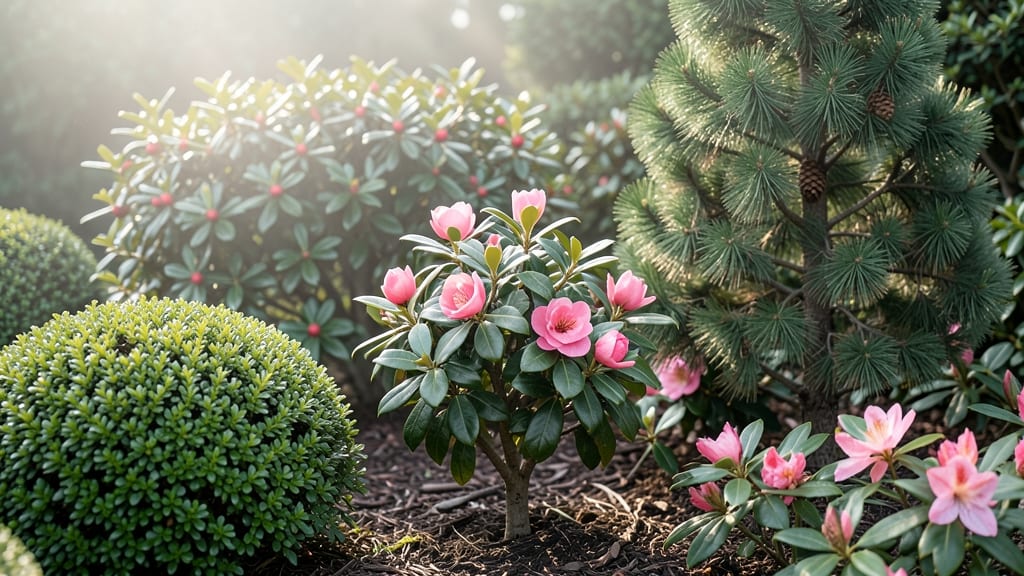
Identifying evergreen bushes doesn't have to feel like solving a puzzle—just study the leaves and bark. 🌿 I've spent years comparing holly's spiky edges to rhododendron's soft, leathery texture, and once you know these visual clues, your garden will transform from a guessing game into a confident landscape.
The right evergreen can anchor your yard year-round, and knowing their unique traits means choosing the perfect one for your space.
Start with leaf shape: holly has glossy, toothed edges with sharp points, while boxwood leaves are smooth and oval with a subtle sheen. Needle size matters too—arborvitae's flat, fan-like needles stand out against rhododendron's rounded, waxy foliage.
These details aren't just for show; they tell you how much sunlight the plant needs, how fast it grows, and even how cold it can handle.
Once you recognize these features, pruning and planting become intuitive. A holly bush's rigid structure makes it ideal for hedges, while rhododendron's delicate blooms thrive in shaded spots. You'll spot problems early—yellowing needles on arborvitae often signal overwatering, while boxwood's crisp edges reveal winter burn.
Confidence in identification means healthier plants and a landscape that feels like it was designed just for you.
This works anywhere—city balconies, suburban backyards, or mountain gardens. Whether you're reviving an old hedge or planning a new border, these visual cues will help you pick the perfect evergreen for your climate and style. Let's get those bushes identified!
Natural Factors Affecting Identification
Understanding why evergreen bushes can be tricky to identify starts with recognizing the role of natural environmental and biological factors. These elements influence leaf shape, needle size, and overall growth patterns—key traits used to distinguish one species from another. Let’s break down the science behind these challenges.
Evergreen bushes, like all plants, exhibit genetic diversity even within the same species.
This variation can arise from: - Hybridization: Crossbreeding between closely related species (e.g., Rhododendron hybrids) creates intermediate traits, blurring identification lines. - Clonal Differences: Some bushes reproduce asexually (via cuttings or runners), leading to slight variations in leaf shape or needle texture. - Seed-Based Growth: Offspring from the same parent plant may inherit slightly different traits, affecting needle arrangement or color.
Actionable Tip: 🔍 Compare multiple samples—if you’re unsure, examine bushes from different locations or ask local nurseries about regional variations.
Evergreens adapt to their environment, and local climate conditions can alter their appearance:
- Temperature: Cooler climates often produce denser, smaller needles (e.g., Picea spruces), while warmer regions may yield broader leaves (e.g., Magnolia grandiflora).
- Sun Exposure: Full sun can make leaves thicker and darker, while shade may result in lighter, softer foliage or elongated needles.
- Soil pH and Nutrients: Acidic soils (common in pine forests) favor Ericaceae family plants (like azaleas), while alkaline soils may stunt growth or change leaf color.
Pro Tip: ✨ Note your region’s climate—some evergreens (e.g., Chamaecyparis lawsoniana) grow differently in coastal vs. inland areas.
A bush’s maturity level dramatically impacts its identifiable features:
- Juvenile vs. Mature Phases: Young bushes may have softer, broader leaves that harden into needles as they age (e.g., Juniperus species).
- Seasonal Changes: Needles may appear darker or more vibrant in spring due to new growth, while winter can cause dormancy-related browning (not disease).
- Pruning or Damage: Over-pruned bushes develop unusual shapes or regrowth patterns that don’t match standard guides.
Quick Fix: ⏰ Check for growth rings or bud scales—older branches often reveal truer species traits.
Environmental stressors like insects or pathogens can distort a bush’s natural appearance:
- Spider Mites or Scale: Cause yellowing, curling, or stunted needles, making identification harder.
- Fungal Infections: Phytophthora root rot can lead to premature needle drop, while Rhizoctonia may cause blackened stems.
- Herbivory: Deer or insects may strip leaves, leaving only skeletal branches that don’t match field guides.
Prevention Tip: 💡 Inspect stems and undersides—healthy foliage is your best clue for accurate ID.
How a bush is grown or maintained can alter its traits:
- Rootbound or Container-Grown: Restricted roots may produce smaller, denser foliage than field-grown specimens.
- Fertilizer Use: Over-fertilization can lead to lush but uncharacteristically large leaves (e.g., Ilex holly).
- Propagation Methods: Grafted bushes (common in nurseries) may show unusual leaf patterns from the rootstock.
Nursery Hack: 🌱 Ask for cultivar names—many "evergreens" sold commercially are hybrids with modified traits.
Key Takeaway: Evergreen identification isn’t just about memorizing shapes—it’s about reading the context. Combine leaf traits with environmental clues, and you’ll narrow down the options like a pro!
Quick Fixes for Common Evergreen ID Confusion
Identifying evergreen bushes can feel like solving a puzzle when you’re staring at a sea of similar-looking foliage. But with the right approach, you can turn confusion into clarity—fast.
Below are practical solutions tailored to the most common challenges, from leaf shape mix-ups to needle size dilemmas, plus prevention tips to keep your green thumb sharp.
If your evergreen’s leaves blur together with others, focus on these three key distinctions: - Needle-like vs. Scale-like: Use a magnifying glass to check if leaves are tiny, overlapping scales (like juniper) or slender needles (like pine). - Arrangement: Are they clustered in bundles (e.g., spruce) or spread randomly (e.g., arborvitae)?
Twist a branch gently to spot the pattern. - Texture: Run your fingers along the leaf. Smooth edges (e.g., boxwood) vs. serrated or spiky (e.g., holly) can be a game-changer.
Pro Tip: 💡 Snap a close-up photo in natural light—angles reveal details your eyes might miss. Compare it side-by-side with online guides (like this USDA database).
Evergreens with fine needles (e.g., pine) vs. broad leaves (e.g., rhododendron) can be tricky. Follow this 3-step trick:
- Pick a sample: Grab 3–5 needles/leaves from different parts of the bush.
- Lay them flat: Use a ruler to measure the widest point (not the length).
Example: - Pine needles: 1–5 mm wide (like a toothpick). - Douglas fir: Flat, 1–2 cm wide (like a ribbon). 3. Check the feel: Roll a needle between your fingers—soft and flexible (fir) vs. stiff and sharp (pine).
Prevention Tip: ✨ Keep a needle-size cheat sheet in your gardening journal. Jot down measurements and snap reference photos during pruning season.
Evergreens aren’t always green! A blue-green tint might signal juniper, while glossy dark green could be boxwood. Here’s how to tell: - Sun exposure: Shade-loving bushes (e.g., rhododendron) often have deeper, richer hues.
Sun-baked ones (e.g., cypress) may fade to grayish-green. - Underside check: Flip a leaf—silvery or rusty undersides (e.g., holly) vs. uniform green (e.g., yew). - Seasonal test: If the bush turns bronze or purple in winter, it’s likely a blue atlas cedar or dwarf Alberta spruce.
Fix It Fast: 🌡️ Compare your bush to a fresh sample from a local nursery. Staff often know regional varieties inside-out!
Stuck? Use this decision tree to zero in on the culprit:
| Question | Yes → Likely Match | No → Next Step |
|---|---|---|
| Are leaves scale-like? | Juniper, cypress | Check needle shape |
| Needles in bundles? | Spruce, pine | Measure width |
| Leaves broad & flat? | Rhododendron, boxwood | Check underside color |
| Bush spiky to touch? | Holly, pyracantha | Compare fruit/seeds |
Prevention Tip: 🎯 Label your bushes at planting! Use stakes with the variety name—future you will hug you for it.
- Assuming all evergreens are pine: Only 3 types of trees are "true pines" (white, red, Scotch).
Most "pine-like" bushes are spruces, firs, or junipers. - Ignoring bark texture: Rough, shaggy bark (e.g., Douglas fir) vs. smooth (e.g., boxwood) can be a dead giveaway. - Over-relying on color: Some bushes (like golden hinoki cypress) change hue with sunlight—compare multiple samples.
Final Thought: 🌟 The more you handle evergreens, the easier ID becomes. Start a "mystery bush" scrapbook—glue in leaves, jot notes, and watch your skills grow! For stubborn cases, consult a local arborist or post photos in gardening forums like Gardeners.com.
Frequently asked questions
How do I tell the difference between holly and boxwood leaves?
Holly leaves have sharp, spiky edges with glossy surfaces and often grow in pairs, while boxwood leaves are smooth, oval, and arranged alternately along the stem. Holly also produces bright red berries, whereas boxwood has small, insignificant flowers. Check for these distinct features to make the ID.
Can I use leaf size alone to identify evergreen bushes?
No, leaf size alone isn't enough—you should also compare texture, arrangement, and color. For example, rhododendron leaves are large (2-6 inches) and leathery, while arborvitae needles are tiny (1/8 inch) and scale-like. Always examine multiple traits together for accurate identification.
Why do some evergreen bushes change color in winter?
Color changes in winter often indicate cold-hardy species like blue atlas cedar (turns bronze) or dwarf Alberta spruce (purple-tinged). These shifts are natural adaptations to protect foliage from winter stress. If the color change is sudden or accompanied by browning, it might signal disease rather than seasonal adaptation.
What's the best time of year to identify evergreen bushes?
Spring and early summer are ideal—this is when foliage is freshest and most representative of the species. Avoid winter when some evergreens may appear stressed or discolored. If you must identify in winter, compare your bush to healthy reference samples from warmer months.
Can I use a smartphone app to help identify evergreen bushes?
Yes! Apps like PictureThis or PlantNet use image recognition to help identify plants. For best results, take clear photos of both leaves and bark in good lighting. While not perfect, these tools can narrow down your options before consulting a field guide or expert.