
Diseases
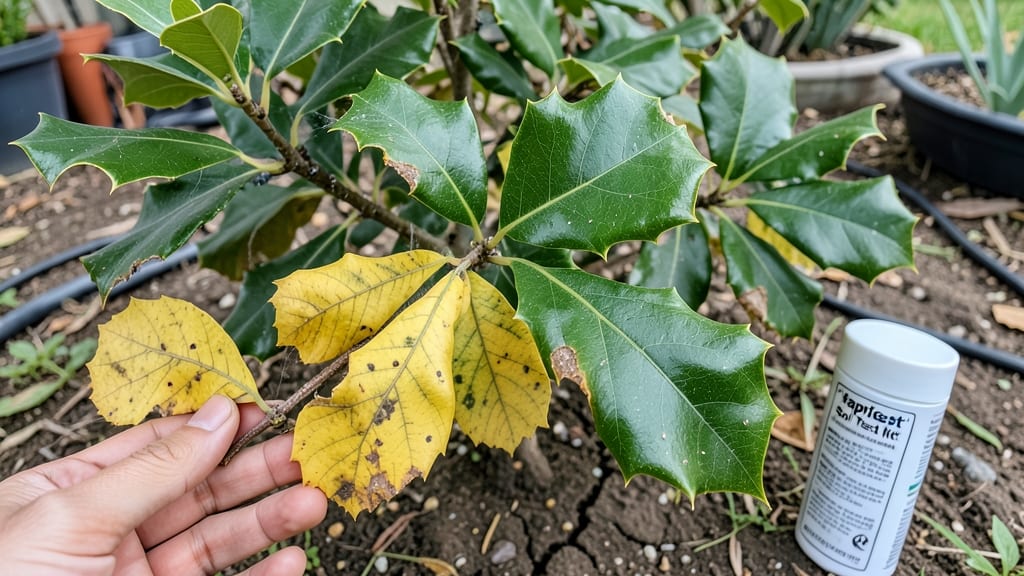
Your holly bush turning yellow could be a cry for help from roots or leaves—here’s how to diagnose it fast before it’s too late. 🌿 I’ve seen yellow holly leaves signal everything from overwatering to a hidden nutrient crisis, and the fix depends on spotting the exact pattern of discoloration first.
Start by checking the edges of the leaves: yellowing along veins often means iron chlorosis, while uniform yellowing on younger leaves points to overwatering. Fungal leaf spot shows up as yellow patches with dark spots, while pests like spider mites leave a dusty yellow film.
Grab a magnifying glass—this is where the clues hide. Once you identify the cause, the solution is straightforward: adjust watering, amend soil with chelated iron, or apply fungicide for leaf spot. I’ve revived holly bushes from both nutrient deficiencies and fungal infections in under 2 weeks with the right approach.
The key is acting before the yellow spreads to new growth. If the entire bush looks sickly, it might be time to call in a local arborist—some issues run deeper than DIY fixes can handle.
Root Causes Behind Yellowing Holly
Holly bushes turning yellow can be a frustrating sight, but understanding the why behind it is the first step to restoring their vibrant green. Below, we break down the most common culprits—each with a clear scientific explanation and actionable insights to help you diagnose the issue accurately.
Yellowing holly leaves often signal a nutrient imbalance, particularly a lack of iron, nitrogen, or magnesium. These deficiencies disrupt chlorophyll production, causing leaves to turn pale yellow (a condition called chlorosis).
- Iron Deficiency (Iron Chlorosis) 🔬 - Why it happens: Holly prefers slightly acidic soil (pH 4.5–6.0).
If your soil is too alkaline (pH > 7.0), iron becomes unavailable to the plant, even if it’s present in the soil. - Actionable fix: Test your soil’s pH and amend it with elemental sulfur or peat moss to lower alkalinity.
For quick relief, apply chelated iron (like iron sulfate) to the soil or use a foliar spray.
- Nitrogen Shortage (General Yellowing) 🌿 - Why it happens: Nitrogen is essential for leaf growth and chlorophyll.
If your holly isn’t getting enough (common in poor or overworked soil), older leaves yellow first, then spread to new growth. - Actionable fix: Feed your holly with a balanced fertilizer (10-10-10 or 20-20-20) in early spring. Organic options like composted manure or fish emulsion work well too.
- Magnesium Deficiency (Interveinal Yellowing) 📏 - Why it happens: Magnesium is a key component of chlorophyll. A deficiency causes yellowing between leaf veins (while veins stay green).
Compacted or sandy soils often lack this mineral. - Actionable fix: Apply Epsom salt (magnesium sulfate)—sprinkle 1–2 tablespoons per foot of plant height around the base and water thoroughly.
Holly bushes are drought-tolerant but hate soggy roots, making watering issues a top cause of yellowing leaves.
- Overwatering (Root Rot Risk) 🚨 - Why it happens: Holly prefers well-draining soil.
If roots sit in waterlogged conditions, they suffocate, leading to root rot (caused by fungi like Phytophthora), which starves the plant and turns leaves yellow. - Actionable fix: - Improve drainage by amending soil with perlite or coarse sand. - Ensure the plant isn’t in a low-lying area where water pools. - Let the top 1–2 inches of soil dry out between waterings.
- Underwatering (Stress-Induced Yellowing) 💦 - Why it happens: While holly is drought-resistant, prolonged dry spells cause leaves to yellow and crisp at the edges.
The plant prioritizes water to new growth, sacrificing older leaves. - Actionable fix: - Water deeply 1–2 times per week (more in extreme heat). - Use mulch (2–3 inches) to retain moisture and regulate soil temperature.
Holly bushes are prone to sap-sucking pests and fungal infections, both of which can trigger yellowing.
- Spider Mites and Scale Insects 🕷️🐛 - Why it happens: These pests pierce leaves, draining nutrients and causing yellow stippling or patches.
They thrive in dry, hot conditions. - Actionable fix: - Blast off mites with a strong spray of water. - Use neem oil or insecticidal soap for severe infestations. - Introduce beneficial predators like ladybugs or lacewings.
- Fungal Leaf Spot (e.g., Cercospora or Septoria) 🍄 - Why it happens: Fungal spores spread in humid, rainy conditions, causing yellow-brown spots with dark borders.
Infected leaves may drop prematurely. - Actionable fix: - Remove and destroy infected leaves (don’t compost them). - Apply copper fungicide or baking soda spray (1 tbsp baking soda + 1 quart water + a drop of dish soap) every 7–10 days. - Improve air circulation by pruning dense growth.
- Hollyhock Rust (Caused by Puccinia Fungus) 🌪️
- Why it happens: While more common in hollyhocks, some holly varieties can host rust spores, leading to orange pustules on undersides of leaves and yellowing above.
- Actionable fix:
- Prune and dispose of infected foliage.
- Avoid overhead watering to reduce spore spread.
Extreme temperatures or improper light exposure can shock your holly into turning yellow.
- Sun Scorch (Too Much Direct Sun) ☀️🔥 - Why it happens: Young or newly planted holly may develop yellow patches on sun-exposed leaves if not acclimated.
Mature holly can also scorch in intense afternoon sun, especially in dry conditions. - Actionable fix: - Provide afternoon shade (especially in hot climates). - Gradually introduce young holly to full sun over 2–3 weeks.
- Winter Burn (Cold + Wind Damage) ❄️💨
- Why it happens: Holly leaves can freeze and turn yellow/brown in winter desiccation (when cold, dry winds pull moisture from leaves).
- Actionable fix:
- Water deeply before the first frost to build root reserves.
- Apply a 2–3 inch layer of mulch around the base to insulate roots.
- Use burlap windbreaks in exposed areas.
- Transplant Shock (Post-Moving Stress) 🌳🚛 - Why it happens: Newly transplanted holly may drop leaves or turn yellow as it adjusts to its new environment.
Roots take time to establish. - Actionable fix: - Water deeply every 2–3 days for the first month. - Avoid fertilizing for 4–6 weeks post-transplant. - Prune any wilted or yellow leaves to redirect energy to root growth.
Pro Tip 💡: Before treating, take a close-up photo of the yellowing and note its pattern (edges, veins, spots). This helps narrow down the cause—whether it’s nutrient-related, pest-driven, or environmental!
Quick Fixes for Yellow Holly Leaves
Yellowing holly leaves can be a sign of stress, disease, or environmental issues—but the good news is, most problems have simple solutions. Below, we’ve mapped out practical fixes based on the most common causes, along with prevention tips to keep your holly bush lush and green.
Let’s get your plant back to its vibrant self!
Fix:
- 🔥 Check the soil moisture – Stick your finger 1–2 inches into the soil. If it’s soggy, your holly is getting too much water.
- ⏰ Adjust your watering schedule – Hollies prefer moderate moisture but hate "wet feet." Water only when the top inch of soil feels dry.
- 🏗️ Improve drainage – If your holly is in a container, add perforations to the pot or repot with well-draining soil mixed with perlite or sand. For in-ground plants, amend the soil with compost or organic matter to help excess water drain.
Prevention Tips: ✨ Use a moisture meter to avoid guesswork. ✨ Water in the morning so excess moisture evaporates during the day. ✨ Avoid mulching too close to the stem—keep it 3–4 inches away to prevent rot.
Fix:
- 💦 Water deeply and slowly – When the soil is dry, give your holly a slow, thorough soak (about 1–1.5 gallons for a mature bush) until water drains from the bottom.
- 🌡️ Mulch properly – Apply 2–3 inches of organic mulch (like shredded bark or pine straw) around the base to retain moisture and regulate soil temperature.
- 🚿 Consider a drip irrigation system – If your holly is in a hot, dry climate, this ensures consistent, gentle watering without over-saturating the roots.
Prevention Tips: 💡 Group holly bushes together to create a microclimate that retains moisture. 💡 Water early in the day to reduce evaporation. 💡 Use drought-resistant varieties (like Ilex × ‘Nellie R. Stevens’) if you live in an arid area.
Fix:
- 🍳 Prune infected leaves immediately – Use sterilized pruners to remove yellow, spotted, or mushy leaves and dispose of them in the trash (not compost).
- 🧼 Apply a fungicide – Spray with a copper-based fungicide or neem oil solution (1 tsp neem oil + 1 quart water) every 7–10 days until the issue clears.
- 🌿 Improve air circulation – Thin out dense foliage or space plants farther apart to reduce humidity around leaves.
- 🔪 For root rot: Dig up the plant, trim away mushy roots, and repot in fresh, sterile soil with perlite for aeration.
Prevention Tips: 🔥 Water at the base (not overhead) to keep leaves dry. 🔥 Avoid overhead sprinklers—they spread fungal spores. 🔥 Plant hollies in full sun (they need 6+ hours of sunlight daily) to prevent excess moisture on leaves.
Fix:
- 📊 Test your soil – Use a home soil test kit to confirm deficiencies before treating.
- 💪 Fertilize appropriately:
- For nitrogen (yellowing lower leaves): Apply a balanced fertilizer (10-10-10) in early spring.
- For iron (yellowing between veins): Use an iron chelate or Epsom salt (1 tbsp per gallon of water, sprayed on leaves).
- For magnesium (yellowing edges): Work gardening lime into the soil in early fall.
- 🍎 Feed lightly – Hollies are low-maintenance; over-fertilizing can burn roots. Stick to one feeding per year in spring.
Prevention Tips: ✨ Use compost or aged manure as a slow-release organic fertilizer. ✨ Avoid synthetic fertilizers if your soil is already fertile. ✨ Mulch with compost to gradually improve soil health over time.
Fix:
- 👨🍳 Inspect leaves closely – Look for tiny webs, sticky residue (honeydew), or small bugs on stems.
- 🔪 Blast off pests – Spray leaves with a strong stream of water to knock off aphids or spider mites.
- 🍎 Use insecticidal soap or neem oil – Mix 1 tbsp neem oil + 1 tsp mild dish soap per quart of water and spray every 5–7 days until pests are gone.
- 🐝 Encourage beneficial insects – Ladybugs and lacewings eat aphids naturally. Plant marigolds or dill nearby to attract them.
Prevention Tips: 💡 Keep your holly healthy—stressed plants attract more pests. 💡 Remove fallen leaves where pests hide over winter. 💡 Avoid broad-spectrum pesticides—they kill beneficial insects too.
Fix:
- 🌞 Shield from extreme heat – If your holly is in a hot, sunny spot, provide afternoon shade (especially in summer).
- ❄️ Protect from cold snaps – Young hollies or newly planted ones may need winter mulch (4–6 inches of straw) to insulate roots.
- 🌱 Give it time after transplanting – If yellowing started after moving, water deeply for 2 weeks and avoid fertilizing until new growth appears.
Prevention Tips: 🌡️ Choose the right location—hollies thrive in partial shade to full sun (depending on variety). 🌡️ Avoid transplanting in extreme heat or cold—spring or fall is best. 🌡️ Acclimate container-grown hollies before planting outdoors (gradually expose them to outdoor conditions).
- 🌿 Prune in late winter/early spring to remove dead or yellowing branches and encourage new growth.
- 🚫 Avoid pruning in fall—it can stimulate tender growth that won’t survive winter.
- 📅 Monitor regularly – Check leaves weekly for early signs of trouble (yellowing, spots, or pests).
With these fixes, your holly should bounce back in 4–8 weeks—just give it time, patience, and the right care. If the problem persists, consider consulting a local nursery or Extension service for a soil/pest test. Happy gardening! 🌿✨
Frequently asked questions
Why are the newer leaves on my holly bush turning yellow first?
This is often a sign of overwatering or nutrient toxicity. Holly bushes prioritize water and nutrients for new growth, so when there's too much water or fertilizer, the plant can't absorb everything properly. Check if the soil stays soggy for more than a day after watering, and reduce watering to 1-2 times per week with 1-2 inches of water each time. If you recently fertilized, flush the soil with water to prevent salt buildup.
What does yellowing between the veins mean for my holly bush?
Yellowing between the veins (while veins stay green) is classic iron chlorosis, caused by either iron deficiency or alkaline soil (pH >7.0). Holly thrives in acidic soil (pH 4.5-6.0). Test your soil and amend with elemental sulfur or peat moss to lower pH. For quick results, apply chelated iron as a soil drench or foliar spray every 2-3 weeks until new growth appears.
Are yellow holly leaves contagious to other plants?
Not usually, but if the yellowing is caused by fungal diseases like leaf spot, spores can spread to nearby plants. Remove and destroy infected leaves immediately (don't compost them). For fungal issues, use copper fungicide or baking soda spray (1 tbsp baking soda + 1 quart water + dish soap) on affected plants. Always clean pruners with rubbing alcohol between cuts to prevent cross-contamination.
Will my holly bush recover if most of its leaves are already yellow?
Yes, but it depends on the cause. If the yellowing is due to environmental stress (watering or light issues), your holly can recover within 4-8 weeks with proper care. For nutrient deficiencies, new growth should appear in 2-3 weeks after treatment. However, if the issue is root rot or severe fungal infection, recovery may take longer or require professional help. Prune all yellow leaves to redirect energy to healthy growth.
Can I use Epsom salt on my holly bush for yellow leaves?
Yes, but only if the yellowing shows magnesium deficiency symptoms (yellowing between veins). Mix 1 tablespoon of Epsom salt per gallon of water and spray it on leaves until runoff occurs. Apply this solution every 2-4 weeks during growing season. Avoid using Epsom salt if your holly has iron chlorosis—it won't help and could worsen the problem by increasing soil alkalinity.