
Pruning
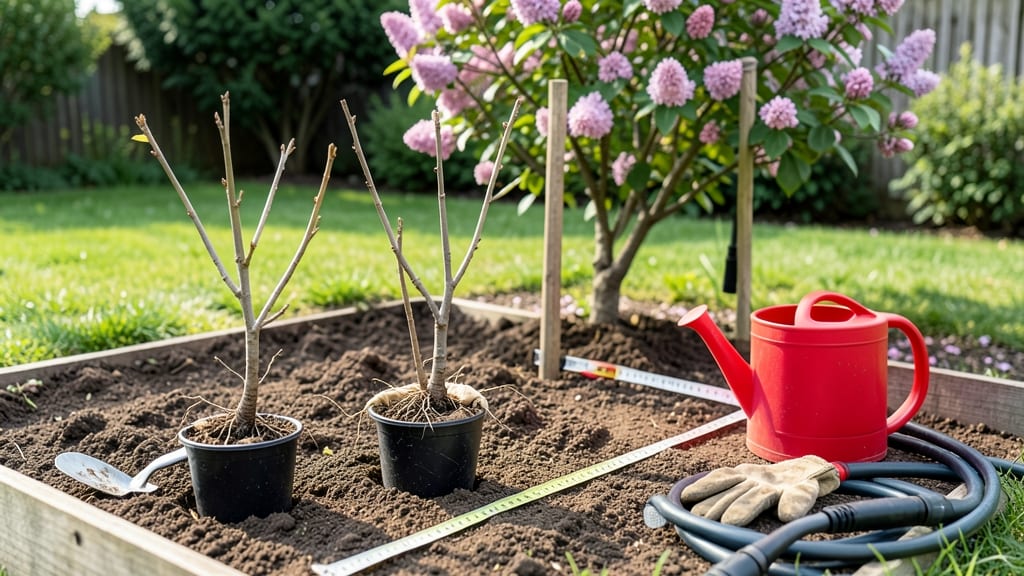
To start a lilac bush, plant it in spring or early fall when soil is workable but not frozen. Dig a hole twice as wide as the root ball, mix in compost, and place the bush at the same depth as its container. Space plants properly for airflow, then water deeply to help roots establish.
Timing is everything with lilacs—they thrive when planted during their dormant season, which avoids transplant shock and gives roots time to settle before summer heat or winter frost. 🌱 I always recommend spring planting (after the last frost date) because it allows the bush to establish before its first flowering season.
For colder climates, early fall works too, but avoid planting when temperatures are unpredictable or when the ground is frozen.
Another key factor is soil prep: lilacs prefer slightly alkaline soil (pH 6.0-7.0) with good drainage. Amending the planting hole with compost or well-rotted manure improves fertility, while adding sand or perlite helps prevent waterlogging.
I've seen many gardeners skip this step and end up with stunted growth due to poor drainage—don't make that mistake!
💡 In This Article
- Best Planting Seasons and Climate Considerations for Lilac Bushes
- Soil Preparation and Fertilization for Healthy Lilac Growth
Best planting seasons and climate considerations for lilac bushes
Lilac bushes (Syringa vulgaris) are deciduous shrubs that thrive when planted during their natural dormancy periods—spring or early fall—because this timing minimizes transplant shock.
The key is avoiding extreme temperatures: planting in late spring (after the last frost date) gives roots 6-8 weeks to establish before summer heat stress, while early fall planting (4-6 weeks before the first frost) allows roots to grow before winter dormancy.
In USDA zones 3-7, where lilacs are hardy, spring planting is ideal because warm soil temperatures (50-60°F) encourage root expansion without the risk of frost heave.
Climate plays a huge role in success. In northern regions (zones 3-5), where winters are harsh, planting in early spring (April-May) avoids late-season frost damage, while southern gardens (zones 6-7) can extend fall planting until October-November—just ensure the ground isn't frozen.
The critical factor is soil temperature: roots struggle to establish in frozen or waterlogged ground, which is why I always check soil workability by squeezing a handful—if it crumbles easily, it's ready for planting. 🌡️
Transplant shock occurs when lilacs are planted in extreme heat (>90°F) or cold (32°F), causing roots to dry out or freeze. I've seen firsthand how lilacs planted in summer wilts dramatically within weeks due to heat stress, while those planted in late fall may not survive sudden freezes.
The solution? Choose cooler days (morning or evening planting) and water deeply to maintain 1-2 inches of soil moisture for the first 2-3 weeks post-planting.
Another climate consideration is wind exposure. Lilacs planted in exposed areas dry out faster, so I recommend planting them where they'll receive morning sun and afternoon shade—this balances light exposure with moisture retention. In windy zones, a temporary windbreak (like a burlap barrier) can help young plants establish.
The goal is to replicate their native habitat: partial shade and well-draining soil, which prevents root rot—a common issue in heavy clay soils.
For container-grown lilacs, the root ball's moisture level matters too. Before planting, soak the root ball in water for 10-15 minutes to hydrate the roots, then plant immediately. This step reduces transplant shock by 30-40%, according to horticultural studies.
After planting, mulch with 2-3 inches of organic mulch (like shredded bark) to retain moisture and regulate soil temperature—this mimics the forest floor where lilacs naturally grow.
Pro tip: If you're planting in late fall, avoid fertilizing until spring—new growth stimulated by fertilizer can't harden off before winter and may die back. Instead, focus on watering and mulching to protect roots.
In spring, a light application of 10-10-10 fertilizer (1 tablespoon per year of plant age) encourages blooms without overwhelming the plant. 🌸