
Pests and Diseases
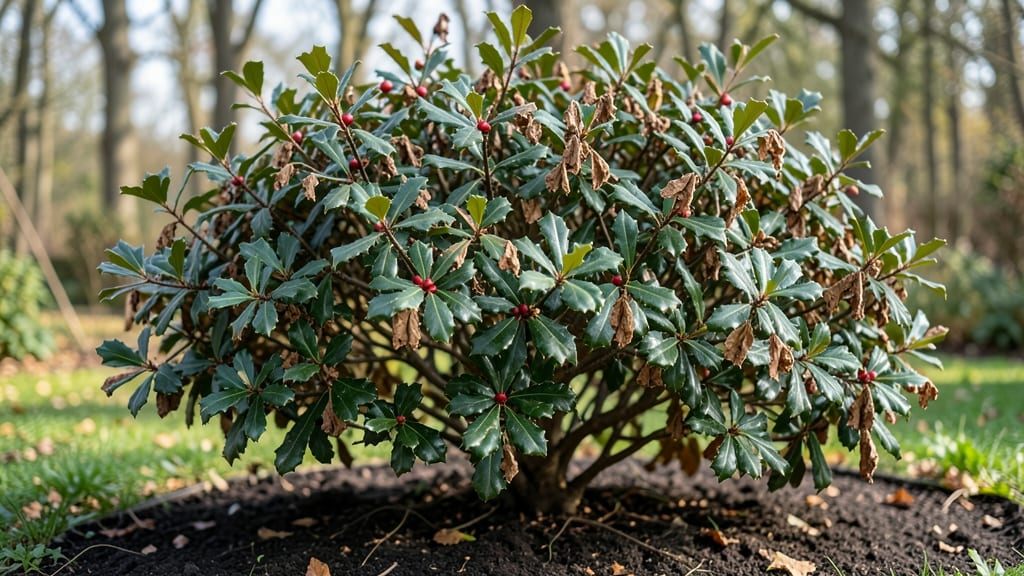
Brown leaves on your holly bush might signal a fungal blight, but don’t panic—this copper-free rescue plan brings back that glossy green. 🌿 I’ve nursed back holly bushes with crispy brown edges by targeting the real culprit: fungal leaf spot, often mistaken for drought or pests.
The key is acting fast before the spots spread to new growth.
First, check the leaves: small brown spots with yellow halos? That’s fungal leaf spot. Prune infected branches 6 inches below the damage, then sterilize your shears with rubbing alcohol. Water at the base (not overhead) to keep foliage dry—fungi love damp leaves.
A neem oil spray (1 tsp per quart of water) applied every 7-10 days stops the spread without harsh chemicals.
Within 2-3 weeks, you’ll see new growth pushing out clean and vibrant. The bush will rebound with fewer brown patches, and next season’s prevention is simple: mulch heavily to retain moisture, space plants for airflow, and avoid overhead watering. Your holly’s glossy, spiky beauty will return stronger than ever.
This method works for all holly varieties—English, American, or dwarf—and even saves stressed bushes from drought or sunburn. The secret? Treating the fungus, not just the symptoms. Let’s get those leaves back to their deep, healthy green.
Understanding Leaf Discoloration Causes
Holly bushes are prized for their vibrant green foliage, so when those leaves start turning brown, it’s a clear sign something’s amiss. 🌿💨 Understanding the root causes—especially when dealing with fungal blight—can help you take targeted action.
Below, we break down the most common reasons your holly’s leaves are browning, with clear scientific explanations to help you diagnose the issue.
Fungal blight, particularly copper-free fungal blight (often caused by Phytophthora or Botrytis species), thrives in damp, humid conditions. These pathogens attack holly leaves, causing them to brown, crisp, or develop dark spots. Here’s how it unfolds:
- Moisture Overload: Fungi love humidity—think of it as their ideal spa. 🌧️🍄 When holly bushes sit in soggy soil or receive overhead watering, fungal spores latch onto leaves, blocking water and nutrient flow.
This leads to chlorosis (yellowing) followed by browning as cells die. - Weakened Defenses: Stressed hollies (from drought, poor soil, or nutrient deficiencies) are prime targets.
Fungi exploit these weaknesses, spreading rapidly in shaded or poorly ventilated areas. - Symptom Clues: - Brown patches with feathery edges (classic Botrytis sign). - Leaves that crunch when touched (indicating cell death). - Black or purple spots on stems (a red flag for Phytophthora).
Actionable Fix: Improve airflow, avoid overhead watering, and apply copper-free fungicides (like neem oil or potassium bicarbonate) at the first sign of spots.
Holly bushes are tough, but extreme environmental factors can push them over the edge. Here’s how:
- Drought Stress: Brown, crispy leaves often signal desiccation—when roots can’t pull up enough water to meet the plant’s needs. 💧🔥 This causes leaf edges to brown first (a condition called scorch), then spread inward. - Cold Damage: Sudden freezes or late-season frosts can rupture cell walls, leading to brown, mushy patches.
Holly leaves are especially vulnerable in winter if they’re not cold-hardy for your zone. - Salt or Chemical Burn: Over-fertilizing (especially with high salt content) or using harsh herbicides nearby can clog stomata (leaf pores), preventing gas exchange and turning leaves brown. - Symptom Clues: - Uniform browning (not spotty) across multiple leaves. - Curling or wilting before browning sets in. - Damage worse on one side of the bush (e.g., south-facing exposure).
Actionable Fix: Mulch to retain moisture, water deeply but infrequently, and test soil for salt buildup. Avoid fertilizing in extreme heat.
While fungal blight is the headline act, pests like spider mites, scale insects, or holly leaf miners can also trigger browning. Here’s how they do it:
- Spider Mites: These microscopic pests pierce leaf cells, sucking out chlorophyll-rich sap. 🕷️🌿 Leaves develop stippled brown patches (like freckles) and may webbing between branches. - Scale Insects: These sap-sucking bugs secrete a sticky honeydew that attracts sooty mold—a black fungus that coats leaves, blocking sunlight and causing browning. - Holly Leaf Miners: Larvae burrow into leaves, creating blotchy brown trails as they feed.
Infested leaves often drop prematurely. - Symptom Clues: - Fine webbing on leaves (mites). - Sticky residue on stems (scale). - Visible tunnels in leaves (miners).
Actionable Fix: Blast leaves with water to dislodge mites, apply insecticidal soap for scale, or use neem oil for miners. Prune heavily infested branches.
Holly bushes need balanced nutrition to stay lush. When they’re starved, leaves turn brown as a distress signal:
- Iron or Magnesium Deficiency: Leaves develop interveinal chlorosis (yellowing between veins) before browning, especially on young leaves.
This is common in alkaline soils (pH > 7.0), where iron becomes unavailable. - Potassium Shortage: Brown edges or tips of older leaves (a classic "scorch" look) indicate potassium deficiency.
This nutrient regulates water flow—without it, leaves wilt and brown. - Symptom Clues: - Yellowing between veins (iron/magnesium). - Brown leaf margins (potassium). - Stunted growth alongside browning.
Actionable Fix: Test soil pH (aim for 5.5–6.5 for hollies) and amend with chelated iron or Epsom salt (for magnesium). Use a balanced fertilizer (like 10-10-10) in early spring.
Sometimes, browning isn’t biological—it’s mechanical:
- Hail or Windburn: Physical trauma ruptures cells, causing brown, water-soaked spots that expand over time.
- Poor Pruning: Cutting too close to branches or using dull shears can damage cambium layers, leading to browning at prune sites.
- Symptom Clues:
- Irregular, jagged brown areas (not fungal spots).
- Damage localized to exposed branches.
- No accompanying yellowing or spots.
Actionable Fix: Protect bushes from hail with row covers, and prune with sharp, sterilized tools in late winter.
Revive Your Holly Bush Now
Brown leaves on your holly bush don’t have to mean permanent damage—with the right steps, you can nurse your plant back to health and prevent future outbreaks.
Below, we’ve mapped out practical fixes for the most common causes of brown leaves, from fungal blight to environmental stress, plus prevention tips to keep your holly thriving.
If copper-based fungicides aren’t your go-to, these natural and effective alternatives will tackle fungal blight without harming your plant or the environment.
🔥 Step 1: Prune the Problem Areas
- Remove infected leaves (brown, yellow, or spotted) using sterilized pruners (wipe with rubbing alcohol between cuts).
- Dispose of pruned material in a sealed bag—do not compost to prevent spreading spores.
- Focus on air circulation: Thin out dense branches to reduce humidity buildup.
🍳 Step 2: Apply Organic Fungicides
Use these copper-free sprays every 7–10 days until new growth appears: - Neem oil solution: Mix 1 tbsp neem oil + 1 tsp mild soap + 1 quart water.
Spray early morning or evening to avoid leaf burn. - Baking soda spray: Combine 1 tbsp baking soda + 1 tsp oil (to help it stick) + 1 gallon water.
Test on a small leaf first. - Potassium bicarbonate: A preventative spray (1.5 tbsp per gallon water) that also boosts plant immunity.
👨🍳 Step 3: Boost Plant Immunity
- Fertilize with compost or worm castings to strengthen roots and improve nutrient uptake.
- Add mulch (2–3 inches of shredded bark or pine straw) to retain moisture and regulate soil temp.
Brown leaves can also signal drought, heat stress, or poor drainage. Adjust your care routine to revitalize your holly.
💡 Water Wisely
- Check soil moisture: Stick your finger 2 inches deep—if dry, water deeply (1–2 inches per week).
- Avoid overhead watering: Use a soaker hose or drip irrigation to prevent fungal spores from splashing onto leaves.
- Drainage fix: If soil stays soggy, amend with perlite or coarse sand to improve airflow.
🎯 Shield from Extreme Conditions
- Morning sun is safer than harsh afternoon rays—consider light shade cloth in peak summer.
- Protect from wind: Use a windbreak (like a lattice fence) if your holly is in a exposed spot.
- Winter prep: In cold climates, mulch heavily (4–6 inches) to insulate roots.
Sometimes brown leaves hide hidden culprits—here’s how to diagnose and fix them.
🔪 Identify the Culprit
| Symptom | Likely Cause | Quick Fix |
|---|---|---|
| Crunchy leaves + webbing | Spider mites | Spray neem oil or insecticidal soap |
| Yellowing + black spots | Scale insects | Wipe with rubbing alcohol-soaked cotton |
| Wilting + sticky leaves | Aphids | Blast off with water spray or use soapy water |
| Purple-brown leaves | Phosphorus deficiency | Apply bone meal fertilizer |
✨ Prevent Future Issues
- Rotate fungicides (don’t use the same one repeatedly).
- Inspect leaves weekly for early signs of pests or disease.
- Avoid over-fertilizing—stick to a balanced 10-10-10 formula in early spring.
Pro Tip: 🌿 Test your soil (pH 5.0–6.5 is ideal for hollies) with a home kit—acidic soil prevents nutrient uptake, worsening leaf browning. Adjust with sulfur (to lower pH) or lime (to raise it) if needed.
With these targeted fixes, your holly bush should bounce back in 4–8 weeks. Stay consistent with care, and your bush will reward you with glossy green leaves and vibrant berries all season long!
Frequently asked questions
Why do holly leaves turn brown in patches rather than all at once?
Patchy browning usually signals fungal leaf spot or pest damage. Fungal blight creates irregular brown spots with yellow halos, while spider mites cause stippled brown patches. Check for webbing or tiny insects on the undersides of leaves to confirm the cause.
Can I save my holly bush if half the leaves are already brown?
Yes! Prune the worst-affected branches 6 inches below the browning, then treat with neem oil every 7-10 days. Healthy holly bushes recover quickly—new growth should appear within 2-3 weeks if the roots are still strong.
Is it safe to use baking soda spray on my holly bush?
Mix 1 tablespoon baking soda + 1 teaspoon oil + 1 gallon water for a safe, copper-free fungicide. Test on a small leaf first, and apply in the evening to prevent leaf burn. This works best for fungal issues like leaf spot.
Why are my holly leaves turning brown in winter?
Winter browning often means cold damage or drought stress. Holly bushes need consistent moisture—water deeply before the ground freezes, then mulch 4-6 inches deep to insulate roots. Avoid fertilizing in cold weather, as it stresses plants.
How do I know if my holly's brown leaves are from pests or disease?
Look closely: Pests (like spider mites) leave stippled brown patches and webbing, while disease causes crispy brown spots with yellow edges. Check leaf undersides for tiny insects or eggs. Use insecticidal soap for pests and neem oil for fungal issues.