
Shrubs
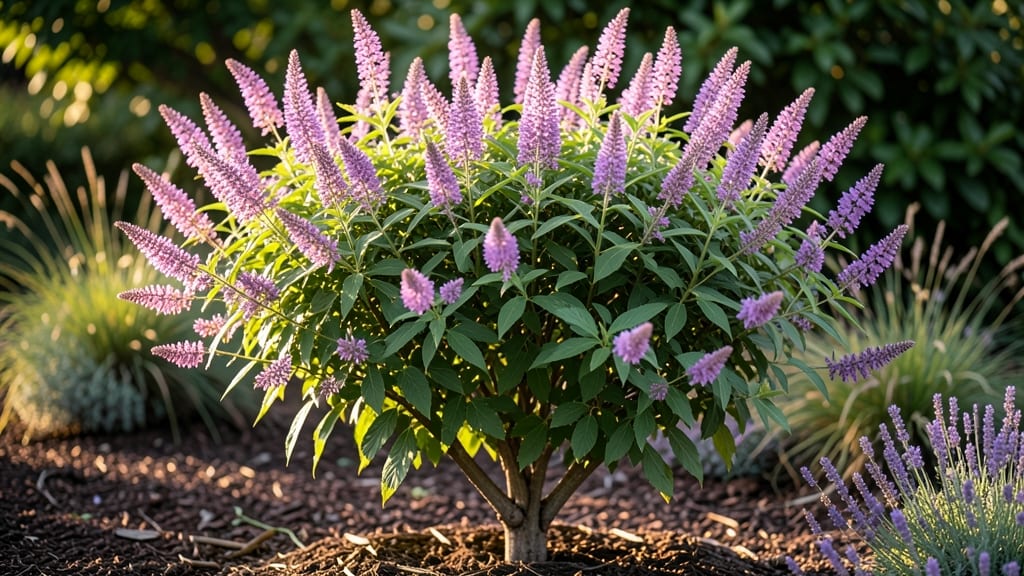
Your Texas garden could become a pollinator paradise with butterfly bush—drought-tolerant beauty that thrives in the heat while drawing swarms of butterflies. ✨ I planted mine last spring, and within weeks, monarchs, swallowtails, and hummingbirds made it their favorite stopover.
The key? Choosing the right variety (like 'Lo & Behold' or 'Pink Micro') and giving it full sun and well-draining soil.
The real magic happens in spring and fall, when blooms attract pollinators while requiring minimal water. Texas summers are no problem—this plant handles heat better than most shrubs, but mulch helps retain moisture. Just avoid soggy soil, or you'll invite root rot, which is the only real challenge here.
By late summer, you'll have a nearly maintenance-free shrub that keeps blooming until frost. The fragrance alone—sweet and honey-like—makes it worth growing. Prune back in winter to keep it tidy, and watch your garden transform into a living butterfly highway.
Perfect for borders, wildscapes, or even containers in smaller yards. Texas gardeners swear by it for both beauty and ecosystem benefits. Ready to turn your yard into a pollinator magnet?
📚 In This Guide
- What you need
- Instructions
- Tips and common mistakes
- Wrapping up and next steps
What you need
- ● Butterfly bush plants (Buddleia spp.): 1–3 mature plants (depending on desired size; dwarf varieties like 'Lo & Behold®' need less space).
- ● Choose native or Texas-adapted varieties (e.g., Buddleia mariae or Buddleia davidii 'Lo & Behold® Purple Haze').
- ● Well-draining soil: Amend heavy clay soil with 3–5 gallons of compost or 1–2 bags of potting mix (if planting in containers).
- ○ Optional: 1–2 cups of perlite or sand for improved drainage in sandy soils.
- ● Fertilizer: 10–10–10 slow-release granular fertilizer (1–2 lbs per plant at planting time).
- ○ Balanced liquid fertilizer (e.g., fish emulsion or 20–20–20) for mid-season feeding (optional).
- ● Watering supplies: Garden hose with soaker hose attachment or drip irrigation system (for deep watering).
- ● Watering can (for container-grown bushes).
- ● Mulch: 2–3 inches of organic mulch (e.g., shredded bark, pine straw, or wood chips) to retain moisture.
- ● Pruning tools: Bypass pruners (for clean cuts on stems up to ½ inch thick).
- ● Loppers (for thicker branches).
- ● Garden gloves (to protect hands from thorns on some varieties).
- ● Container gardening? 1–2 large pots (15+ gallons each) with drainage holes.
- ● Pollinator boost: Native wildflower seeds (e.g., Mexican sunflower or black-eyed Susan) to plant nearby.
- ● Pest control: Neem oil or insecticidal soap (for aphid or spider mite issues).
- ● Staking: 3–4 bamboo stakes + twine (if planting in windy areas).
Step-by-step guide to planting and maintaining butterfly bush in Texas
Here's how to grow a thriving butterfly magnet that survives Texas heat and drought.
🌱 Step 1: Select the Right Location and Planting Time
Choose a spot with full sun exposure (6+ hours daily) and well-draining soil—Texas clay can suffocate roots if not amended. I always plant in early spring (March-April) or fall (October-November) to avoid extreme summer heat stress during establishment. Dig a hole twice as wide as the root ball but only as deep.
Butterfly bush thrives in USDA Zones 5-9, making it perfect for all of Texas. If your soil is heavy clay, mix in 2-3 inches of compost to improve drainage. The key is avoiding waterlogged roots, which lead to root rot. Amend the hole with a handful of slow-release fertilizer to give your plant a nutrient boost right away.
🪴 Step 2: Plant and Water for Initial Establishment
Place the butterfly bush in the hole so the top of the root ball sits 1 inch above ground level. This prevents water from pooling around the stem. Backfill with native soil, pressing gently to remove air pockets. Water deeply right after planting to settle the soil and encourage root contact.
For the first 2-3 weeks, water 2-3 times per week until the soil is 6 inches deep and moist. You'll know it's right when water runs out the drainage holes but doesn't pool on the surface. Mulch with 2-3 inches of organic mulch (like shredded bark) to retain moisture and regulate soil temperature.
☀️ Step 3: Provide Ongoing Care for Drought Tolerance
Once established (after 6-8 weeks), butterfly bush becomes incredibly drought-tolerant. Water only when the soil feels dry 3-4 inches down. In Texas summers, this typically means every 7-10 days, but adjust based on rainfall. Overwatering is the fastest way to kill this plant—it's built to handle dry spells.
Fertilize in early spring with a balanced 10-10-10 fertilizer to encourage blooms. I use about ½ cup per plant. Avoid high-nitrogen fertilizers, which promote leafy growth at the expense of flowers. Prune back 1/3 of the plant in late winter to shape it and encourage dense, bushy growth.
✂️ Step 4: Prune and Maintain for Year-Round Beauty
Prune in late winter (February) before new growth begins. Cut back 1/3 of the plant to the main stems, removing any dead or crossing branches. This prevents overcrowding and improves airflow, which reduces disease risk. I always sterilize my pruners with rubbing alcohol between cuts to prevent bacterial spread.
Deadhead spent blooms throughout the season to encourage continuous flowering. Butterfly bush produces conical flower clusters that attract pollinators, so the more you remove faded blooms, the more flowers you'll get. In Zone 8-9, some varieties may bloom year-round with minimal care—just keep the soil slightly moist during extreme heat.
Tips & tricks for thriving butterfly bush in Texas
Here's what I've learned from years of growing these hardy beauties in Texas heat—tricks that'll help your butterfly bush flourish.
Soil Preparation Secret: Before planting, I always test my soil's drainage by digging a hole and filling it with water. If it doesn't drain within 2 hours, mix in 3-4 inches of coarse sand or perlite to improve aeration. The instructions mention 2-3 inches of compost, but for heavy Texas clay, I go one step further and add a handful of gypsum to break up compacted soil. This prevents the dreaded root rot that can kill butterfly bushes in our humid summers.
Watering Wisdom: The 2-3 inches of organic mulch recommendation is spot-on, but I've found that using pine straw mulch works even better in Texas—it breaks down slowly and adds acidity that butterfly bushes love. When watering those first 2-3 weeks, I check moisture by sticking my finger 3 inches down—if it feels dry, that's when I water deeply. This prevents the shallow watering that leads to weak roots.
Pruning Pro Tip: During that late winter pruning in February, I always look for crossing branches that create rubbing points—these can create wounds that attract pests. I cut these out first, then remove any dead wood, and finally shape the plant by cutting back 1/3 of the plant to the main stems. Sterilizing pruners between cuts (as mentioned) is crucial, but I also dip them in horticultural oil for extra protection against fungal spores.
Seasonal Care Strategy: In Zone 8-9, where many Texans live, I've noticed that butterfly bushes often bloom year-round if given the right care. After that 6-8 week establishment period, I switch to drip irrigation on a timer set for 15 minutes every 10 days during peak summer. This keeps the soil consistently moist without overwatering. The key is maintaining that 3-4 inch dryness test—if the soil feels dry at that depth, it's time to water.
Pro Tips for Butterfly Bush In Texas
- Here's what I've learned from years of growing these hardy beauties in Texas heat—tricks that'll help your butterfly bush flourish.
- Soil Preparation Secret: Before planting, I always test my soil's drainage by digging a hole and filling it with water.
- Watering Wisdom: The 2-3 inches of organic mulch recommendation is spot-on, but I've found that using pine straw mulch works even better in Texas—it breaks down slowly and adds acidity that butterfly bushes love.
Frequently asked questions
Got questions about growing a butterfly bush in Texas?
You’re not alone! Here are answers to the most common concerns—from planting tips to pest problems—so you can enjoy this vibrant, pollinator-friendly shrub with confidence.
Is butterfly bush truly drought-tolerant in Texas?
Yes! Once established, butterfly bush (Buddleia davidii) thrives in Texas’s heat and drought conditions. Its deep roots access water efficiently, and it requires minimal watering after the first year. Pro tip: Mulch around the base to retain moisture and suppress weeds.
When is the best time to plant butterfly bush in Texas?
The ideal window is fall (September–November) or early spring (February–March). Planting in fall gives roots time to establish before summer heat, while spring avoids winter freezes. Avoid planting in peak summer—young plants may struggle with heat stress.
How do I prevent pests like aphids or spider mites?
Butterfly bushes are generally pest-resistant, but aphids or mites can appear in hot, dry spells. Try these fixes:
- Spray plants with a hose to dislodge pests.
- Use neem oil or insecticidal soap for severe infestations.
- Encourage ladybugs—natural predators of aphids!
Prevention tip: Keep your bush healthy with balanced pruning and watering to boost its natural defenses.
Are there native Texas alternatives to butterfly bush?
If you prefer native plants, consider these pollinator magnets:
- Mexican Bush Sage (Salvia leucantha) – Drought-tolerant and deer-resistant.
- Blackfoot Daisy (Melampodium leucanthum) – White blooms loved by butterflies.
- Eastern Red Columbine (Aquilegia canadensis) – Hummingbird favorite.
While non-native, butterfly bush is not invasive in Texas if pruned regularly (see below).
How (and when) should I prune my butterfly bush?
Prune late winter or early spring (Jan–Feb) to shape the shrub and encourage new growth. Cut back:
- Dead or weak stems to the base.
- Overly long branches by ⅓ to maintain a bushy shape.
Bonus: Pruning also reduces seed production, slowing potential spread (if that’s a concern).
Why aren’t butterflies visiting my butterfly bush?
Butterflies may avoid your bush if:
- It’s not in full sun (6+ hours/day).
- You’ve used pesticides (even sprays for other plants).
- Flowers are overly pruned (leave some seed heads for late-season blooms).
Fix: Add a shallow water source (like a birdbath) nearby to attract thirsty pollinators!
Wrapping up and next steps
Growing a butterfly bush in Texas isn’t just about adding beauty to your landscape—it’s a rewarding way to support local ecosystems while thriving in the state’s unique climate. With its drought tolerance, vibrant blooms, and pollinator-friendly appeal, this shrub is a must-have for Texas gardeners.
Whether you’re a beginner or a seasoned green thumb, now’s the perfect time to plant one and watch your garden transform into a buzzing haven! 🌿🦋
Ready to take the next step? Pick your favorite variety, gather your supplies, and start planting—your future butterflies (and neighbors!) will thank you.