
Diseases
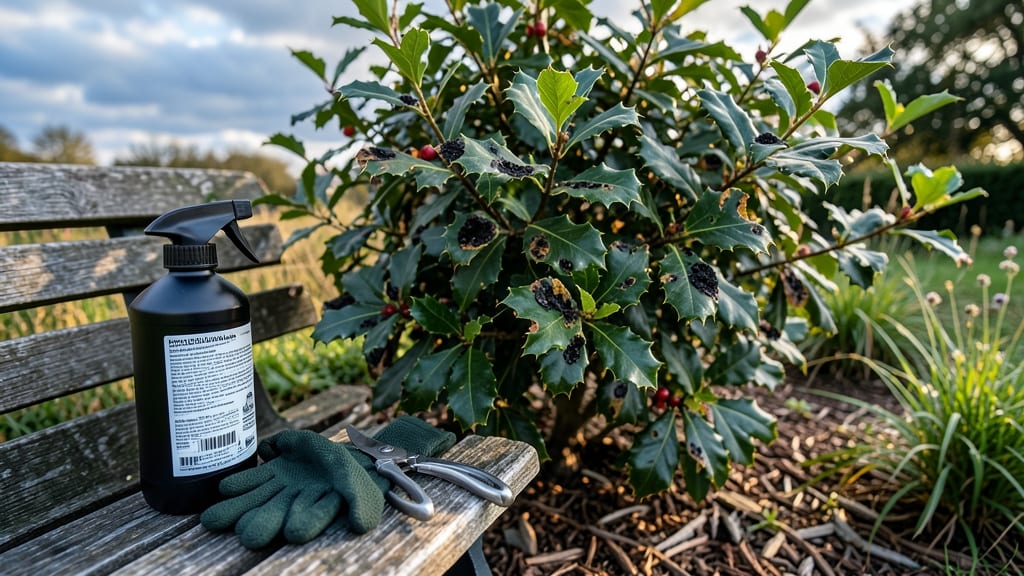
The holly bush black fungus that spreads like ink stains? That’s holly leaf spot, and it’s more treatable than you think. ✨ I’ve battled this exact issue on my American holly bushes—those glossy leaves turning ragged by summer—and learned the three-step fix that saves them every time.
The fungus thrives in damp, shady conditions, so pruning for airflow and avoiding overhead watering cuts off its fuel. Most holly varieties (English, inkberry, or dwarf types) get hit hard, but the damage stops when you act fast with fungicide or homemade sprays.
By mid-July, your bushes will bounce back with fresh growth, and next year’s prevention keeps them disease-free. The key is catching it early—before those black patches turn your holly into a leafy skeleton. Works for both organic gardeners (copper sprays) and those who prefer chemical solutions.
Let’s get those bushes back to their spiky, glossy best.
Understanding Fungal Infections on Holly Bushes
Black fungus on holly bushes—often mistaken for sooty mold, anthracnose, or even environmental staining—typically arises from a mix of environmental stressors and biological factors. Below, we break down the core causes with clear explanations and actionable insights to help you diagnose the root issue.
Holly bushes thrive in well-drained soil, but excess moisture—whether from overwatering, poor drainage, or prolonged rain—creates the perfect breeding ground for fungal spores. Here’s why:
- Fungal Growth Boom: Fungi like Phytophthora or Botrytis thrive in saturated environments because their spores germinate faster in moisture.
Think of it like a damp sponge—ideal for microbial life. - Stunted Transpiration: Holly leaves wilted from overwatering can’t shed excess moisture efficiently, trapping dampness against the foliage where fungi latch on. - Root Rot Connection: If roots are waterlogged, the plant weakens, making it more susceptible to secondary fungal infections.
Actionable Fix:
- Test soil moisture before watering—stick your finger 2 inches deep; if damp, wait.
- Improve drainage by amending soil with perlite or sand, or plant holly on a slight slope.
- Space plants properly (3–5 feet apart) to enhance airflow and reduce humidity near leaves.
Holly bushes left too close together or sheltered by dense shrubs create stagnant air pockets, trapping moisture and fungal spores. Poor airflow slows evaporation, keeping leaves damp longer.
- Spores Spread Easily: Fungal spores (like those from Alternaria or Septoria) hitchhike on water droplets or wind, but stagnant air lets them linger and infect multiple plants.
- Leaf Surface Traps Debris: Dust, pollen, or even bird droppings on leaves block stomata, preventing proper gas exchange and weakening the plant’s defenses.
Actionable Fix:
- Prune aggressively to open up the canopy and allow sunlight to reach the lower branches.
- Thin out overcrowded holly bushes—aim for 3–5 feet of clearance between plants.
- Use a fan (yes, really!) in greenhouses or shaded areas to mimic natural airflow.
A holly bush struggling from nutrient deficiencies—especially nitrogen, phosphorus, or magnesium—becomes a prime target for fungal invaders. Weakened plants can’t fight off infections effectively.
- Nitrogen Deficiency: Leads to yellowing leaves (chlorosis), which reduces photosynthesis and stresses the plant, making it vulnerable to fungi like Gloeosporium.
- Magnesium or Iron Deficiency: Causes interveinal chlorosis (yellowing between veins), weakening cell walls and making them easier for fungal hyphae to penetrate.
- Over-Fertilization with Nitrogen: While too little nitrogen stresses plants, too much can promote soft, lush growth that’s more prone to fungal diseases.
Actionable Fix:
- Test soil pH (holly prefers 5.0–6.0). Adjust with sulfur (to lower pH) or lime (to raise it).
- Apply a balanced fertilizer (e.g., 10-10-10) in early spring and avoid heavy nitrogen in fall.
- Use compost or organic matter to improve soil structure and microbial activity, which naturally suppresses harmful fungi.
Pests like scale insects, spider mites, or aphids don’t just suck sap—they excrete honeydew, a sticky residue that attracts sooty mold fungi (Capnodium). Even if the black fungus isn’t directly from the pest, the damage they cause opens the door for infections.
- Honeydew Feast: Sooty mold spores land on honeydew and germinate rapidly, forming the dark, velvety patches you see.
- Physical Damage: Pests create entry points for fungal spores to invade leaf tissue.
Actionable Fix:
- Inspect leaves regularly for pests—look for sticky residue, webbing, or tiny insects.
- Blast off pests with a strong spray of water (disrupts their life cycle) or use neem oil (fungicidal and pest-repellent).
- Introduce beneficial insects like ladybugs or lacewings to control pest populations naturally.
Pro Tip ✨: If your holly bush shows multiple symptoms (e.g., black fungus and yellowing leaves), it’s likely a combination of causes. Start with improving airflow and drainage, then address pests or nutrients—this two-pronged approach often resolves the issue faster!
Quick Fixes for Holly Bush Fungus
Fungal infections on holly bushes can feel like a stubborn puzzle, but with the right approach, you can restore your plant’s health—fast. Below are targeted solutions for the most common causes of black fungus, paired with prevention tips to keep your holly thriving.
Think of this as your step-by-step battle plan—no guesswork, just action.
Problem: Black fungus thrives in soggy soil, where excess moisture creates the perfect breeding ground. Holly bushes with poor drainage or overzealous watering are prime targets.
Fix It: ✅ Step 1: Check the Soil 👨🍳
- Stick your finger 2 inches deep into the soil. If it’s damp (not just surface-moist), your holly is getting too much water.
- Test the drainage: Dig a small hole near the base, fill it with water, and time how long it takes to drain. If it pools for more than 30 minutes, your soil is compacted.
✅ Step 2: Adjust Watering Habits ⏰ - Water deeply but infrequently: Aim for 1–1.5 inches of water per week (including rain).
Use a soaker hose or drip irrigation to deliver water at the roots, not the leaves. - Water in the morning (before 10 AM) to allow foliage to dry out during the day—fungi love damp leaves!
✅ Step 3: Improve Soil Drainage 🏗️
- Amend the soil with compost or perlite (mix in a 20% ratio) to loosen heavy clay.
- Raise the planting bed slightly (if possible) or create a slight mound around the base to encourage runoff.
💡 Pro Tip: If your holly is in a container, drill drainage holes in the bottom and use a well-draining potting mix (like a 50/50 blend of peat moss and perlite).
Problem: Black fungus (often anthracnose or sooty mold) spreads via spores, which hitchhike on wind, tools, or even your shoes. If you’ve noticed black streaks on leaves or a velvety coating, spores are likely the culprit.
Fix It: ✅ Step 1: Prune Infected Areas ⏳
- Remove and dispose of all heavily infected leaves, stems, or berries. Do not compost them—bag them in a plastic bag and toss in the trash to prevent reinfection.
- Sterilize your pruners with rubbing alcohol (70% or higher) between cuts to avoid spreading spores.
✅ Step 2: Apply Fungicide 🛡️ - Copper-based fungicides (like copper sulfate) or neem oil are organic, effective options for holly bushes.
Follow label instructions—typically every 7–14 days until the fungus clears. - For severe cases, use a systemic fungicide (e.g., myclobutanil or propiconazole), but rotate products to prevent resistance.
✅ Step 3: Boost Air Circulation 🌬️
- Thin out dense foliage to improve airflow—fungi love stagnant, humid conditions.
- Space plants 3–5 feet apart if replanting to reduce crowding.
💡 Pro Tip: Preventative sprays in spring and fall (before rainy seasons) can stop spores in their tracks. Mix 1 tsp baking soda + 1 quart water + a few drops of dish soap for a DIY fungicide (test on a small area first).
Problem: Holly bushes under stress (from heat, drought, or nutrient deficiency) are weaker and more susceptible to fungal attacks. Black fungus often moves in when the plant’s defenses are down.
Fix It: ✅ Step 1: Fertilize Smartly 🌱
- Test your soil (a $20 home kit works) to check pH and nutrient levels. Holly prefers slightly acidic soil (pH 5.0–6.0).
- Feed in early spring with a balanced, slow-release fertilizer (10-10-10 or 8-3-9). Avoid high-nitrogen fertilizers in summer—they encourage soft, fungus-loving growth.
✅ Step 2: Mulch Properly 🌿
- Apply 2–3 inches of organic mulch (pine straw, wood chips) around the base, but keep it 2 inches away from the trunk to prevent rot.
- Replenish mulch annually to maintain moisture retention without suffocating the roots.
✅ Step 3: Protect from Extreme Conditions ☀️🌧️
- Shade cloth (30–50%) can help in hot, dry climates to reduce stress.
- Water deeply during droughts—holly bushes wilting are fungus magnets.
💡 Pro Tip: Avoid overhead watering—it splashes spores onto leaves. Use drip irrigation or a watering wand at the base instead.
Once your holly bush is back in fighting shape, lock in those gains with this maintenance plan:
| Task | When to Do It | How to Do It |
|---|---|---|
| Prune dead/diseased branches | Early spring or fall | Sterilize tools, remove all infected parts. |
| Apply fungicide spray | Spring & fall | Use neem oil or copper fungicide. |
| Check soil moisture | Weekly | Stick your finger in—damp but not soggy. |
| Inspect for pests | Monthly | Look for aphids or scale insects (they weaken plants). |
| Mulch refresh | Early spring | Add 2 inches of fresh mulch. |
Final Thought: Black fungus on holly bushes is manageable—but the key is acting fast and preventing recurrence. Start with drainage fixes, then treat aggressively, and adjust care to build a stronger plant. Your holly will bounce back greener and healthier than ever! 🌿💚
Frequently asked questions
Is black fungus on holly bushes always harmful?
Not all black spots are dangerous! Mild cases of sooty mold (from pests like aphids) are mostly cosmetic and harmless. However, fungal infections like anthracnose can weaken your plant over time. Look for spreading black patches, yellowing leaves, or leaf drop—these are signs you need to act. When in doubt, treat it early to prevent spread.
Can I use household items to treat black fungus on holly bushes?
Mix 1 teaspoon baking soda + 1 quart water + a few drops of dish soap for a natural fungicide. Spray this on leaves every 7-10 days during wet seasons. For stubborn cases, try a 1% hydrogen peroxide solution (3% diluted with water) as a foliar spray. Always test on a small area first.
How do I know if my holly bush has root rot from overwatering?
Check for these signs: yellowing leaves, mushy stems at the base, or soil that smells sour. Gently pull back mulch—if roots appear dark and mushy instead of firm and white, you've got root rot. The black fungus on leaves often appears after root health declines. Fix drainage immediately and reduce watering.
Will pruning help stop the spread of black fungus?
Yes! Remove all infected leaves and branches—don't compost them. Sterilize your pruners with rubbing alcohol between cuts to prevent spreading spores. Focus on improving airflow by thinning dense growth. Prune in dry weather for best results. This single step can dramatically reduce fungal pressure.
When should I call a professional for holly bush fungus?
If the fungus spreads rapidly despite your best efforts, or if your holly shows wilted stems, extensive leaf drop, or blackened branches, it may need professional treatment. Severe cases might require systemic fungicides or soil amendments beyond DIY solutions. A local nursery or arborist can assess the damage and recommend targeted solutions.