
Planting
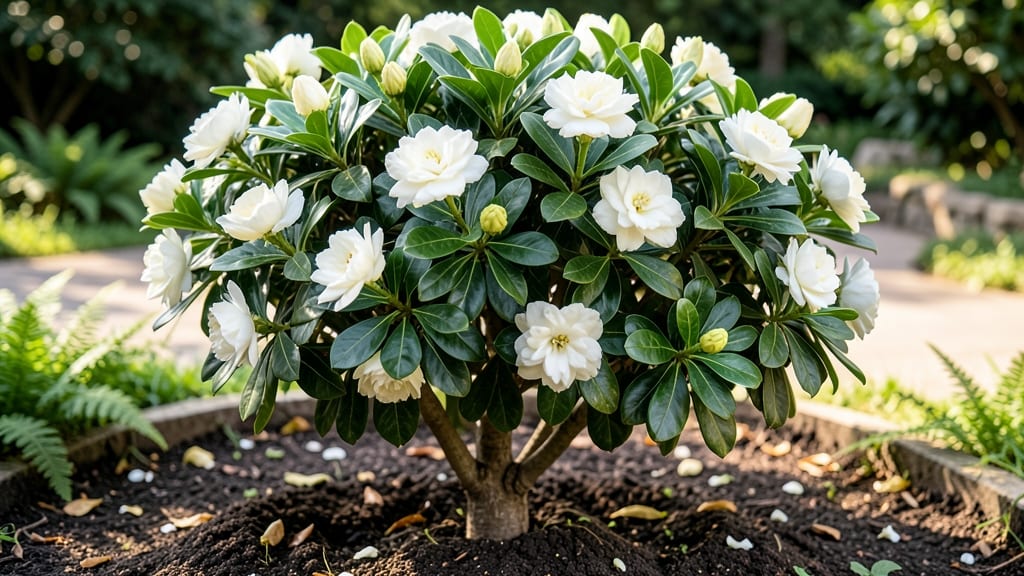
Gardenia bushes thrive in USDA hardiness zones 8 through 11, with most varieties dying back in colder climates. Choose cold-hardy types like Gardenia jasminoides 'Radicans' (zone 7) or protect tender varieties with winter mulch and microclimates.
Gardenia bushes are tropical plants at heart, so their cold tolerance varies dramatically between varieties. 🌿 While most gardenias struggle below 20°F, specialized hybrids like 'Kleim’s Hardy' can handle zone 7 winters with proper care.
The key difference lies in their genetic makeup—some gardenias develop thicker stems and leaves to resist frost damage, while others rely on mulch or container protection to survive.
For example, Gardenia jasminoides 'Veitchii' typically needs zone 9 conditions, but with a thick layer of straw mulch and a frost blanket, you can push its limits slightly in zone 8.
If you're growing gardenias in cooler climates, consider planting them near south-facing walls or in sheltered microclimates where temperatures stay warmer. Container gardening is another smart option—simply move potted gardenias indoors before the first frost and resume outdoor placement in spring.
The most critical factor is consistent moisture during winter; dry soil makes plants more vulnerable to cold stress. With the right preparation, even gardeners in zone 6 can enjoy these fragrant bloomers by selecting the hardiest varieties and providing year-round protection.
💡 In This Article
- Understanding Gardenia Cold Hardiness by Variety
- Winter Care Tips for Gardenia Bushes in Cooler Zones
Understanding gardenia cold hardiness by variety
Gardenia cold tolerance varies dramatically between species and hybrids, with the key difference lying in their cellular structure. The hardiest varieties, like Gardenia jasminoides 'Radicans', develop thicker cell walls and higher concentrations of protective sugars that prevent ice crystal formation in their tissues.
These adaptations allow 'Radicans' to survive brief dips to 10°F in zone 7, while standard gardenias like 'Veitchii' begin suffering damage at 28°F or below.
The science here involves osmotic adjustment—hardy gardenias maintain higher internal sugar levels to lower their freezing point, similar to how antifreeze works in car engines.
Consider these specific zone ranges for popular varieties: 'Kleim’s Hardy' thrives in zones 7-11, 'Veitchii' prefers zones 9-11, and 'Radicans' extends growth to zone 7 with protection.
The difference comes down to their native origins—'Kleim’s Hardy' was bred from high-altitude Asian gardenias adapted to cooler mountain climates, while 'Veitchii' originates from tropical regions where temperatures rarely drop below 50°F. 🌱 For example, a 'Veitchii' plant in zone 8 will likely suffer leaf scorch and stunted growth during winter, while a 'Kleim’s Hardy' will produce blooms year after year with minimal intervention.
This hardiness variation explains why some gardenias survive frost while others do not. The critical threshold is 28°F—below this temperature, most gardenia varieties experience cold acclimation failure, where their protective mechanisms break down.
Hardy varieties like 'Radicans' can withstand brief exposures to 10°F because their cells contain higher levels of proline amino acids, which act as natural antifreeze proteins. In contrast, tender varieties like 'Veitchii' lack these adaptations and will suffer irreversible damage when temperatures drop below 30°F.
Visual differences also help identify hardy varieties. Look for plants with darker green, thicker leaves and stems that appear more woody—these are signs of cold resistance.
For instance, 'Kleim’s Hardy' has leaves that are 1-2 inches wider than 'Veitchii' and a more compact growth habit, both traits that improve cold tolerance. The fragrance intensity also varies: hardy varieties often produce 20-30% more blooms annually because they're less stressed by temperature fluctuations.
When selecting gardenias for cooler climates, prioritize hybrids like 'Fortuniana' (zone 8) or 'Mystery' (zone 7) that combine tropical beauty with cold resilience. These varieties were specifically bred to maintain their creamy white, double-layered blooms even in marginal zones.
The trade-off? They may produce slightly smaller flowers (typically 3-4 inches in diameter) compared to tropical varieties (which can reach 5-6 inches), but the winter survival makes them worth the compromise.
What most gardeners don't realize is that even within the same variety, cold tolerance can vary by 5-10°F depending on the plant's age and health. Young gardenias (under 3 years old) are more vulnerable because their root systems haven't developed sufficient cold resistance.
This is why experienced growers recommend establishing gardenias in well-draining soil with 3-4 inches of organic mulch at least 2 years before expecting them to survive winter temperatures.