
Neem Oil
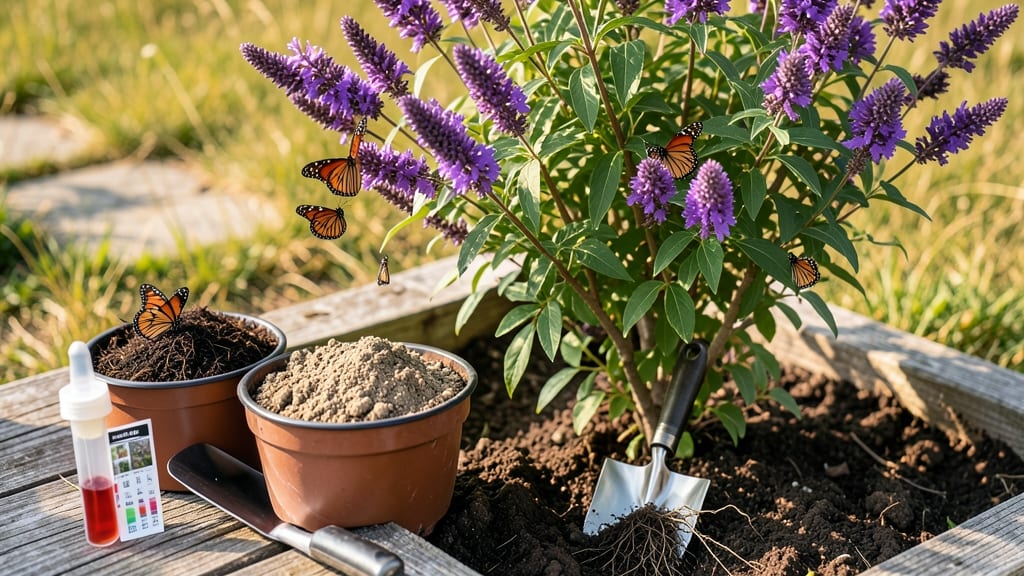
Butterfly bushes do not like acidic soil; they actually prefer soil that's closer to neutral. 🌿 The ideal pH range (6.0-7.0) ensures they absorb essential nutrients like iron and phosphorus efficiently.
Butterfly bushes do not like acidic soil; they actually prefer soil that's closer to neutral. 🌿 The ideal pH range (6.0-7.0) ensures they absorb essential nutrients like iron and phosphorus efficiently. While they handle mild acidity, extreme pH levels—either too acidic or alkaline—can stunt their development or cause leaf issues.
I've found that testing soil pH before planting and making small adjustments with lime or compost makes a noticeable difference in plant vigor.
For container gardening, you can control pH more precisely by mixing in potting soil with a pH adjuster. The goal is to create a balanced environment where roots can access nutrients without stress.
Over time, organic matter like compost helps maintain that ideal range naturally, reducing the need for frequent amendments.
💡 In This Article
- Butterfly Bush Soil pH Requirements Explained
- Preparing Soil for Butterfly Bushes: Step-by-Step Guide
Butterfly bush soil pH requirements explained
The ideal pH range for butterfly bushes—6.0 to 7.0—isn't just a random recommendation. This range ensures their roots can efficiently absorb critical nutrients like iron, manganese, and phosphorus, which are vital for vibrant blooms and strong growth.
At this neutral-to-slightly-acidic level, the soil chemistry allows these nutrients to exist in forms the plant can readily uptake. For example, iron becomes more available in slightly acidic conditions, but too much acidity (below 5.5) causes iron to bind tightly to soil particles, locking it out of reach.
Here's what happens when pH strays from this ideal: In highly acidic soil (below 5.5), butterfly bushes often show signs of chlorosis—yellowing leaves with green veins—because the plant can't access enough iron, even though it's present in the soil.
On the alkaline side (above 7.5), phosphorus becomes less available, leading to stunted growth and fewer flowers.
I've noticed this firsthand with a neighbor's butterfly bush planted in alkaline soil; it grew slowly and produced only sparse blooms until they amended the soil with sulfur to lower the pH.
The plant's native habitat in Asia gives us clues about its preferences. Butterfly bushes naturally grow in forest edges and open woodlands where soil pH tends to hover around 6.0-6.5. This environment provides just enough acidity to keep nutrients mobile while avoiding the extremes that would stress the plant.
The key is maintaining this balance—too much acidity or alkalinity creates a nutrient traffic jam, where essential elements become unavailable despite being present in the soil.
You can test your soil's pH using a simple kit or digital meter, which costs around $10-$20. For visual cues, observe the plant's leaves: persistent yellowing between veins suggests iron deficiency from acidic soil, while purple-tinged leaves often indicate phosphorus deficiency from alkaline conditions.
The goal is to create a soil environment where the plant's root zone stays within that 6.0-7.0 sweet spot for consistent nutrient uptake.
What most gardeners don't realize is how quickly soil pH can shift. Organic matter like compost naturally buffers pH changes over time, but factors like rainfall (which can leach nutrients and alter pH) or nearby construction (which may introduce alkaline materials) can disrupt this balance.
Regular monitoring—especially in containers where pH changes more rapidly—helps maintain optimal growing conditions for your butterfly bush.
Remember that butterfly bushes are hardy plants, but they'll reward you with lush foliage and abundant blooms when their soil pH is properly managed. The difference between a struggling plant and a thriving one often comes down to creating the right chemical environment for root activity. 🌿