
Pruning
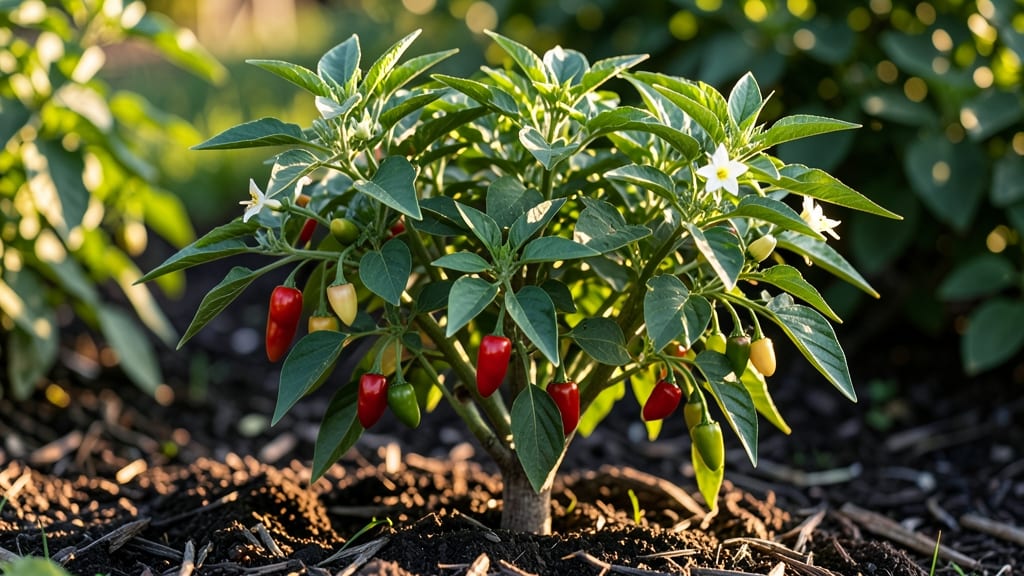
A chile pequin bush delivers tiny but mighty heat all year—if you trim it right. 🌱 I learned the hard way that letting this plant grow wild means losing most of your harvest to leggy, fruitless branches.
The secret lies in precision pruning every 6-8 weeks, which keeps the bush compact and packed with those signature 1-inch peppers.
Start with well-draining soil and full sun (6+ hours daily), then water consistently but avoid soggy roots—pequin chiles hate wet feet. Unlike larger chiles, these grow as shrubs, not vines, so they need 18-24 inches of space between plants.
The real magic happens when you prune back by ⅓ after each harvest wave, encouraging bushier growth and more fruit clusters.
By mid-summer, you’ll see a dense, velvety-green bush producing peppers continuously. Harvest when they’re bright red (or green if you prefer milder flavor), and pinch off spent flowers to redirect energy.
The key is staying ahead of the growth—this plant grows fast, but so do its branches if you skip pruning.
Works in pots or garden beds, and thrives year-round in zones 9-11 (bring indoors in colder climates). The payoff? A bush that keeps producing through winter with minimal effort—once you master the trim. Let’s get those shears sharp!
📚 In This Guide
- What you need
- Instructions
- Tips and common mistakes
- Wrapping up and next steps
What you need
- ● Chile pequin seeds or seedlings: 1–3 plants (choose disease-resistant varieties like ‘Perennial’ or ‘Achiote’ for best results).
- ● Well-draining potting mix: 5–10 gallons (use a blend of 60% potting soil, 30% perlite, and 10% compost).
- ● Containers: 5–15 gallon pots with drainage holes (or a raised bed if planting in-ground).
- ● Pruning shears: Sharp, bypass-style shears (sterilize with rubbing alcohol between cuts).
- ● Gloves: Heavy-duty gardening gloves (chile pequin plants can be spicy—protect your hands!).
- ○ Support stakes or cages: 3–4 ft tall (optional but helpful for bushier growth).
- ● Slow-release fertilizer: Balanced 10-10-10 or organic options like fish emulsion (apply every 4–6 weeks).
- ● Mulch: Straw or shredded leaves (to retain moisture and suppress weeds).
- ● Grow lights: LED full-spectrum bulbs (if growing indoors or in low-light conditions).
- ● Spray bottle: For misting seedlings during germination.
- ● Journal/notebook: To track pruning dates, harvests, and plant health (trust us, it’s a game-changer!).
Step-by-Step instructions for precision trimming of chile pequin bushes
Master this technique and your pequin chiles will produce nonstop harvests—even in winter.
🪴 Step 1: Identify Healthy Growth Zones
Start by examining your pequin bush for new growth—look for the smallest leaves just emerging at the tips of branches. These are your trimming targets. I always work in the morning when plants are hydrated, making it easier to spot healthy growth zones.
Use clean, sharp pruning shears to make cuts just above a leaf node (the bump where leaves attach). Avoid cutting into old wood—pequin bushes regenerate best from younger stems. If you see any yellowing or brown leaves, remove those first—they sap energy from productive growth.
✂️ Step 2: Trim for Bush Shape and Airflow
Shape your bush into a compact, rounded form by cutting back leggy stems to encourage branching. I aim for a 12-18 inch diameter bush—any larger and airflow suffers, increasing disease risk. Focus on removing stems that cross or grow inward, as these block light and air.
Don't be afraid to cut back aggressive growth by one-third if needed. Pequin bushes bounce back quickly, and this forces energy into producing more fruiting branches. After trimming, step back and check for open centers—this ensures sunlight reaches all parts of the plant.
🌿 Step 3: Encourage Flowering and Fruiting
To trigger more flowers and pequins, trim back any flower clusters that appear before existing pequins mature. This might seem counterintuitive, but it redirects the plant's energy toward ripening current fruit first. I also pinch off any weak or deformed flowers—they rarely produce quality pequins.
After trimming, apply a balanced fertilizer (10-10-10) around the base to support new growth. Water deeply but avoid wetting the foliage to prevent fungal issues. Within 2-3 weeks, you'll see fresh green growth—this is your signal the plant is recovering and preparing for another round of flowering.
⏰ Step 4: Seasonal Adjustments for Year-Round Production
In spring and fall, focus on light trimming to maintain shape and remove dead growth. During summer's peak heat, reduce trimming to avoid stress—just remove damaged leaves and overcrowded branches. Winter is the only time I do minimal pruning, focusing only on removing dead or diseased wood.
Here's the thing—pequin bushes respond best to consistent, light trimming rather than heavy pruning. I trim every 4-6 weeks during growing seasons, always cutting just above a leaf node. This keeps the plant productive without overwhelming it, ensuring a steady supply of those tiny, fiery pequins all year.
Tips & tricks for perfect chile pequin bush maintenance
Real talk: I learned these tricks after watching my first pequin bush struggle through inconsistent harvests. The difference between a productive plant and a struggling one often comes down to these small details.
Timing is Everything: Always trim your pequin bush in the morning when leaves are fully hydrated. This makes it easier to identify healthy growth zones and reduces stress on the plant. I've found that trimming right after watering helps too—just let excess moisture evaporate for an hour first to avoid fungal issues. The morning light also helps you spot yellowing leaves more clearly, which you should always remove first since they drain energy from productive growth.
Cutting Technique Matters: When making cuts in Step 1, aim for just above a leaf node—this is where new growth will emerge. I use clean, sharp pruning shears to make precise cuts that heal faster. For thicker stems in Step 2, cut at a 45-degree angle to prevent water from pooling on the cut surface. This simple technique reduces disease risk and encourages faster regrowth. Remember, pequin bushes regenerate best from younger stems, so avoid cutting into old wood.
Seasonal Strategy: The seasonal adjustments in Step 4 are crucial for year-round production. In summer's peak heat, I reduce trimming to only remove damaged leaves and overcrowded branches—this prevents stress on the plant when it's already working hard. During winter's minimal pruning, I focus solely on removing dead or diseased wood, giving the plant a clean start for spring. This consistent approach keeps my bushes productive without overwhelming them, ensuring steady harvests all year.
Pro Tips for Chile Pequin Bush
- Real talk: I learned these tricks after watching my first pequin bush struggle through inconsistent harvests.
- Timing is Everything: Always trim your pequin bush in the morning when leaves are fully hydrated.
- Cutting Technique Matters: When making cuts in Step 1, aim for just above a leaf node—this is where new growth will emerge.
Frequently asked questions
Got questions about keeping your Capsicum annuum var. glabriusculum (chile pequin) bush thriving with precision trimming?
Here are answers to the most common ones—so you can enjoy a year-round harvest without stress!
How often should I trim my chile pequin bush?
Trim your chile pequin bush every 4–6 weeks during the growing season (spring to fall) to encourage bushier growth and more peppers. Reduce trimming to once every 2–3 months in winter when growth slows. Always use clean, sharp pruners to avoid disease.
When is the best time to start pruning?
Begin pruning early in the season (when the plant is 6–8 inches tall) to shape it and remove weak growth. Avoid heavy trimming in late summer—focus on light maintenance to prep for winter dormancy. Pro tip: Prune in the morning when peppers are dry to reduce stress on the plant.
Should I trim my chile pequin bush in winter?
Yes, but lightly! Reduce trimming to once every 2–3 months in winter to avoid shocking the plant. Focus on removing dead or diseased branches. If your plant is in a pot, trim back by 1/3 to control size and encourage spring regrowth.
What if my chile pequin bush isn’t producing peppers?
Check these first:
- Light: Ensure it gets 6–8 hours of sunlight daily—peppers need plenty!
- Water: Keep soil consistently moist but not soggy.
- Nutrients: Fertilize with a balanced, low-nitrogen formula (like 5-5-5) every 4–6 weeks.
- Pruning: Over-trimming can reduce fruit. Aim for 2–3 main stems with side branches.
Can I propagate chile pequin cuttings from trimmings?
Take 4–6 inch cuttings from healthy, non-flowering stems. Remove lower leaves, dip in rooting hormone, and plant in moist perlite or sand. Keep in warm, humid conditions (70–75°F) and mist daily. Roots should form in 2–4 weeks—then transplant!
Wrapping up and next steps
Growing a thriving chile pequin bush is all about balance—precision trimming ensures year-round harvests while keeping your plant healthy and productive. 🌱 Whether you’re a seasoned gardener or just starting, mastering the art of pruning unlocks a bounty of tiny, fiery peppers to spice up your dishes.
With the right tools, timing, and techniques, your bush will reward you with flavor-packed peppers all season long!
Ready to take the next step? Start small—pick one bush to experiment with trimming this week, and observe how it responds. Soon, you’ll be a pro, sharing your harvest (and tips!) with fellow pepper enthusiasts. Happy pruning! 🌶️✨