
Pruning
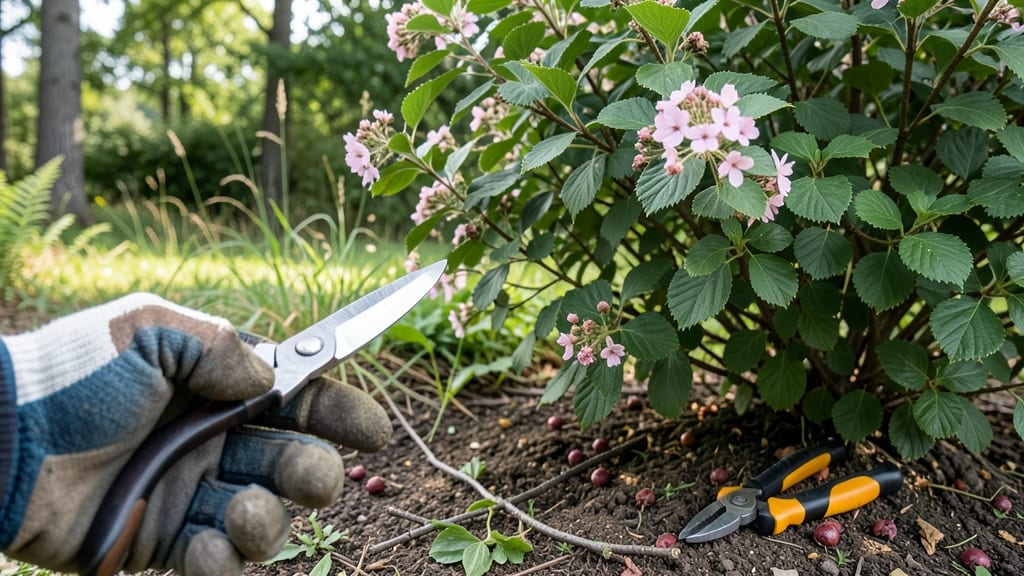
Precision cuts now mean vibrant blooms all season long. ✂️ My first attempt at trimming a viburnum bush left me with a leggy mess—until I learned the right timing and technique.
The secret lies in understanding when to prune for flowers versus shaping the plant, and how to encourage dense growth without sacrificing next year’s blooms.
You’ll need sharp pruners, a clean saw for thicker branches, and a glove—plus a clear plan. The best time to trim depends on your viburnum type: spring-flowering varieties get their haircut right after blooming, while fall-bloomers wait until late winter.
Most gardeners skip this detail, which is why their bushes look ragged and produce fewer flowers.
After pruning, you’ll see fuller foliage and more abundant blooms within weeks. The bush will look neater, grow stronger, and resist pests better. I’ve revived multiple viburnums that were nearly bare by following these steps—even the ones I’d given up on.
Works for shrub viburnums like Viburnum bodnantense or Viburnum plicatum, but avoid heavy pruning on spring-flowering types like Viburnum carlesii unless absolutely necessary. Let’s get those branches looking intentional!
📚 In This Guide
- What you need
- Instructions
- Tips and common mistakes
- Wrapping up and next steps
What you need
- ● Pruning shears: Sharp, bypass-style shears (for clean cuts on small stems). Quantity: 1 pair (or 2 if working with a large bush).
- ● Loppers: For thicker branches (½"–1½" diameter). Quantity: 1 pair (with a bypass or anvil blade).
- ● Hand pruners: For fine-tuning and detail work (e.g., shaping). Quantity: 1 pair.
- ● Garden gloves: Heavy-duty, cut-resistant (to protect from thorns and debris). Quantity: 1 pair.
- ● Disinfectant: 70% rubbing alcohol or bleach solution (1 part bleach to 9 parts water) to sterilize tools between cuts. Quantity: Small bottle or spray.
- ● Rake or broom: For clearing fallen leaves/debris post-pruning. Quantity: 1.
- ○ Pruning sealant (optional but helpful): Tree wound paint (for large cuts > ½" diameter). Quantity: Small tube.
- ● Safety glasses: To shield eyes from flying debris.
- ● Knee pads: For comfort during prolonged trimming sessions.
- ● String or measuring tape: To mark pruning lines for uniformity.
- ● Sharpie or chalk: For labeling branches (e.g., "remove" or "keep").
- ● Wheelbarrow or bucket: To collect clippings for composting.
Step-by-step guide to trimming Viburnum for continuous blooms
Here's how to revive your viburnum's flowering potential with surgical precision.
✂️ Step 1: Identify Growth Patterns and Bloom Types
Viburnums bloom on either old wood (last year's growth) or new wood (current season's growth). First, examine your bush: if flowers appear on last year's stems, you're dealing with an old-wood bloomer like Viburnum bodnantense or V. farreri. If flowers emerge on current year's growth, it's a new-wood variety such as V. plicatum or V. trilobum.
Here's the thing—cutting back old-wood bloomers incorrectly can rob you of next year's flowers. I always start by mapping the bush's structure: mark stems with last year's blooms with a ribbon or flag so I remember which ones to preserve. For new-wood types, you'll prune differently, focusing on rejuvenating the center rather than preserving last year's stems.
✂️ Step 2: Time Your Cuts for Maximum Impact
Timing matters more than you'd think. For old-wood bloomers, prune immediately after flowering but before new growth begins—typically in late spring or early summer. This ensures next year's blooms develop on this year's growth. For new-wood types, prune in late winter or early spring, just as buds begin to swell but before leaves emerge.
Don't rush this step. I've seen gardeners cut too early and lose potential blooms, or too late and risk damaging new growth. Watch for leaf buds swelling—that's your signal for new-wood types. For old-wood varieties, wait until flowers fade completely but before you see new shoots pushing from the base.
✂️ Step 3: Remove Dead and Crossing Branches First
Start with the easy fixes: remove any dead, diseased, or damaged branches at the base. Cut back to the nearest outward-facing bud or lateral branch to encourage outward growth. Next, eliminate branches that cross or rub against others—these create wounds that invite pests and disease. You'll know you're doing this right when the center of the bush opens up, allowing light and air to circulate.
I always use clean, sharp bypass pruners to make cuts just outside the branch collar. A jagged cut heals poorly and weakens the plant. If a branch is thicker than 1/4 inch, make a small undercut first to prevent bark tearing, then complete the cut smoothly above your undercut.
✂️ Step 4: Thin Out for Airflow and Light Penetration
For old-wood bloomers, thin out 1/3 of the oldest stems at ground level to encourage new, vigorous growth. Select stems that are thin, weak, or no longer producing flowers. For new-wood types, remove 20-30% of the oldest stems to rejuvenate the center. You'll see a bush that looks fuller and more balanced after this step.
Watch for water sprouts—those fast-growing, vertical shoots that look like they're reaching for the sky. These steal energy from flowering. Cut them back to a lateral branch or bud. The goal is to create an open, vase-like shape that lets light reach the center, where most flowers develop.
✂️ Step 5: Shape and Maintain Year-Round
After the major cuts, step back and assess the shape. Viburnums naturally grow in a rounded form, so avoid cutting back too aggressively on one side. For old-wood types, lightly shape the outer edges to maintain a rounded, layered look. For new-wood varieties, you can be slightly more aggressive in shaping the overall form.
Here's the key to year-round blooms: repeat this process annually. Mark your calendar for post-bloom pruning (old wood) or late winter pruning (new wood). After each trim, apply a balanced fertilizer to support new growth. Within a season, you'll notice thicker foliage, more abundant blooms, and a bush that looks like it just got a spa day.
Tips & tricks for perfect Viburnum pruning
Precision is everything when it comes to reviving your viburnum's blooming potential—here's how to avoid common pitfalls and elevate your results.
Old-Wood vs. New-Wood Identification: I can't stress enough how critical this step is. For old-wood bloomers like Viburnum bodnantense, mark stems that produced flowers last year with colored flags or ribbons. This visual cue prevents accidental removal of next year's bloom stems. For new-wood varieties, focus on the center—these stems need light to produce flowers, so don't be afraid to open up that dense middle. Think of it as creating a window for sunlight to reach the heart of the bush.
Timing Secret for Maximum Blooms: The window for old-wood pruning is narrow—late spring or early summer after flowers fade but before new growth starts. I've seen gardeners miss this and wonder why their bush didn't bloom again. For new-wood types, watch for those leaf buds swelling in late winter—this is your signal to prune. Pro tip: Set reminders for both types based on your local frost dates. A mis-timed cut can mean lost blooms for an entire season.
Cutting Technique That Makes All the Difference: Always make your cuts just outside the branch collar using clean, sharp bypass pruners. The branch collar is that swollen area where the branch meets the trunk—it's the plant's natural healing point. For branches thicker than 1/4 inch, make that small undercut first to prevent bark tearing. I've had to explain to frustrated gardeners why their cuts healed poorly—it's always because they didn't respect the branch collar. This simple technique ensures cleaner wounds that heal faster and stronger.
Thinning Strategy for Year-Round Beauty: When thinning old-wood bloomers, remove 1/3 of the oldest stems at ground level. For new-wood types, aim for 20-30% of the oldest stems. The key is to create that open, vase-like shape. I recommend working in stages—remove 10% now, then reassess next year. This gradual approach prevents shock to the plant while still improving airflow and light penetration. You'll notice the difference in just one growing season with thicker foliage and more abundant blooms.
Pro Tips for Trimming Viburnum Bush
- Precision is everything when it comes to reviving your viburnum's blooming potential—here's how to avoid common pitfalls and elevate your results.
- Old-Wood vs.
- Timing Secret for Maximum Blooms: The window for old-wood pruning is narrow—late spring or early summer after flowers fade but before new growth starts.
Frequently asked questions
Got questions about trimming your Viburnum bush? You’re not alone! Here are answers to the most common concerns—from timing to tools—to keep your shrub thriving and blooming beautifully.
When is the best time to trim a Viburnum bush?
The ideal time depends on your Viburnum type. For spring-blooming varieties (like Viburnum dentatum), prune right after flowering (late spring/early summer) to avoid cutting off next year’s blooms. Summer/fall-blooming types (like Viburnum plicatum) can be pruned in late winter or early spring before new growth starts. Always avoid heavy pruning in fall—it can stimulate tender growth that won’t survive winter.
Can I trim a Viburnum bush in winter?
Light pruning in late winter (before buds swell) is safe for most Viburnum bushes, but avoid heavy cuts. Winter pruning helps shape the bush and removes dead wood. However, never prune in extreme cold or during frost—wait until temperatures stabilize above freezing. For spring-bloomers, winter pruning risks cutting off flower buds, so hold off until post-bloom.
What if I accidentally cut off the flowers?
Don’t panic! If you’ve already pruned too late, focus on shaping the bush for next year. Cut back to just above a bud or branch junction to encourage new growth. For spring-bloomers, you’ll miss this year’s flowers, but the bush will rebound. Fertilize lightly in early spring to support recovery. Next season, time your cuts better—patience pays off!
Do I need special tools to trim a Viburnum bush?
Not necessarily! Use sharp bypass pruners for small branches (up to ½ inch thick) and loppers for thicker stems. A hand saw helps with stubborn wood. Avoid dull tools—they tear branches, inviting disease. Disinfect blades with rubbing alcohol between cuts to prevent spreading bacteria or fungi. Pro tip: Wear gloves to protect against thorns!
How much can I trim a Viburnum bush?
Never remove more than ⅓ of the bush in one year—this ensures it stays healthy and productive. For rejuvenation pruning (if overgrown), thin out old, dense wood over 2–3 years. Focus on opening the center for airflow and sunlight. Young Viburnum bushes need minimal pruning—just remove dead or crossing branches.
What should I do if my Viburnum bush looks sick after trimming?
If you notice yellowing leaves, wilting, or unusual spots post-pruning, act fast:
- Check for pests (aphids, scale, or spider mites) and treat with neem oil or insecticidal soap.
- Ensure it’s getting proper water (deep but infrequent watering).
- Apply a balanced fertilizer (10-10-10) in early spring if growth seems weak.
- If fungal issues appear (like powdery mildew), prune infected areas immediately and use fungicide.
Most stress is temporary—keep an eye on it and adjust care as needed.
Wrapping up and next steps
Trimming your viburnum bush doesn’t have to be intimidating—with the right timing, tools, and techniques, you can unlock a year-round display of beauty and health. Remember, precision cuts encourage lush growth, vibrant blooms, and a well-shaped shrub that thrives season after season.
Whether you’re a seasoned gardener or just starting, your viburnum will thank you for the care!
Ready to transform your garden? Grab your pruners, mark your calendar for next year’s cuts, and watch your viburnum shine brighter than ever. 🌿✨