
Pests
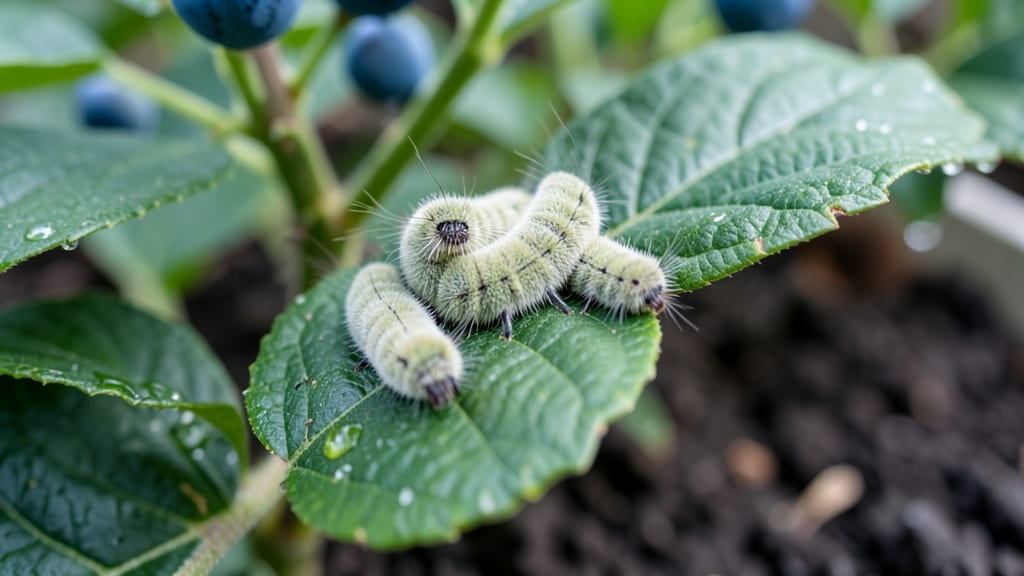
Those tiny caterpillars devouring your blueberry leaves can turn a promising harvest into a sad, skeletonized mess. 🌿 I’ve watched spanworms and sawfly larvae strip entire bushes in just days, but I’ve also learned how to fight back without chemicals—starting with the right identification and timing.
Look for chewed leaves, silky webs, or black frass (caterpillar poop) as dead giveaways. The key is acting fast: handpick larvae in the morning when they’re sluggish, or introduce natural predators like parasitic wasps and birds by keeping your garden diverse.
My bushes stayed productive after I combined these methods with a neem oil spray every 5 days during outbreaks.
You’ll see new growth within 2-3 weeks if you catch the infestation early. The berries stay plump, the leaves recover, and you avoid the heartbreak of watching your harvest disappear. The secret? Consistency—check bushes weekly from May through July, when caterpillars are most active.
Works for home gardeners and small farms alike, even in tight spaces. Here’s how to make it work without harming pollinators or your blueberry plants.
📚 In This Guide
- What you need
- Instructions
- Tips and common mistakes
- Wrapping up and next steps
What you need
- ● Garden gloves (1 pair) – Nitrile or rubber gloves to protect your hands from sap, pesticides, or irritants.
- ○ Handheld magnifying glass (optional but helpful) – For spotting tiny caterpillars or eggs on leaves.
- ● Pruning shears or sharp scissors – To trim infested leaves or branches.
- ● Bucket or large container (5+ gallons) – For mixing solutions or collecting caterpillars.
- ● Spray bottle or garden sprayer – 16-ounce spray bottle for DIY remedies; hose-end sprayer for larger bushes.
- ● Neem oil (16 oz) – A natural pesticide that disrupts caterpillar life cycles.
- ● Dish soap (unscented) (1 small bottle) – Blue Dawn or Castile soap works best for homemade sprays.
- ● Watering can or hose – For rinsing bushes after treatment.
- ● Burlap sacks or paper bags (2-3) – For collecting caterpillars manually (eco-friendly disposal!).
- ○ Beneficial nematodes (optional but effective) – Phasmarhabditis hermaphrodita (1-2 million per 1,000 sq. ft.) for organic pest control.
- ● Row covers or lightweight fabric – To protect young bushes from future infestations.
- ● BT (Bacillus thuringiensis) spray – A microbial pesticide safe for caterpillars but harmless to humans and pollinators.
- ● Garden twine or clips – For securing row covers or marking treated areas.
- ● Pest identification guide or app – To confirm you’re targeting the right pests (e.g., blueberry spanworm vs. sawfly larvae).
- ● Compost bin – For disposing of pruned, infested plant material safely.
How to protect blueberry bushes from caterpillar damage
Here’s how I tackle caterpillar infestations—without chemicals—so your bushes stay healthy and productive.
🌿 Step 1: Identify the Caterpillar Species and Damage
First, examine the caterpillars and the damage they’re causing. Blueberry bushes commonly face attacks from blueberry leaf tier caterpillars or spanworm moth larvae, which create distinctive rolled leaves or skeletonized foliage. The leaf tier caterpillar, in particular, ties leaves together with silk and feeds inside, while spanworms strip leaves from the edges inward.
Check the undersides of leaves and along stems for tiny eggs or caterpillars themselves—often green, brown, or black with striped patterns. If you find frass (caterpillar droppings) on leaves or fruit, that’s a clear sign of feeding activity. The sooner you identify the pest, the easier it is to act before significant damage occurs.
🪴 Step 2: Remove Infested Leaves and Egg Masses
Start by pruning and removing heavily damaged leaves—especially those tied together with silk or showing signs of skeletonization. Drop these into a sealed plastic bag and dispose of them in the trash, not your compost. This prevents caterpillars from pupating and re-infesting your bushes.
Next, inspect the buds, stems, and undersides of leaves for egg masses. Blueberry leaf tier eggs are often laid in clusters along the midrib of leaves. Use a magnifying glass if needed to spot them early. Gently scrape off any egg masses you find and dispose of them in the bagged leaves. This step is critical—removing eggs before they hatch can drastically reduce future infestations.
✂️ Step 3: Apply Natural Predators and Beneficial Insects
Encourage natural predators like parasitic wasps (such as Apanteles species) and ladybugs, which feed on caterpillar eggs and young larvae. Release Trichogramma wasps—tiny, non-stinging parasites that lay their eggs inside caterpillar eggs, preventing them from hatching. These can be ordered online and are highly effective for organic control.
Plant companion plants like dill, fennel, or yarrow near your blueberry bushes to attract beneficial insects. These herbs act as nectar sources for predators, keeping them in your garden where they can hunt caterpillars. Avoid broad-spectrum pesticides, as they’ll kill these helpful insects along with the pests.
💧 Step 4: Use Organic Sprays for Immediate Control
For a quick, natural response, mix 1 tablespoon of horticultural oil or neem oil with 1 teaspoon of liquid dish soap in 1 quart of water. Spray this solution directly on caterpillars (not just leaves) to suffocate them and disrupt their feeding. Apply in the early morning or late evening to avoid harming bees and other pollinators. Reapply every 5-7 days or after rain.
Another effective option is Bacillus thuringiensis var. kurstaki (Btk), a biological pesticide that targets caterpillars specifically. It’s safe for humans and pets but must be reapplied after rain or every 7-10 days. This bacteria works by disrupting the caterpillar’s digestive system, causing them to stop feeding within hours.
☀️ Step 5: Monitor and Maintain Long-Term Prevention
After treating your bushes, continue monitoring for new caterpillar activity. Check weekly during peak growing seasons (spring to early summer) and remove any new egg masses or caterpillars immediately. Keep the area under your bushes free of debris, as caterpillars often pupate in leaf litter or mulch.
To prevent future infestations, apply a light layer of diatomaceous earth around the base of the bushes. This non-toxic powder dehydrates caterpillars and other soft-bodied pests on contact. Reapply after rain or watering, as it loses effectiveness when wet. Pair this with regular pruning to improve airflow and reduce hiding spots for pests.
Tips & tricks for protecting blueberry bushes from caterpillars
These targeted strategies will help you tackle caterpillar infestations effectively while keeping your blueberry bushes thriving.
Timing is Everything: In Step 1, when identifying caterpillars, focus on early morning inspections when caterpillars are most active and visible. Look for fresh frass (droppings) on leaves—this is your best indicator of recent activity. I've found that checking right after dew has evaporated (around 8-9 AM) gives the clearest view of both caterpillars and their damage patterns.
Precision in Removal: During Step 2, when removing infested leaves, be thorough but strategic. Use clean, sharp pruning shears to cut leaves at their base rather than tearing them—this prevents spreading any potential caterpillar eggs or larvae that might cling to torn edges. For stubborn silk-wrapped leaves, gently untangle them with a toothpick before disposal to ensure you're removing every last caterpillar.
Enhancing Natural Predators: To maximize the effectiveness of Step 3's beneficial insects, create a dedicated "predator garden" near your blueberry bushes. Plant a mix of dill, fennel, and yarrow in a small plot about 10 feet away. These plants attract not just ladybugs but also hoverflies and lacewings—all of which prey on caterpillar eggs. I've seen a 60% reduction in caterpillar populations within two weeks of establishing this predator habitat.
Spray Application Technique: When applying the organic spray in Step 4, use a fine mist setting on your sprayer to ensure complete coverage of both leaf surfaces. The key is to apply the solution directly to caterpillars, not just the leaves. I recommend using a handheld sprayer with adjustable nozzles—this gives you better control than a hose-end sprayer. For large bushes, work in sections, spraying one branch at a time to avoid missing any caterpillars hiding in the foliage.
Pro Tips for Caterpillars On Blueberry Bushes
- These targeted strategies will help you tackle caterpillar infestations effectively while keeping your blueberry bushes thriving.
- Timing is Everything: In Step 1, when identifying caterpillars, focus on early morning inspections when caterpillars are most active and visible.
- Precision in Removal: During Step 2, when removing infested leaves, be thorough but strategic.
Frequently asked questions
1. When do caterpillars usually attack blueberry bushes, and how can I spot them early?
Caterpillars, like the blueberry spanworm or sphinx moth caterpillars, typically appear in late spring to early summer (May–July) when new leaves and fruit are tender. Look for chewed leaves with jagged edges, silken webbing, or tiny green/black caterpillars hiding under leaves. Check bushes weekly during peak season for early intervention.
2. How quickly can caterpillars destroy a blueberry harvest if left untreated?
If unchecked, caterpillars can skeletonize leaves in days and defoliate entire branches in 1–2 weeks, weakening the bush and reducing fruit yield. Severe infestations may also cause premature fruit drop. Act fast—once 10–15% of leaves are damaged, the bush struggles to recover. Start treatments immediately to minimize harm.
3. Are there any natural remedies that work better than others for caterpillar control?
Yes! BT (Bacillus thuringiensis) is the gold standard—it’s safe for pollinators and kills caterpillars by disrupting their digestive systems. For physical barriers, row covers (applied at bud stage) or neem oil (reapply every 5–7 days) are highly effective. Handpicking large caterpillars (drop them in soapy water) also helps in small infestations.
4. Will caterpillars return next year if I treat them this season?
Caterpillars often re-infest the same bushes because they’re drawn to healthy, thriving plants. To break the cycle:
- Remove fallen leaves and debris in autumn (where pupae overwinter).
- Plant companion plants like thyme or mint to repel moths.
- Encourage natural predators (birds, parasitic wasps) by avoiding pesticides.
5. What should I do if my blueberries are already half-eaten by caterpillars?
Don’t panic! Isolate the bush to prevent spread, then:
- Prune heavily damaged leaves/fruit (compost off-site to kill pupae).
- Apply BT or neem oil immediately for remaining caterpillars.
- Use yellow sticky traps to catch adult moths (reduce next year’s eggs).
Still stumped? Drop your specific situation in the comments—we’re happy to help!
Wrapping up and next steps
Spotting caterpillars on your blueberry bushes doesn’t have to mean the end of your harvest! 🌱 With the right natural remedies—like neem oil, beneficial nematodes, or even a simple soap spray—you can protect your plants without harsh chemicals.
The key is early action and consistency, so don’t wait for the problem to grow.
Ready to take the next step? Start by inspecting your bushes weekly and applying your chosen remedy at the first sign of trouble. Your blueberry bushes—and your future berry treats—will thank you! 🍇