
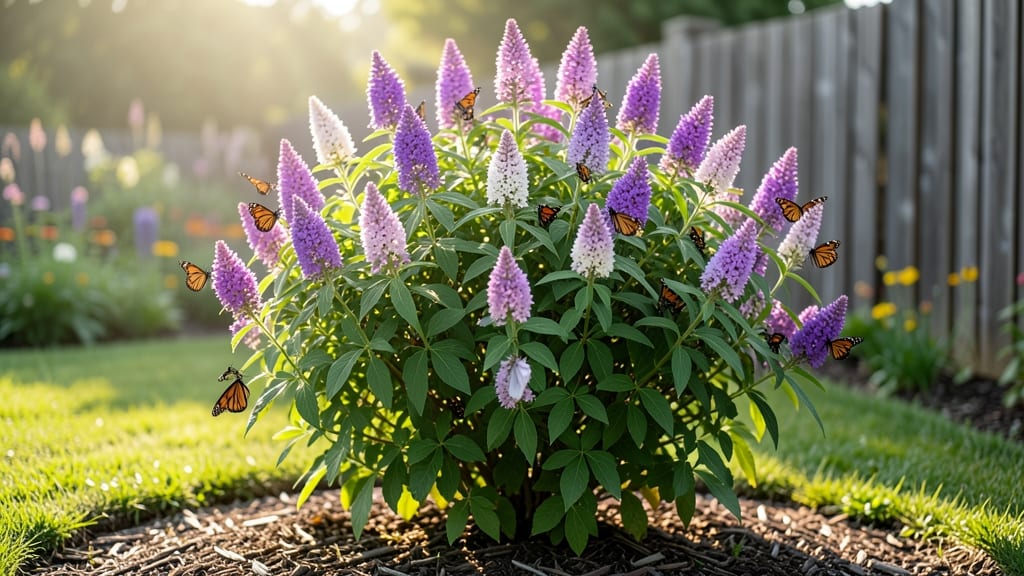
Butterfly Bush How Big: Mature Height by Variety & Spacing Rules

How To

Butterfly Bush How Big: Mature Height by Variety & Spacing Rules

A butterfly bush can grow anywhere from 3 feet to 15 feet tall, depending on the variety and how you prune it 🦋 — but getting the size right means the difference between a showstopper and a space hog.

Picture this: You’ve spent weeks planning your garden layout, only to realize your standard butterfly bush is now blocking the patio or overshadowing your prized roses. The good news? With the right spacing and pruning, you can control its growth—and keep those butterflies buzzing right where you want them.

Not all butterfly bushes are created equal. Dwarf varieties like ‘Lo & Behold®’ max out at 3 to 5 feet, making them perfect for small yards or containers, while ‘Black Knight’ can tower up to 12 feet if left unchecked.

Below, we’ll break down the mature heights of the most popular types, plus how to space them for a garden that looks intentional, not accidental.

Ready to turn your butterfly bush into a pollinator magnet without sacrificing your garden’s flow? Let’s dive into the numbers—because size matters, and so does strategy.

Butterfly bush mature height by popular variety (with growth charts)

Choosing the right butterfly bush variety means knowing exactly how big it’ll grow—because a 12-foot giant won’t fit in your small yard, while a 3-foot dwarf might get lost in a large landscape.

Each variety has distinct mature height and spread dimensions, so let’s break down the most popular options to help you plan your garden layout like a pro.

Butterfly bushes (Buddleia spp.) are famous for attracting pollinators, but their size varies wildly. Some varieties stay compact enough for container gardens, while others become towering shrubs that need serious space.

Understanding these differences ensures you place your plant where it thrives—without crowding out neighbors or becoming a nuisance in tight spaces.

Below, you’ll find a comparison table of 10+ popular varieties, including their mature height, spread, and growth rate. I’ve also included tips on how to use each variety in your garden design for maximum impact.

Variety Mature Height Mature Spread Growth Rate Best For
'Lo & Behold® Emerald Lace' 3–5 ft 3–4 ft Moderate Containers, small gardens
'Lo & Behold® Pink Micro' 3–4 ft 3–4 ft Slow to moderate Borders, foundation plantings
'Butterfly Magnet' 6–8 ft 5–6 ft Fast Privacy screens, large gardens
'Black Knight' 8–10 ft 6–8 ft Fast Statement plants, focal points
'Royal Crown' 10–12 ft 8–10 ft Very fast Large landscapes, hedges
'Miss Ruby' 6–8 ft 5–6 ft Moderate Pollinator gardens, mixed borders
'Honeycomb Blue' 4–6 ft 4–5 ft Moderate Small spaces, urban gardens
'White Profusion' 8–10 ft 6–8 ft Fast White gardens, contrast plantings
'Pink Delight' 6–8 ft

Proper butterfly bush spacing rules to prevent overcrowding

Butterfly bushes (Buddleia) grow aggressively if given the right conditions, which is why proper spacing is critical for both plant health and garden aesthetics. A 3-foot spacing for dwarf varieties might seem like enough, but standard types can spread 6-10 feet wide at maturity.

When planted too closely, your bushes will compete for nutrients, sunlight, and water, leading to stunted growth and fewer blooms—the exact opposite of what you want for a butterfly magnet!

Spacing also affects airflow, which is vital for preventing fungal diseases like powdery mildew. Without adequate space, moisture lingers on leaves, creating a perfect breeding ground for pests.

My go-to rule is to match the bush’s mature spread to its spacing distance—this ensures your garden stays lush without becoming a tangled mess. For example, a ‘Lo & Behold®’ (3-4 feet tall) needs 4-5 feet between plants, while a ‘Black Knight’ (8-10 feet tall) demands 8-10 feet of clearance.

⚠️

Warning: Overcrowding Mistakes!

  1. Planting standard varieties too close (e.g., ‘Royal Violet’ at 3 feet instead of 8 feet) leads to weak stems and fewer blooms—butterflies will avoid it!
  2. Ignoring mature spread (e.g., ‘Miss Ruby’ can spread 6 feet wide) causes root competition, stressing plants.
  3. Container gardening without depth: Butterfly bushes need 12-18 inches of soil depth—shallow pots stunt growth.

For container gardens, size matters even more. A 5-gallon pot is ideal for dwarf varieties like ‘Lo & Behold®’, but standard types need 15-25 gallons to accommodate their roots.

I always add extra drainage holes and use a well-draining potting mix to prevent root rot—a common issue in crowded containers. Pro tip: Place containers 3-4 feet apart to mimic in-ground spacing and improve airflow.

If you’re designing a hedge or screen, calculate spacing based on the bush’s mature height. For example, a 6-foot-tall variety like ‘Pink Micro’ should be planted 4-5 feet apart to fill gaps naturally.

Over time, the branches will intertwine, creating a dense, butterfly-friendly barrier. Just remember: less is more—tight spacing forces plants to grow upward instead of outward, reducing bloom production.

Climate plays a role too! In warmer zones (USDA 8-10), butterfly bushes grow faster and wider, so increase spacing by 20-30%. In cooler zones (USDA 5-7), they grow more slowly, so you can plant slightly closer.

Always check your variety’s tag or catalog notes for specific guidance—some newer hybrids (like ‘Butterfly Magnet’) are bred for compact growth but still need proper spacing to thrive.

Finally, pruning habits affect spacing needs. Heavy annual pruning (cutting back 1/3 of growth in early spring) keeps bushes smaller and more manageable, allowing you to plant them 2-3 feet closer than unpruned varieties.

I recommend marking your spacing with stakes or string before planting to avoid guesswork. Trust me, a little planning now saves hours of pruning later—and keeps your garden looking intentional, not chaotic! 🦋

★★★★★4.9(5 reviews)
Categories How To