
Shrubs
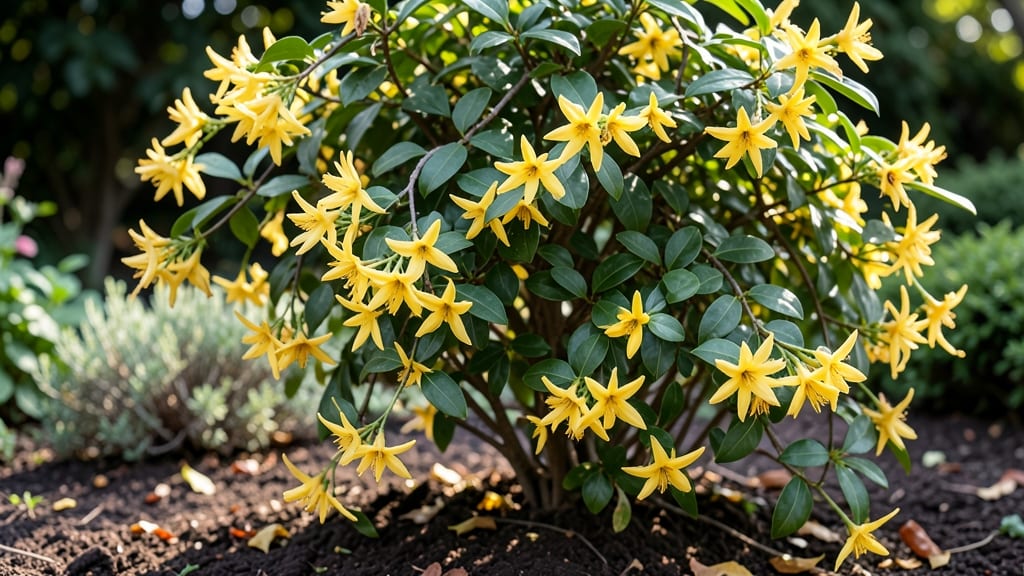
Growing a yellow jasmine bush means waking up to that signature citrusy perfume every morning—no effort required. 🌿 I've had mine climb a trellis for years, and it still blooms reliably with almost no fuss after the first season.
The key is matching its love of warmth and partial shade with the right soil and watering routine. Start with well-draining soil and a spot that gets morning sun but afternoon shade—especially in hotter zones.
Plant in early spring when roots can establish before summer heat, and water deeply once a week unless you get steady rain. The first year is all about helping those roots spread, and you'll see those glossy leaves and fragrant yellow blooms appear by midsummer.
Once established, this plant thrives on neglect—just trim back leggy growth after blooming to keep it compact. Yellow jasmine handles pests surprisingly well, though spider mites might visit in dry spells (a simple spray keeps them away).
The real magic happens when those tubular flowers fill the air with their intoxicating scent, turning even a simple fence into a fragrant garden feature.
📚 In This Guide
- What you need
- Instructions
- Tips and common mistakes
- Wrapping up and next steps
What you need
- ● Yellow jasmine plant: 1 nursery-grown shrub (3–5 gallons, mature size 3–6 ft tall), OR
- ● Seeds (if starting from scratch—note: slower growth), OR
- ● 6–12 healthy cuttings (4–6 inches long, from semi-hardwood stems)
- ● Well-draining potting mix: 2–3 bags (1–2 cubic feet each) of organic garden soil + perlite/pumice (20% mix)
- ● Container or garden bed: For pots: 1–2 5-gallon containers (with drainage holes) OR
- ● For in-ground: A sunny, sheltered spot with loose, slightly acidic soil (pH 6.0–7.0)
- ● Fertilizer: 1 bag of balanced, slow-release fertilizer (10-10-10 or 20-20-20)
- ● Mulch: 1–2 bags of pine bark or shredded leaves (2–3 inches thick)
- ● Must-haves: Garden trowel or shovel
- ● Pruning shears (sterilized with rubbing alcohol)
- ● Watering can or hose with a gentle spray nozzle
- ● Gloves (to protect from thorns, if applicable)
- ● Nice-to-haves: Soil pH tester (to check acidity)
- ● Epsom salt (for magnesium boost, if leaves yellow)
- ● Support trellis or stakes (if training as a climbing bush)
- ● Slow-release fertilizer spikes (for container plants)
Step-by-Step instructions for planting and caring for a yellow jasmine bush
Here's how to establish a thriving yellow jasmine bush that rewards you with months of sweet fragrance.
🌱 Step 1: Choose the Perfect Planting Location
Yellow jasmine thrives in full sun—at least 6-8 hours of direct sunlight daily. I always test the spot for a week before planting by observing how much sun it actually gets. South-facing walls or fences work beautifully, as the reflected heat helps extend the blooming season.
This bush grows 6-10 feet wide at maturity, so plant it 10-15 feet away from structures unless you want it to climb. The roots spread aggressively, so avoid planting near sidewalks or driveways where they might crack pavement. Dig a hole twice as wide as the root ball but only as deep—burying too deep suffocates the plant.
💧 Step 2: Plant and Establish the Bush
Place your yellow jasmine in the hole and spread the roots gently outward—never force them. The top of the root ball should sit 1 inch above ground level. Backfill with native soil mixed with 2-3 inches of compost to improve drainage and fertility. Water deeply right after planting to eliminate air pockets.
I always mulch around the base with 2-3 inches of organic mulch (like pine bark or wood chips) to retain moisture and regulate soil temperature. Keep the mulch 6 inches away from the trunk to prevent rot. Water 2-3 times weekly for the first month until new growth appears—you'll see fresh green leaves within 3-4 weeks if conditions are right.
☀️ Step 3: Prune for Maximum Blooms and Shape
Prune yellow jasmine right after flowering (late spring or early summer) to encourage next year's blooms. Remove any dead, diseased, or crossing branches first—these compete with healthy growth. Then cut back one-third of the oldest stems to the ground to rejuvenate the bush and promote new growth from the base.
Shape the bush by trimming back any leggy growth that spoils its natural form. Always use clean, sharp pruners and make cuts just above a leaf node. Avoid heavy pruning in fall or winter, as the plant needs its foliage to photosynthesize and store energy for spring blooms. You'll know you're doing it right when you see new green shoots within 2-3 weeks.
✂️ Step 4: Maintain Year-Round for Continuous Blooms
Yellow jasmine blooms best when it gets regular water during dry spells—water deeply once weekly if rainfall is less than 1 inch. The soil should stay evenly moist but not soggy; you'll see wilting leaves if it's too dry. Fertilize lightly in early spring with a balanced, slow-release fertilizer (10-10-10) to support new growth.
Watch for aphids or spider mites, which love the tender new growth. Spray with water or use insecticidal soap if you spot them early—yellow jasmine is tough but hates being stressed. In winter, reduce watering to once every 2-3 weeks unless temperatures drop below 20°F, then protect the bush with burlap or frost cloth. With proper care, your bush will reward you with year-round fragrance and stunning golden blooms.
Tips & tricks for perfect yellow jasmine bush growth
Took me years to figure out these tricks—here's how to skip the trial-and-error and get that fragrant bush thriving in no time.
Sunlight Strategy: That 6-8 hours of sunlight is non-negotiable, but here's the secret: if your spot gets afternoon shade, plant it where it catches morning sun instead. The cooler morning light is gentler on the leaves while still providing enough energy for blooms. I've seen bushes in partial shade still thrive when positioned to catch those crucial morning rays.
Root Ball Revelation: When planting, don't just drop the root ball in the hole—loosen the roots gently with your fingers. This encourages them to spread outward into the surrounding soil rather than staying compacted. The top of the root ball should sit just 1 inch above ground level, but here's the thing: if your soil is particularly dense, you can actually bury it slightly deeper (up to 1/2 inch) to help it establish better in heavy clay.
Watering Wisdom: Those first 3-4 weeks are critical, but don't drown it! Water deeply only when the top 2 inches of soil feel completely dry. I test this by sticking my finger in—if it comes out clean, it's time to water. Overwatering is the #1 reason yellow jasmine fails, especially in containers where drainage is poor. A soaker hose works wonders for even moisture distribution.
Pruning Payoff: That one-third pruning of oldest stems in Step 3 might seem drastic, but trust me—it's what makes the difference between a bush that fades and one that keeps blooming. The key is timing: do it immediately after flowering, not before. You'll know you've pruned correctly when you see those new green shoots appear within 2-3 weeks. If you don't see new growth, you've either pruned too late or too aggressively.
Pro Tips for Yellow Jasmine Bush
- Took me years to figure out these tricks—here's how to skip the trial-and-error and get that fragrant bush thriving in no time.
- Sunlight Strategy: That 6-8 hours of sunlight is non-negotiable, but here's the secret: if your spot gets afternoon shade, plant it where it catches morning sun instead.
- Root Ball Revelation: When planting, don't just drop the root ball in the hole—loosen the roots gently with your fingers.
Frequently asked questions
about growing and caring for yellow jasmine bush (Trachelospermum jasminoides) can help you avoid common pitfalls. Here are answers to the most common queries:How fast does a yellow jasmine bush grow, and how big will it get?
A yellow jasmine bush grows at a moderate pace, typically adding 12–24 inches per year. With proper care, it can reach 6–10 feet tall and wide over time. Pruning regularly keeps it compact and encourages bushier growth.
Does yellow jasmine bush spread aggressively, or is it easy to control?
Yellow jasmine bush is not overly invasive but can spread via runners if unchecked. To control its growth, prune back new shoots in early spring or fall. For container gardening, choose dwarf varieties or use root barriers.
Why isn’t my yellow jasmine bush flowering?
Lack of blooms often stems from too much shade, over-fertilizing with high-nitrogen food, or improper pruning. Ensure it gets 6+ hours of sunlight and prune in late winter to encourage new growth. A balanced 10-10-10 fertilizer in spring can also help.
Can yellow jasmine bush survive winter in cold climates?
This evergreen shrub is hardy to USDA Zones 7–10. In colder zones, mulch heavily around the base and protect young plants with burlap wraps. Older bushes often recover well with minimal damage.
What are some low-maintenance alternatives to yellow jasmine bush?
If you want fragrant, easy-care shrubs, consider:
- Abelia – Thrives in partial shade, blooms summer to fall.
- Gardenia – Loves humidity, produces creamy white flowers.
- Dwarf Gardenia – Compact, perfect for containers.
- Olearia – Drought-tolerant, silvery foliage with white blooms.
Wrapping up and next steps
Growing a yellow jasmine bush is a rewarding way to bring year-round fragrance and beauty to your garden with minimal fuss! With the right sunlight, soil, and a little patience, you’ll enjoy its vibrant blooms and soothing scent for seasons to come. 🌸
Ready to transform your outdoor space? Start by planting your jasmine bush today, and soon, you’ll be savoring its sweet aroma and stunning appearance—nature’s perfect low-maintenance gift! 🌿