
Shrubs
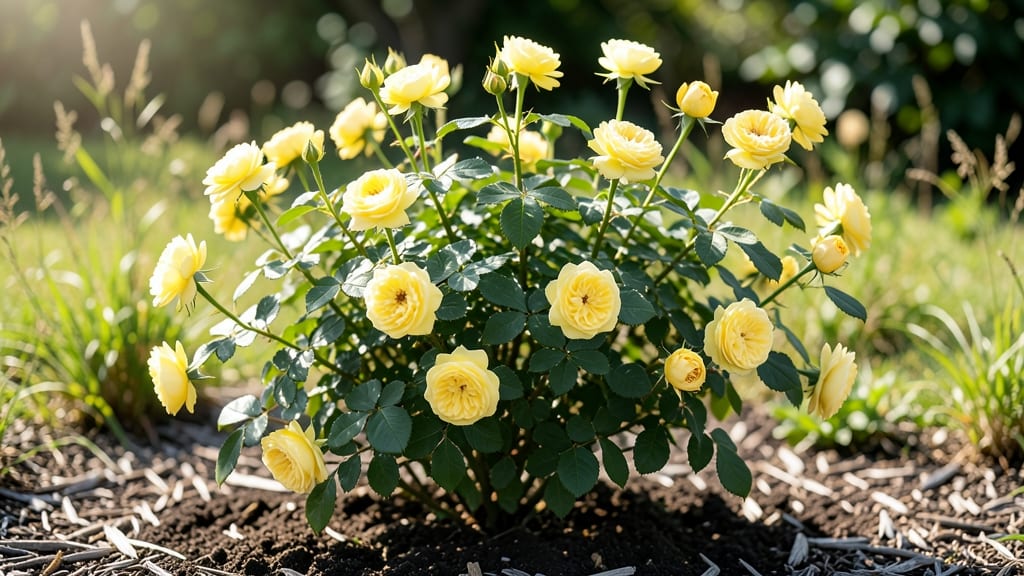
Growing a Japanese yellow rose bush means waking up to sunshine-yellow blooms that smell like a spring morning. 🌸 These aren't your average roses—they're the kind that reward patience with fragrant, repeat blooms all season long, but only if you nail the soil, sunlight, and pruning.
I've grown three varieties now, and the 'Garden Party' series is my favorite for its hardiness and disease resistance.
The secret to their success starts with well-draining soil (they hate soggy roots) and full sun (at least 6 hours daily). Water deeply but infrequently—overwatering is their #1 enemy—and mulch heavily to keep roots cool.
Prune right after blooming to encourage those year-round flowers, and never cut into old wood. My first bush took two seasons to really thrive, but now it's the showstopper of my garden.
📚 In This Guide
- What you need
- Instructions
- Tips and common mistakes
- Wrapping up and next steps
What you need
- ● Japanese Yellow Rose Bush (Rosa foetida or similar hybrid): 1-2 bare-root or potted plants (ensure they’re disease-resistant and hardy for your climate zone).
- ● Well-draining soil: Mix 60% native soil with 30% compost and 10% perlite or coarse sand (aim for a pH of 6.0–6.5).
- ● Organic fertilizer: 5-10-5 or 10-10-10 balanced fertilizer (1–2 lbs per plant).
- ● Mulch: 2–3 inches of wood chips or straw (to retain moisture and suppress weeds).
- ○ Slow-release rose food: Optional but recommended (e.g., Espoma Rose-Tone, 1 lb per plant).
- ● Garden trowel or spade: For digging planting holes (12–18 inches deep).
- ● Pruning shears: Sharp, bypass-style shears (sterilize with rubbing alcohol between cuts).
- ● Gloves: Heavy-duty gardening gloves (roses can have thorns!).
- ● Watering can or hose with nozzle: For gentle, deep watering (1–1.5 gallons per plant, 2–3 times/week).
- ○ Stakes or trellis: Optional but helpful for climbing varieties (3–4 ft tall, 1–2 per plant).
- ○ pH testing kit: Optional (to monitor soil acidity).
- ● Sunlight: Full sun (6+ hours daily) or partial shade (4–6 hours) in hot climates.
- ● Spacing: 3–4 feet apart for bush varieties; 4–6 feet for climbers.
- ● Climate zone: USDA Zones 5–9 (adjust watering in extreme heat/drought).
- ● Patience: First blooms may take 6–12 months, but worth the wait! 🌟
Step-by-step instructions for cultivating a Japanese yellow rose bush
Here’s my method for nurturing a fragrant, long-blooming Japanese yellow rose—where precision trimming meets seasonal care.
🌱 Step 1: Select and Prepare the Planting Site
Japanese yellow roses thrive in full sun—choose a location with at least 6-8 hours of direct sunlight daily. I dig the hole twice as wide as the root ball but only as deep, ensuring the graft union (visible bump near the base) sits 2 inches above soil level. This prevents rot and encourages strong growth.
Amend the native soil with 3 inches of compost mixed into the bottom of the hole. Japanese roses prefer slightly acidic to neutral soil (pH 6.0-6.5), so test your soil first. If it’s too alkaline, add sulfur or peat moss to adjust. Water the hole deeply before planting to settle the soil.
☀️ Step 2: Plant and Water for Establishment
Gently remove the rose from its container and loosen any circling roots. Place it in the hole so the graft union remains 2 inches above soil level, then backfill with native soil mixed with compost, pressing lightly to eliminate air pockets. Water deeply to encourage roots to expand into the surrounding soil.
Mulch around the base with 2-3 inches of organic mulch (like shredded bark), keeping it 6 inches away from the stem to prevent rot. This conserves moisture and regulates soil temperature. Water twice weekly for the first month, ensuring the top 3 inches of soil stay moist—not soggy.
✂️ Step 3: Prune for Shape and Continuous Blooms
Prune your Japanese yellow rose twice a year: late winter (just before new growth starts) and right after the first flush of blooms. In late winter, remove dead, crossing, or inward-growing canes at a 45-degree angle, cutting just above an outward-facing bud. This opens the center for airflow and sunlight.
After the first bloom cycle, cut back one-third of the oldest canes to encourage new growth. Japanese roses bloom repeatedly, so deadhead spent blooms regularly to redirect energy into new flowers. Use sterilized pruners to avoid disease, and dispose of clippings immediately.
🌿 Step 4: Feed and Protect for Year-Round Health
Feed your rose with a balanced, slow-release fertilizer (10-10-10) in early spring, then switch to a low-nitrogen, high-phosphorus formula (5-10-10) when buds form. I apply fertilizer every 6-8 weeks during the growing season, always watering it in thoroughly to prevent root burn.
Protect your rose from black spot and powdery mildew by spraying with neem oil every 2-3 weeks during humid months. Water at the base (not overhead) to keep foliage dry. In Zone 6 or colder, mound soil around the base in late fall for winter protection, then remove it in early spring.
Tips & tricks for cultivating a Japanese yellow rose bush
These are the hard-won lessons that'll help your Japanese yellow rose thrive beyond its first year—where most gardeners see early promise fade.
Sunlight Strategy: While the instructions call for 6-8 hours of direct sunlight, I’ve found that morning sun paired with afternoon shade in hotter climates (like Zone 8+) actually preserves petal vibrancy longer. If you notice leaves wilting by midday, provide light shade during peak hours—your rose will reward you with bigger blooms. The key is maintaining that balance without sacrificing the full sun requirement entirely.
Soil Science: That 3 inches of compost isn’t just filler—it’s the foundation for your rose’s health. I test my soil annually and adjust the pH using sulfur if it drifts above 6.5. For heavy clay soils, mix in perlite to improve drainage while maintaining moisture. The goal is to mimic the well-draining, slightly acidic conditions Japanese roses evolved in—this makes all the difference in root health and bloom frequency.
Pruning Precision: When you’re cutting back one-third of the oldest canes in Step 3, focus on selecting canes that are at least pencil-thick with multiple bloom stems. These are the powerhouses of your bush. I mark them with a ribbon in early spring so I don’t accidentally prune them during the second pruning cycle. This targeted approach keeps your rose productive while maintaining its natural shape.
Watering Wisdom: The "twice weekly" guideline works for most climates, but I’ve learned to adjust based on rainfall. After establishing roots (about 3 months in), I water deeply only when the top 3 inches of soil feel dry to the touch. Overwatering is the silent killer—it causes root rot and weakens your rose’s ability to fight disease. A moisture meter makes this easy to track without guesswork.
Pro Tips for Japanese Yellow Rose Bush
- These are the hard-won lessons that'll help your Japanese yellow rose thrive beyond its first year—where most gardeners see early promise fade.
- Sunlight Strategy: While the instructions call for 6-8 hours of direct sunlight, I’ve found that morning sun paired with afternoon shade in hotter climates (like Zone 8+) actually preserves petal vibrancy longer.
- Soil Science: That 3 inches of compost isn’t just filler—it’s the foundation for your rose’s health.
Frequently asked questions
How often should I prune a Japanese Yellow Rose bush?
Prune your Japanese Yellow Rose twice a year: once in late winter/early spring (before new growth starts) to shape the bush and remove dead wood, and again lightly after blooming (summer) to encourage more flowers. Avoid heavy pruning in fall—it can stimulate tender growth that won’t survive winter. Pro tip: Use clean, sharp shears and sterilize them with rubbing alcohol to prevent disease!
Does a Japanese Yellow Rose bush survive winter?
Yes! This hardy shrub typically thrives in USDA Zones 5-9, but it needs proper winter prep in colder climates. Mulch the base with 2-3 inches of organic mulch (like shredded bark) after the first frost, and wrap young or tender bushes with burlap. Prune back any damaged branches in early spring—new growth will emerge strong!
What pests or diseases commonly affect Japanese Yellow Roses?
Watch for Japanese beetles, aphids, and black spot fungus—all common threats. For beetles, handpick them or use neem oil. Aphids? Blast them off with water or apply insecticidal soap. Prevent black spot by watering at the base (not overhead) and removing infected leaves immediately. Pro tip: Space bushes for airflow to reduce humidity-related diseases!
Can I grow a Japanese Yellow Rose bush in a container?
Choose a large container (at least 15-20 gallons) with drainage holes and use a well-draining potting mix (like a 50/50 blend of soil and perlite). Repot every 2-3 years to refresh nutrients, and move it indoors during harsh winters if you’re in Zone 5 or colder. Bonus: Container roses bloom just as beautifully and are easier to protect from pests!
Why aren’t my Japanese Yellow Roses blooming?
Lack of blooms often stems from over-pruning, poor nutrition, or insufficient sunlight. Ensure your bush gets 6+ hours of sun daily and fertilize in early spring and mid-summer with a balanced rose fertilizer. Skip heavy pruning—this variety blooms on old and new wood, so avoid cutting back more than 1/3 of the bush at once.
What’s the best fertilizer for Japanese Yellow Roses?
Use a balanced, slow-release fertilizer (like 10-10-10 or 5-10-5) in early spring to kickstart growth, then switch to a high-phosphorus formula (e.g., 7-9-5) in summer to boost flowering. Organic options? Try composted manure or fish emulsion—just follow package instructions! Water deeply after fertilizing to prevent root burn.
Wrapping up and next steps
Growing a Japanese Yellow Rose Bush is a rewarding journey that brings vibrant color and intoxicating fragrance to your garden—all while keeping maintenance simple with the right techniques.
Whether you're a seasoned gardener or just starting out, this fragrant beauty thrives with patience, proper care, and a little precision trimming. Now that you’re armed with the know-how, why not take the next step?
- 🌱 Start small: Plant your rose bush in the perfect spot this season and watch it flourish.
- 📅 Mark your calendar: Schedule regular trimming sessions to encourage lush, continuous blooms.
- 💬 Share the joy: Snap photos of your progress and inspire others in your gardening community!
Your garden—and your senses—will thank you! 🌸