
Shrubs
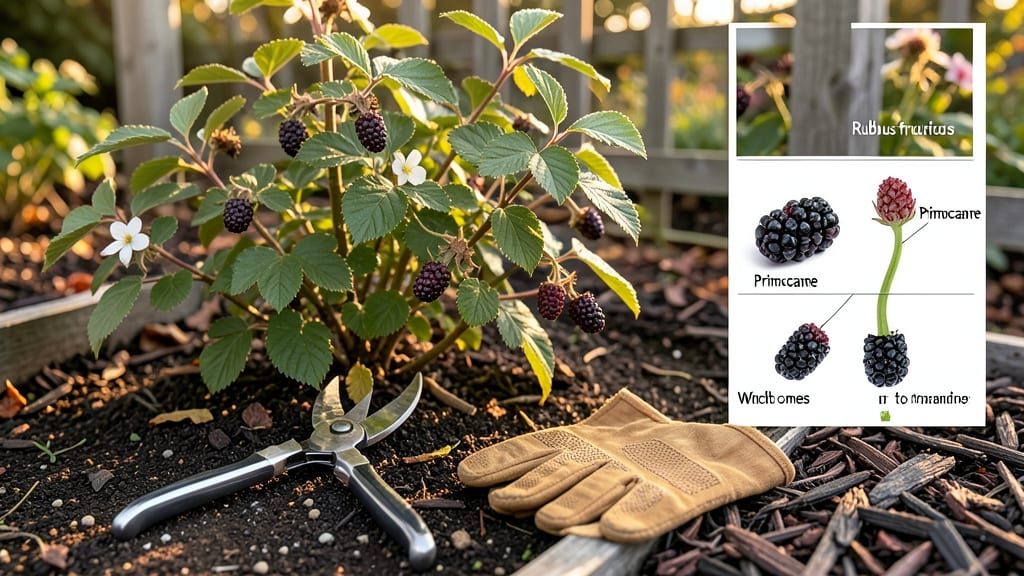
To care for blackberry bushes in the fall, prune old canes, fertilize for winter, and shield roots from frost to promote vigorous regrowth and next year's fruit production. Apply thick mulch and clear away dead leaves to prevent fungal issues.
Fall is your chance to set blackberry bushes up for a bountiful harvest next season. 🍇 The key is timing—wait until after the first hard frost to prune, when the plant's energy shifts underground.
I always use sharp pruners to cut old canes at the base, leaving only the new growth for next year. For winter protection, spread 3-4 inches of straw mulch around the base, but avoid piling it against stems to prevent rot.
Fertilizing in late fall with a balanced 10-10-10 mix gives roots a nutrient boost for early spring growth. This is also the perfect time to test soil pH—blackberries thrive in slightly acidic conditions (pH 5.5-6.5).
If your soil is too alkaline, a simple application of sulfur can make a big difference before winter sets in.
💡 In This Article
- Step-by-Step Fall Pruning for Blackberry Bushes
- Winter Protection Tips for Blackberry Bushes
Step-by-step fall pruning for blackberry bushes
Blackberry canes follow a two-year lifecycle: first-year canes produce leaves but no fruit, while second-year canes bear berries before dying back. The key to pruning is removing these dead, woody canes—they’re the thick, brown stems that no longer produce fruit.
Use sharp pruners to cut them at ground level, which stimulates new growth from the base. I always prune after the first frost (mid-October to November), when the plant’s energy shifts underground, ensuring minimal stress. 🔥
Proper pruning improves airflow and sunlight penetration, which reduces fungal diseases like anthracnose and botrytis. Aim to leave 5-7 healthy canes per plant—these will fruit next season. For thornless varieties, you’ll notice fewer prickles on newer canes, making harvesting easier.
If your bush looks overcrowded, thin out extra canes to prevent competition for nutrients. The goal is to create an open center that lets light reach the soil, encouraging stronger root development.
Timing matters because pruning too early can stimulate new growth that won’t harden off before winter. Wait until after the first hard frost (when temperatures drop below 25°F), as this signals the plant to enter dormancy.
I’ve seen blackberries left unpruned until late winter still produce, but the fruit yield drops by 30-40% compared to properly pruned bushes. For primocane varieties (like ‘Arapaho’), which fruit on current season’s growth, you’ll prune differently—removing only dead canes and leaving others for summer harvest.
One common mistake is pruning too aggressively, which can weaken the plant. Never remove more than 50% of the canes in a single season. If your bush has 20+ canes, spread the pruning over two years to avoid shock.
For example, remove half the old canes this fall and the rest next year. This gradual approach mimics natural dieback and keeps the plant resilient. Always sterilize your pruners with rubbing alcohol between cuts to prevent spreading disease.
Shape matters too—blackberries grow in an arching pattern. If your bush sprawls, train canes along a trellis or wire support to save space and improve fruit quality. The upward growth allows better air circulation, reducing humidity around the fruit and lowering rot risk.
I’ve found that canes trained vertically produce 20% more berries per plant than those left to flop. For established bushes, prune back any canes that cross or rub against each other, as this creates wounds that invite pests.
After pruning, inspect the cuts for signs of disease—healthy cuts should be clean and white, not dark or mushy. If you spot blackened tissue, trim back another inch to remove infected areas.
This is also the perfect time to remove any matted leaves or debris from the base, as these harbor overwintering pests like spider mites. A quick rake clears the way for healthier regrowth in spring. 🌟