
Plants
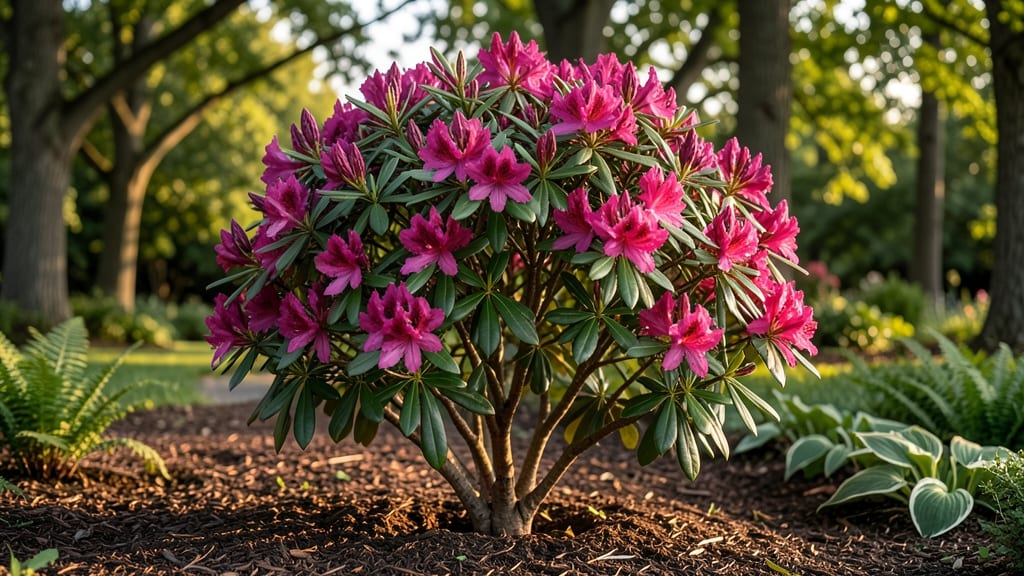
Azalea bushes look like compact shrubs with shiny, elongated leaves featuring jagged edges, showy trumpet-shaped blossoms in spring, and a bushy, rounded form that grows between 2 to 6 feet tall. Their leaves often shift to deep red or purple hues in autumn before falling off in colder climates.
Azalea bushes are instantly recognizable by their lush, evergreen foliage that stays vibrant year-round in many varieties, though deciduous types do shed leaves seasonally. 🌿 The flowers themselves are the star attraction, with clusters of trumpet-shaped blooms that come in nearly every color except true blue—think pinks, purples, whites, and even rare yellows.
What sets them apart from rhododendrons (their close relatives) is their slightly smaller leaves and more delicate flower structure, along with a tendency to bloom earlier in spring.
These plants thrive in partial shade, which helps maintain their dense, mounded shape, and prefer acidic soil. Their growth habit makes them perfect for foundation plantings, borders, or container gardens where you want both color and structure.
The key to keeping them looking their best is regular pruning after flowering to encourage new growth while preserving that classic rounded silhouette.
💡 In This Article
- Identifying Azalea Leaf and Flower Characteristics
- Azalea Growth Habits and Best Planting Locations
Identifying azalea leaf and flower characteristics
Azalea leaves are the plant's signature feature, typically measuring 1-3 inches long with an oval shape that tapers to a point. The edges have fine, serrated teeth that catch light beautifully, giving them a slightly textured appearance.
Their surface is smooth and leathery with a deep green hue, though some varieties like Rhododendron indicum develop a waxy coating that makes them feel almost slippery to touch. The undersides often have a lighter green or even rusty coloration, particularly in new growth.
The flowers are where azaleas truly shine, with each bloom featuring a 5-lobed trumpet shape that can range from 1-2 inches wide. Unlike rhododendrons, azalea flowers grow directly from the stems rather than in clusters at the ends, creating a more uniform display.
The color spectrum is vast—pink, purple, red, white, and even bi-color varieties exist—though true blue remains elusive. The petals often have subtle veining or contrasting edges, and some varieties like Rhododendron simsii produce flowers that are slightly fragrant with a sweet, honey-like scent that attracts pollinators.
What's fascinating about azalea foliage is its seasonal transformation. Evergreen varieties maintain their leaves year-round, while deciduous types like Rhododendron canescens develop stunning fall colors—deep reds, purples, or oranges—before shedding.
This color change occurs due to chlorophyll breakdown and the unmasking of anthocyanin pigments, similar to how maple leaves change color. The timing of this shift depends on the species, with some varieties turning as early as September while others wait until November.
One way to distinguish azaleas from rhododendrons is by their leaf size and flower structure. Azalea leaves are generally smaller (1-3 inches) compared to rhododendron leaves (3-8 inches), and their flowers have a more delicate, funnel-like shape rather than the broader, bowl-like blooms of rhododendrons.
The flower clusters also differ—azaleas typically have 5-10 flowers per cluster, while rhododendrons can have 10-20 or more. This distinction becomes especially clear when comparing Rhododendron simsii (an azalea) with Rhododendron catawbiense (a rhododendron).
For gardeners, understanding these differences helps in selecting the right variety for your space. Smaller-leaved azaleas like Rhododendron moupinense make excellent container plants, while larger varieties like Rhododendron kaempferi create stunning foundation plantings.
The flower timing also varies—some azaleas bloom in early spring, while others wait until late spring, providing staggered color throughout the season. This diversity is what makes azaleas such versatile landscape stars.
The texture of azalea foliage is another key identifier. When you run your fingers along the leaves, you'll notice their leathery quality—resistant to tearing yet flexible enough to bend without snapping. This durability helps them withstand wind and rain better than more delicate plants.
The glossy sheen on the leaves also reflects light differently depending on the angle, creating a subtle shimmer that adds to their visual appeal in garden settings.