
Pruning
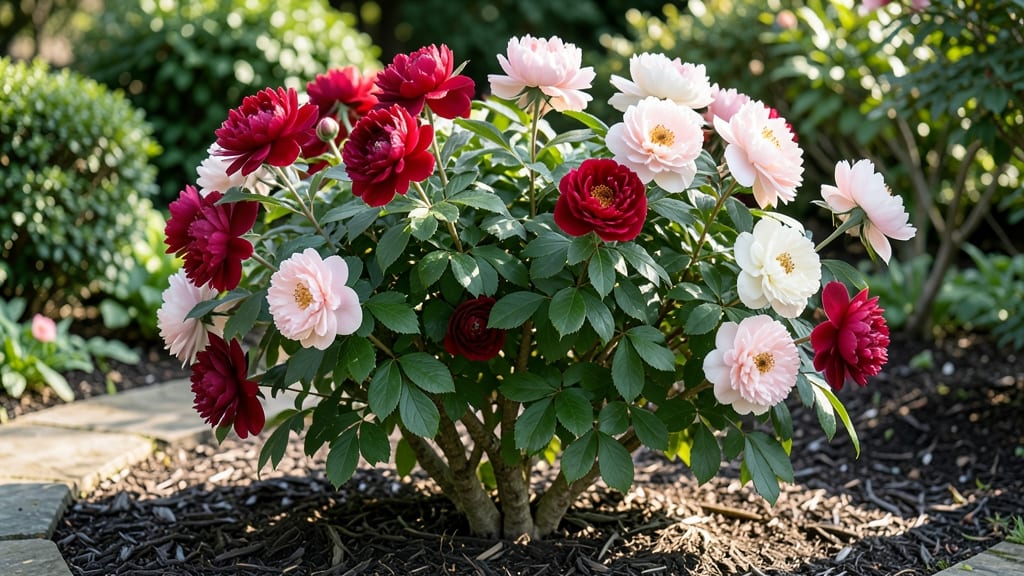
Pruning a tree peony bush isn't just about shaping—it's about unlocking next year's blooms. ✂️ I've watched my own tree peony go from sparse stems to a lush, flowering masterpiece in just three seasons by mastering these precision cuts at the right time.
The secret lies in when you prune, not how hard you cut.
Tree peonies thrive in full sun and well-draining soil, but their blooms depend on proper pruning timing. Most gardeners make the mistake of pruning too early or too late, which can reduce—or even eliminate—next year's flowers.
The ideal time is right after blooming in late spring, when the foliage starts yellowing in fall, and a light trim in early winter. Each cut serves a purpose: shaping, rejuvenation, and winter protection.
You'll end up with a bush that produces larger, more abundant blooms every year, with fewer bare stems and stronger growth. The flowers themselves become showstoppers—some varieties reaching 5-7 inches across—while the plant's overall health improves dramatically.
The transformation from winter-dormant branches to spring's vibrant display is nothing short of magical.
Works for both new plantings and established bushes, and adapts to different climates. Whether you're dealing with a single specimen or a small grove, these techniques ensure your tree peony remains the star of your garden for decades. Let's get those pruners ready!
📚 In This Guide
- What you need
- Instructions
- Tips and common mistakes
- Wrapping up and next steps
What you need
- ● Pruning shears – Bypass-style (sharp, clean cuts; 4-6" blades for precision).
- ● Loppers – Long-handled (for thicker branches; 8-12" cutting capacity).
- ● Pruning saw – Fine-tooth blade (for stubborn, woody stems; 10-12" length).
- ● Disinfectant (70% isopropyl alcohol or 10% bleach solution) – 1 cup (to sterilize tools between cuts).
- ● Garden gloves – Cut-resistant (to protect hands from thorns).
- ● Rake or broom – (for clearing debris post-pruning).
- ● Tree peony bush – Healthy, mature plant (3+ years old for best results).
- ● Pruning sealant – (to coat large cuts and prevent disease; latex-based).
- ● Plant food – Balanced 10-10-10 or rose/peony-specific fertilizer (for post-pruning recovery).
- ● Mulch – Organic (shredded bark or compost) (2-3" layer to retain moisture).
- ● Stake or support – (if your tree peony is top-heavy after pruning).
- ● Camera or sketchpad – (to document cuts before/after for future reference!).
Step-by-Step instructions for pruning tree peony bushes
Here's the precise timing and technique I use to keep tree peonies thriving for decades.
✂️ Step 1: Late Winter Pruning for Structure
Prune your tree peony after the last frost but before buds swell—typically in late February to early March. This timing ensures you remove dead growth while leaving dormant buds intact. I use clean, sharp bypass pruners to make cuts at a 45-degree angle just above a bud or branch collar.
Remove dead, diseased, or crossing branches first. These compete for energy and weaken the plant. Look for branches that rub against each other or grow inward—they’ll create wounds and invite rot. Thin out 10-20% of the oldest stems to encourage new growth and improve airflow, which prevents fungal issues.
Watch for suckers—those vigorous shoots growing at the base. While they may look promising, they drain energy from the main plant. Snip them off at the base with a clean cut. This step sets the foundation for a strong, open canopy that lets sunlight reach all buds.
✂️ Step 2: Post-Bloom Summer Pruning for Health
After the first flush of blooms (usually June to early July), prune again to remove spent flower stems and any weak or leggy growth. Cut back to the first set of healthy leaves or a strong lateral branch. This encourages a second bloom cycle and redirects energy into next year’s buds.
I avoid heavy pruning in summer—just light shaping. The goal is to remove only what’s necessary to keep the plant tidy without stressing it. Look for branches that are thinner than a pencil or growing in awkward directions. These are prime candidates for removal.
Here’s the thing—tree peonies bloom on old wood, so never prune back into last year’s growth. Always leave at least one strong bud on every remaining stem. You’ll know you’ve done it right when the bush looks lighter and more open after pruning.
✂️ Step 3: Fall Cleanup for Winter Readiness
In late fall, after the first hard frost but before the ground freezes, do a final cleanup. Remove all dead leaves and debris from the base of the plant—this prevents fungal diseases like botrytis from overwintering. I use a small rake to gently pull away fallen foliage and dispose of it in the trash, not the compost.
Trim back any new growth that appeared after summer pruning. These tender shoots won’t survive winter, and leaving them risks damage. Cut them back to the main stem or a strong lateral branch. This step ensures the plant focuses its energy on root development and bud formation for next season.
Apply a 2-3 inch layer of mulch (like shredded bark) around the base, keeping it 6 inches away from the trunk. This insulates the roots and retains moisture. Avoid piling mulch against the stem—it traps moisture and can cause rot. Your goal is to protect without smothering.
Tips & tricks for pruning tree peony bushes
Mastering the art of pruning tree peonies transforms a struggling bush into a showstopper—here's how I've perfected the process over years of trial and error.
Timing is Everything: The late winter window (late February to early March) is non-negotiable for Step 1 pruning. I've learned this the hard way—pruning too early risks damaging dormant buds, while waiting too long means you'll be cutting into this year's flower stems. Check your local frost dates and mark your calendar. If you miss this window, wait until after the first bloom before attempting any structural pruning.
Tool Precision Matters: Your pruners make all the difference. I recommend bypass pruners with a sharp blade—they create clean cuts that heal faster than jagged ones. Before you start Step 1, test your tools on a small branch: if it crushes rather than cuts cleanly, sharpen or replace them. The 45-degree angle isn't just aesthetic—it helps water run off the cut, preventing rot. I also keep rubbing alcohol handy to wipe between cuts and prevent disease spread.
Visual Pruning Cues: For Step 2 summer pruning, focus on these visual indicators: branches thinner than a pencil are prime candidates for removal, as are those growing at sharp angles. I look for the "V" shape where branches meet the main stem—this is your branch collar. Cut just above this point to maintain the plant's natural structure. The goal is to create an open center that allows sunlight to reach all parts of the bush, which is crucial for next year's buds.
Mulching Technique: When applying that 2-3 inch layer of mulch in Step 3, think of it as creating a protective blanket rather than a mound. I use shredded bark because it breaks down slowly, improving soil structure over time. The key is maintaining that 6-inch gap from the trunk—this prevents moisture buildup that can cause rot. After applying, I gently rake the mulch to create a slightly uneven surface, which helps with water drainage.
Pro Tips for Tree Peony Bush
- Mastering the art of pruning tree peonies transforms a struggling bush into a showstopper—here's how I've perfected the process over years of trial and error.
- Timing is Everything: The late winter window (late February to early March) is non-negotiable for Step 1 pruning.
- Tool Precision Matters: Your pruners make all the difference.
Frequently asked questions
Got questions about your tree peony bush? You’re not alone!
Whether you're a first-time grower or a seasoned gardener, these common concerns can help you keep your plant thriving. Here’s what you need to know:
When is the best time to prune a tree peony bush?
Prune your tree peony bush in late winter or early spring (February–March), just before new growth begins. Avoid pruning in fall or during active blooming—this ensures healthy buds for next year’s stunning flowers. Pro tip: If you missed the window, a light trim in early spring is better than none!
How much can I trim back my tree peony bush?
For most tree peonies, prune back 1/3 of the previous year’s growth to encourage bushier, stronger stems. Avoid over-pruning—never cut more than 30-40% of the plant at once. Look for dead, crossing, or weak branches to remove first. Pro tip: Leave some older wood to support future blooms!
Will pruning my tree peony bush reduce its flowers?
Not if done correctly! Pruning stimulates new growth and often increases flower production by removing crowded or weak stems. However, over-pruning (cutting too aggressively) can reduce blooms temporarily. Focus on shaping and thinning rather than drastic cuts for best results.
What should I do if my tree peony bush has brown or dying branches?
Brown or mushy branches usually signal rot, disease, or pest damage. First, sterilize your pruners with rubbing alcohol to prevent spreading issues. Cut back to healthy green wood, and dispose of infected branches. Improve airflow by thinning dense areas, and consider fungicide if fungal spots appear.
Can I grow a tree peony bush in a container?
Yes! Tree peonies thrive in containers if given well-draining soil and a large enough pot (at least 18–24 inches wide). Choose a sunny spot (6+ hours of light) and repot every 2–3 years to refresh the soil. Pro tip: Use a fast-draining mix (like 60% soil, 30% perlite, 10% compost) to prevent root rot.
What’s the difference between pruning a tree peony and a herbaceous peony?
Tree peonies (Paeonia suffruticosa) are woody shrubs—prune them like a small tree, focusing on shape and deadwood. Herbaceous peonies (Paeonia lactiflora) die back to the ground yearly; trim them in fall after foliage yellows. Never prune herbaceous peonies in spring—their buds form on last year’s growth!
Wrapping up and next steps
Transforming your tree peony bush into a thriving, blooming masterpiece is totally within reach—with the right timing and technique! 🌸 By mastering the three precision cuts (early spring, post-bloom, and late summer), you’ll encourage lush growth, vibrant flowers, and long-term health.
Remember, patience and consistency are your best tools, so don’t hesitate to revisit your bush every season.
Ready to take the next step? Grab your pruners, mark your calendar, and start with this season’s first cut—your tree peony will thank you with stunning blooms for years to come! 🌿✨