
Pruning
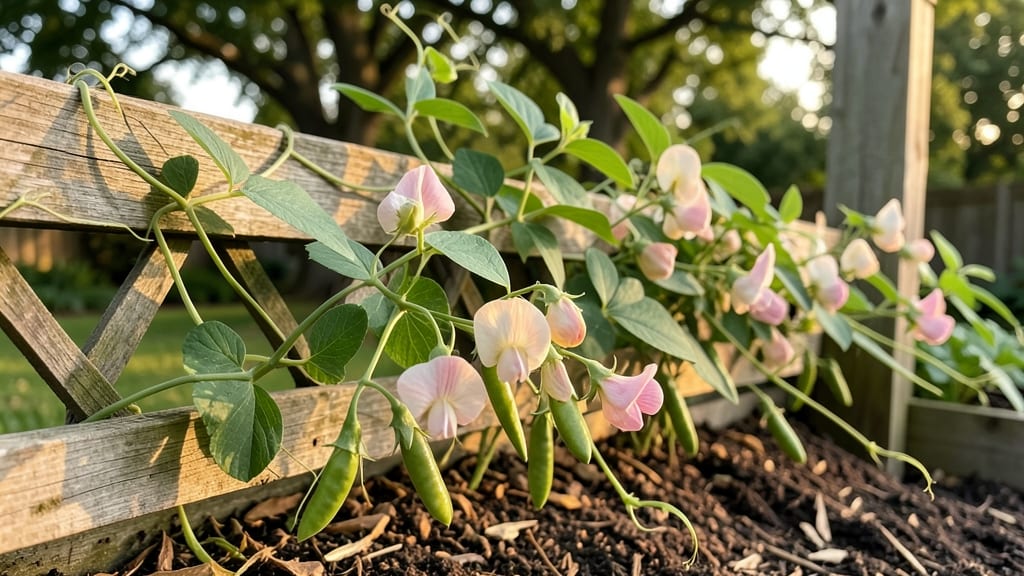
A sweet pea bush care routine unlocks their full potential—fragrant clouds of blooms that last all season.
The secret isn’t complicated: prune spent blooms just as they fade, and you’ll trigger a second flush of flowers that lasts until summer’s end. 🌸 I’ve learned the hard way that skipping this step means fewer flowers and leggy stems by the season’s close.
The key is consistency: remove faded blooms just as they wilt, and your bush will keep producing vibrant flowers until frost.
Start with well-draining soil rich in organic matter—sweet peas hate soggy roots. Plant in full sun (6+ hours daily) and water consistently, keeping the soil moist but not waterlogged. Unlike many flowers, sweet peas thrive when supported with a trellis or sturdy stakes, so install that early.
The payoff? Vibrant blooms in shades of pink, purple, and white that perfume the air for weeks.
Here’s the game-changer: deadhead every faded bloom by pinching it off at the first set of leaves. This redirects energy to new growth, not seed production. Do it religiously, and your bush will keep producing flowers until frost.
Skip it, and you’ll end up with a bush full of seed pods and hardly any blooms.
Watch for aphids on new shoots—spray with soapy water if you spot them. And save those dried seed pods! Sweet peas self-seed easily, so you can grow next year’s crop from last season’s blooms.
The key is consistency: prune, water, repeat. That’s all it takes to turn your sweet peas into a fragrant, flowering powerhouse.
📚 In This Guide
- What you need
- Instructions
- Tips and common mistakes
- Wrapping up and next steps
What you need
- ● Sweet pea seeds or seedlings: 10–20 seeds (if starting from scratch) or 2–3 healthy seedlings (for quicker results).
- ● Pro tip: Choose heirloom varieties like ‘Cupani’ or ‘Perfume’ for fragrant blooms! 🌸
- ● Well-draining potting mix or garden soil: 5–10 gallons (for containers) or amended garden soil (for in-ground planting).
- ● Mix in: 20% perlite or compost for aeration and nutrients.
- ○ Containers (optional but helpful): 5–10 gallon pots (with drainage holes) or a raised bed (12" deep minimum).
- ● Pruning shears: Sharp, bypass-style shears (for clean cuts).
- ● Pro tip: Sterilize blades with rubbing alcohol before/after pruning to prevent disease! 🧴
- ● Gloves: Heavy-duty gardening gloves (to protect from thorns and soil).
- ● Stakes or trellis: 4–6 ft tall (sweet peas are vining climbers!).
- ● Options: Metal cages, bamboo stakes, or a DIY wooden frame.
- ● Fertilizer: Balanced 10-10-10 or 5-10-10 granular fertilizer (sprinkle lightly every 4–6 weeks).
- ● Organic alternative: Compost tea or worm castings.
- ● Mulch: 2–3 inches of straw or shredded leaves (to retain moisture).
- ● Slow-release fertilizer spikes (for convenience).
- ● Plant ties or soft twine (to secure vines to trellises gently).
- ● Spray bottle (for misting seedlings or tender new growth).
- ● pH testing kit (aim for 6.0–7.0 soil pH—sweet peas prefer slightly acidic to neutral).
- ● Floral preservative (if cutting blooms for arrangements!).
Step-by-step sweet pea bush care for continuous blooms
Sweet peas reward patience with vibrant flowers—here’s how to keep them blooming all season.
🌱 Step 1: Plant in Well-Draining Soil with Full Sun
Sweet peas thrive in loamy, well-draining soil with a pH between 6.5 and 7.5. Amend heavy clay by mixing in 2-3 inches of compost before planting. Choose a location with at least 6-8 hours of direct sunlight daily—partial shade leads to fewer blooms and leggy growth.
Dig a hole twice as wide as the root ball but no deeper. Gently loosen roots if pot-bound, then place the bush in the hole, ensuring the top of the root ball sits level with the soil surface. Backfill with native soil, pressing lightly to eliminate air pockets. Water deeply immediately to settle the soil and encourage root expansion.
☀️ Step 2: Water Deeply and Consistently
Sweet peas need 1-1.5 inches of water per week, delivered at the base to avoid wetting foliage (which promotes fungal diseases). Water early in the morning to allow leaves to dry before evening. You’ll know moisture is right when the top 2 inches of soil feel dry to the touch—this prevents root rot while keeping roots hydrated.
Mulch with 2-3 inches of organic mulch (like shredded bark) to retain moisture and suppress weeds. Keep mulch 2 inches away from the stem to prevent rot. Overwatering is the #1 killer—yellowing leaves or wilting despite damp soil signals you’re overdoing it.
✂️ Step 3: Deadhead Regularly for Nonstop Blooms
Here’s the secret to continuous flowers: Deadhead spent blooms within 24 hours of wilting. Use clean pruners to snip the stem just above the first set of healthy leaves (about ½ inch below the bloom). This redirects energy from seed production to new flower growth.
For bushier plants, prune back leggy stems by ⅓ in early summer. Avoid heavy pruning late in the season—it reduces next year’s blooms. Watch for new buds forming at the base of stems; these are your plant’s signal it’s ready for more flowers.
🌿 Step 4: Fertilize Lightly for Balanced Growth
Feed sweet peas with a balanced, slow-release fertilizer (10-10-10) at planting, then again 4-6 weeks later. Avoid high-nitrogen fertilizers—these promote leafy growth at the expense of flowers. Instead, use a low-nitrogen, phosphorus-rich formula (like 5-10-5) to encourage blooming.
After flowering begins, switch to a liquid bloom booster every 4-6 weeks. Apply only when the soil is moist to prevent root burn. You’ll see stronger stems and more vibrant blooms within 2-3 weeks of proper feeding.
⏰ Step 5: Prepare for Winter Dormancy
As temperatures drop below 50°F at night, sweet peas enter dormancy. Reduce watering to once every 10-14 days, keeping soil just moist. Cut back dead or diseased stems to 6 inches tall, but leave healthy stems intact—they’ll regrow in spring.
Mulch heavily (4-6 inches) with straw or shredded leaves to insulate roots. In colder climates (below 10°F), wrap the base of the bush with burlap or frost cloth for extra protection. Prune back completely in late winter (just before new growth appears) to encourage fresh, vigorous shoots.
Tips & tricks for perfect sweet pea bush care
Here's what nobody tells you about keeping your sweet peas blooming like a pro—these are the little details that make all the difference.
Sunlight Strategy: That 6-8 hours of direct sunlight isn't just a minimum—it's the sweet spot for maximum blooms. I've seen sweet peas in partial shade produce only 30% of the flowers compared to full sun. If your garden gets less light, choose a southern exposure or supplement with a grow light for 4-6 hours daily during shorter days. The key is consistent light exposure throughout the day, not just peak hours.
Deadheading Discipline: The 24-hour window for deadheading is critical—wait longer than that, and you're essentially telling your plant to waste energy on seed production instead of new blooms. I use a small pair of clean pruners dedicated just to this task, and I set a reminder on my phone for when I notice the first wilting petals. Pro tip: Snip at the base of the bloom where the stem meets the leaf node—this hidden joint is where new buds will form.
Watering Wisdom: The 1-1.5 inches of water per week is a guideline, but timing matters just as much. I've learned the hard way that watering in the evening can lead to fungal issues—those damp leaves overnight create the perfect breeding ground. Instead, water early in the morning when the sun can quickly dry the foliage. And here's a trick: Use a rain gauge or mark a water bottle to measure exactly 1-1.5 inches—most people underestimate how much water that actually is.
Fertilizer Timing: That 4-6 week interval between feedings is perfect for giving your sweet peas a steady nutrient supply without overwhelming them. I've found that applying the liquid bloom booster right after a good rain (or thorough watering) ensures the nutrients get absorbed properly. And here's what nobody tells you—if you notice new growth but no flowers, you're likely overdoing the nitrogen. Switch to that phosphorus-rich formula immediately to redirect growth toward blooms.
Pro Tips for Sweet Pea Bush Care
- Here's what nobody tells you about keeping your sweet peas blooming like a pro—these are the little details that make all the difference.
- Sunlight Strategy: That 6-8 hours of direct sunlight isn't just a minimum—it's the sweet spot for maximum blooms.
- Deadheading Discipline: The 24-hour window for deadheading is critical—wait longer than that, and you're essentially telling your plant to waste energy on seed production instead of new blooms.
Frequently asked questions
Got questions about keeping your sweet pea bush happy and blooming? You’re not alone! Here are answers to the most common concerns—from pruning puzzles to pest problems—so you can enjoy nonstop floral drama.
When is the best time to prune sweet peas for more flowers?
Prune sweet pea bushes right after the first flush of blooms (usually late spring to early summer). Cut back leggy stems by one-third to encourage bushier growth. For continuous blooms, deadhead spent flowers weekly—this redirects energy to new buds! Avoid heavy pruning in fall, as the plant needs time to harden off.
How often should I deadhead sweet pea flowers?
Deadhead every 3–5 days during peak bloom season (spring/summer) to keep your bush producing flowers. Use clean pruners to snip stems just above a set of healthy leaves. Pro tip: If you’re swamped, aim for weekly—consistency matters more than perfection! Overlooking this step? Say hello to seed pods and fewer blooms.
What should I do if my sweet pea bush has yellow leaves?
Yellow leaves often signal overwatering, nutrient deficiency, or pests. First, check soil moisture—sweet peas hate soggy roots. If leaves are crunchy or have holes, aphids or spider mites may be the culprits. Act fast: Spray with neem oil or insecticidal soap, and boost potassium with a balanced fertilizer. Yellowing from the bottom up? It’s likely a sign of root rot.
Can I grow sweet peas in containers? What’s the best setup?
Sweet peas thrive in 5–7 gallon containers with drainage holes. Use a well-draining potting mix (add perlite or sand) and a trellis or cage for support. Place pots in full sun (6+ hours/day) and water when the top inch of soil feels dry. Container hack: Mix in compost at planting for extra nutrients—these plants are heavy feeders!
Do sweet peas need winter protection? How do I overwinter them?
Sweet peas are hardy to USDA zones 3–9, but young plants or tender varieties benefit from mulch (2–3 inches of straw or shredded leaves) to insulate roots. In colder zones, cut back stems to 6 inches and cover with burlap or a frost blanket. Skip pruning in late fall—let foliage protect the crown until spring. Most sweet peas resprout reliably if roots stay intact!
What’s the fastest way to revive a struggling sweet pea bush?
Start with a soil check: Amend heavy clay with compost, and loosen compacted soil. Water deeply but infrequently—sweet peas despise wet feet. Feed with a low-nitrogen fertilizer (like 5-10-10) every 4–6 weeks. If stems are weak, stake them immediately and prune back any mushy or blackened growth. Patience pays off—healthy regrowth usually appears within 2–3 weeks!
Wrapping up and next steps
Caring for your sweet pea bush is all about timing, patience, and a little love—especially when it comes to deadheading! With the right tools, a gentle touch, and a watchful eye, you’ll be rewarded with a cascade of fragrant blooms all season long. 🌸
Ready to level up your gardening game? Start by bookmarking this guide and grabbing your pruners—your sweet pea bush is waiting for its next trim! 🌱