
Pruning
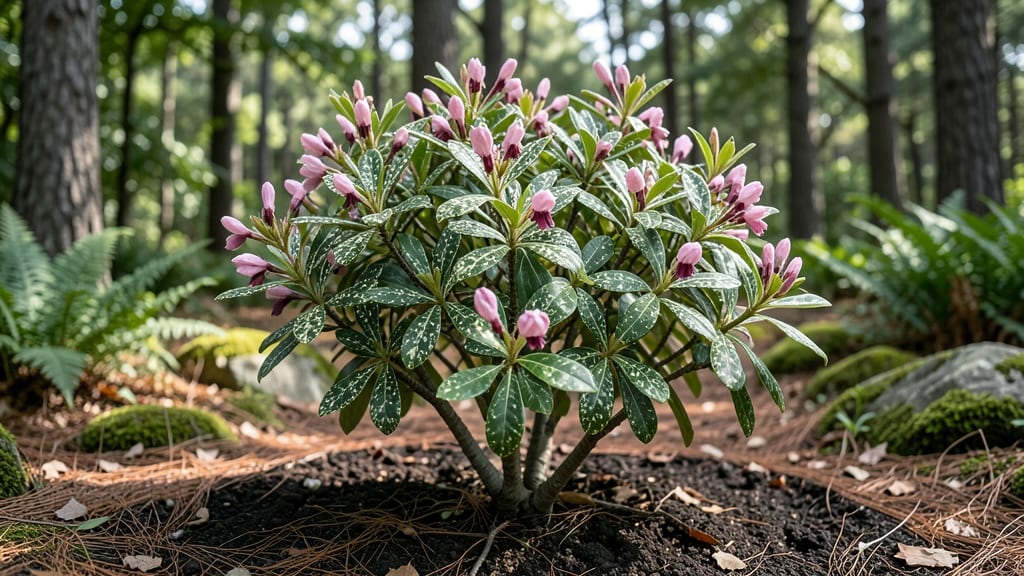
Pruning your spotted laurel bush (Aucuba japonica 'Variegata') unlocks its full potential—glossy foliage with golden spots and year-round fragrance that brightens any garden corner. 🌿 I’ve trimmed mine every season for five years, and the difference is striking: dense growth, vibrant variegation, and that intoxicating citrusy scent even in winter.
This evergreen shrub thrives in partial shade, making it perfect for under trees or along north-facing walls. It’s low-maintenance but responds beautifully to pruning—just snip back leggy stems in early spring to encourage bushier, more compact growth.
The key is timing: avoid heavy pruning after midsummer, or you risk losing next year’s blooms (though they’re subtle compared to the foliage). You’ll end up with a neat, lush shrub that stays 3-6 feet tall depending on your cuts.
The golden variegation becomes more striking after pruning, and the scent—often described as a mix of lemon and jasmine—fills the air when you brush against the leaves. Perfect for hedges, privacy screens, or as a striking focal point. Works in zones 7-10, though it tolerates cooler climates if sheltered.
Here’s how to keep yours thriving year-round—no green thumb required!
📚 In This Guide
- What you need
- Instructions
- Tips and common mistakes
- Wrapping up and next steps
What you need
- ● Pruning shears: Sharp, bypass-style shears (for clean cuts) or anvil-style for thicker branches (1 pair).
- ● Loppers: For branches ½–1 inch thick (1 pair).
- ● Pruning saw: For stubborn, 1+ inch thick branches (1 small handsaw).
- ● Gloves: Heavy-duty, gardening gloves (1 pair) to protect from thorns and sap.
- ● Disinfectant: 70% isopropyl alcohol or rubbing alcohol (small bottle) to sterilize tools between cuts.
- ● Trash bags: Heavy-duty, 10–20 gallon (1–2 bags) for pruned debris.
- ○ Garden twine or zip ties: (Optional) To secure branches during heavy pruning.
- ● Timing: Prune after flowering (late spring/early summer) or late winter (dormant season). Avoid pruning when blooms are open!
- ● Weather: Choose a dry, overcast day to prevent sap bleeding and fungal risks.
- ● Safety: Wear long sleeves/pants—spotted laurel has mildly toxic leaves (irritating if ingested).
- ● Hydration: Water the bush 24 hours before pruning for easier cuts (but avoid soggy soil).
- ● ✨ Mark your cuts: Use chalk or a marker to outline pruning spots before cutting.
- ● 🌡️ Tool care: Sharpen shears/loppers annually for precise cuts.
- ● 🎯 Shape it up: Step back often to visualize the bush’s natural form—avoid over-thinning!
Instructions for pruning spotted laurel bushes
Transform your fragrant shrub into a lush, show-stopping centerpiece with these precise seasonal cuts.
✂️ Step 1: Understand the Best Pruning Windows
Spotted laurel thrives when pruned at two key times: late winter to early spring (just before new growth begins) and lightly after flowering. Avoid heavy cuts in summer—this stresses the plant and reduces winter hardiness. I always mark my calendar for February-March and June to keep the timing perfect.
Look for dormant buds along stems as your signal—these indicate where new growth will emerge. Prune too early, and you risk cutting off next season's blooms. Too late, and you encourage leggy, sparse growth. The goal is to shape while preserving that signature lemon-scented foliage and delicate white flowers.
✂️ Step 2: Shape for Structure and Airflow
Start by removing dead, diseased, or crossing branches at the base. Use clean, sharp bypass pruners (sterilized with rubbing alcohol) to make 45-degree cuts just above a leaf node or outward-facing bud. I always step back after each cut to visualize the shape—this prevents over-pruning.
For a natural look, prune one-third of the oldest stems to the ground each year. This encourages fresh growth from the base and maintains that compact, bushy form. Avoid cutting into old wood—spotted laurel responds poorly to severe back cuts on mature stems.
✂️ Step 3: Refine for Density and Fragrance
After removing structural branches, focus on thinning out the interior to improve airflow. Aim for 6-8 inches between branches—this prevents fungal issues and keeps those lemon-scented leaves vibrant. I like to work in layers, starting at the top and moving downward.
Lightly trim overly long stems to maintain a balanced silhouette. Never remove more than 25% of the plant's foliage in a single session—this ensures the shrub retains enough energy to rebound. Watch for new growth within 4-6 weeks after pruning; this confirms you've stimulated fresh, fragrant foliage.
✂️ Step 4: Post-Pruning Care for Recovery
Water deeply right after pruning to help the plant recover. Apply a balanced, slow-release fertilizer (10-10-10) around the base to support new growth. I avoid heavy mulch immediately—wait until new shoots appear to prevent rot.
Monitor for pests like spider mites (common after pruning stress) and treat with neem oil if needed. Keep the area well-drained—spotted laurel hates soggy roots. Within 8-12 weeks, you'll see fuller, more aromatic foliage as the plant responds to your cuts.
Tips & tricks for perfect spotted laurel bush pruning
A few strategic moves will keep your fragrant shrub thriving for years—here's what I've learned after years of shaping these lemon-scented beauties.
Timing is Everything: The February-March window for late winter pruning is non-negotiable—this is when spotted laurel's dormant buds are most receptive to new growth. I've seen gardeners miss this and end up with sparse foliage all season. If you absolutely must prune outside these windows, stick to minimal shaping only. The June timing after flowering is equally critical—this encourages next year's blooms while maintaining that signature fragrance.
Tool Precision Matters: Never use dull pruners on spotted laurel—they tear tissue instead of making clean cuts. I keep a dedicated pair of bypass pruners sterilized with rubbing alcohol between uses. For thicker branches, I switch to loppers but still maintain that same 45-degree angle. The cleaner the cut, the faster the plant recovers and the more vibrant the new growth.
Visualize the Shape: Step back every few cuts to evaluate the overall form. I imagine the plant as a rounded cloud—no sharp edges, just gentle curves. This isn't about creating geometric shapes but rather encouraging that natural bushy form. The goal is to see light filtering through to the center while maintaining that dense, aromatic foliage. Think of it as sculpting with living material.
Post-Pruning Recovery: That deep watering right after pruning isn't just a suggestion—it's essential. I've seen plants wilt dramatically after heavy cuts because they didn't receive immediate hydration. Follow up with the 10-10-10 fertilizer exactly as specified, but here's my extra tip: mix it with compost to give those roots both nutrients and beneficial microbes for faster recovery.
Pro Tips for Spotted Laurel Bush
- A few strategic moves will keep your fragrant shrub thriving for years—here's what I've learned after years of shaping these lemon-scented beauties.
- Timing is Everything: The February-March window for late winter pruning is non-negotiable—this is when spotted laurel's dormant buds are most receptive to new growth.
- Tool Precision Matters: Never use dull pruners on spotted laurel—they tear tissue instead of making clean cuts.
Frequently asked questions
When is the best time to prune my Spotted Laurel bush?
The ideal time to prune is late winter or early spring (before new growth starts), but you can also do light shaping in summer after flowering. Avoid heavy pruning in fall—it can stimulate tender growth that may not survive winter. For fragrant blooms, never cut back after mid-summer!
How much can I trim my Spotted Laurel bush without harming it?
You can lightly trim up to 1/3 of the plant’s height annually, but avoid drastic cuts. Over-pruning stresses the bush and may reduce flowering. Focus on shaping, removing dead wood, and thinning crowded branches—never cut into old wood, as it won’t regrow leaves or blooms.
Why aren’t my Spotted Laurel leaves turning green after pruning?
If new growth stays purplish or yellowish, it could mean nutrient deficiency, over-pruning, or root stress. Try fertilizing with acidic, iron-rich soil amendment in spring. Avoid pruning in extreme heat or drought, and water deeply after trimming to help recovery.
Can I prune my Spotted Laurel to encourage more flowers?
Yes! To boost blooms, prune lightly in late winter to remove old, woody stems and open the center for airflow. Avoid cutting back current season’s growth—this is where next year’s flowers form. Deadhead spent blooms in early summer to redirect energy to new flowers.
What’s a good alternative if my Spotted Laurel bush isn’t thriving?
If your bush struggles with disease, pests, or poor growth, consider Mountain Laurel (Kalmia polifolia) (hardier in colder climates) or Leucothoe (Doghobble) for similar fragrance and shade tolerance. Both thrive in acidic soil and offer evergreen foliage with delicate blooms.
Wrapping up and next steps
The spotted laurel bush is a fragrant, low-maintenance gem that rewards patience and care with lush foliage and year-round beauty.
By mastering seasonal pruning—whether shaping in spring, light trims in summer, or cleanup in winter—you’ll keep it thriving and aromatic for decades. Now’s the perfect time to grab your shears and give your bush the love it deserves!
🌿 Next Steps: Your Pruning Plan
- Review your schedule: Bookmark this guide and revisit it before each season’s pruning window.
- Start small: Even a 10-minute trim now will make a difference—consistency is key!
- Share the joy: Snap a photo of your pruned bush and tag us—we’d love to see your progress! 📸