
Plants
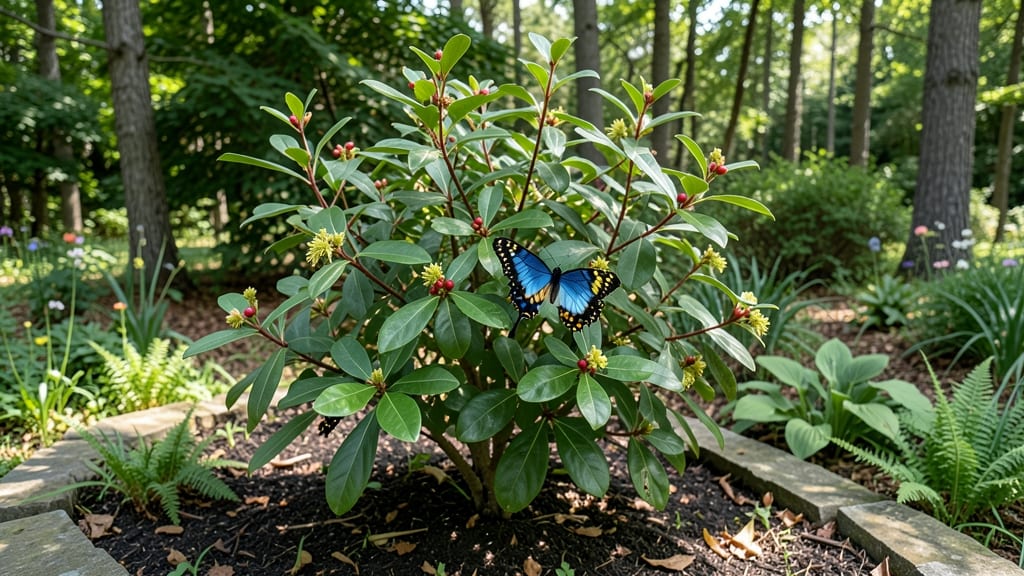
Spicebush swallowtail males are the flashy blue-black acrobats of your garden—but they won’t visit without the right host plants. 🌿 I’ve watched these iridescent butterflies dance around my yard for years, and the secret to attracting them starts with growing spicebush (Lindera benzoin), their sole larval food source.
Without it, you’ll never see their dramatic courtship flights or caterpillars munching on fresh leaves.
The key is planting spicebush in partial shade to full sun with moist, well-drained soil—it thrives in the Eastern U.S. from New England to Florida. Pair it with native nectar plants like milkweed or butterfly bush to keep adults lingering.
My yard’s spicebush now stands 10 feet tall and hosts dozens of caterpillars each spring, turning my garden into a butterfly hotspot.
You’ll spot males easily—they’re the ones with blue-tipped antennae and a habit of patrolling territories. Females lay eggs on spicebush leaves, and within weeks, you’ll see fuzzy green caterpillars that look like tiny alligators. The payoff? A garden teeming with life, where every fluttering wing tells a story.
Skip pesticides entirely—these butterflies are sensitive to chemicals. Instead, focus on native plant diversity and let nature take its course. By next summer, your garden could be their favorite stopover, with males performing aerial loops just for you.
📚 In This Guide
- What you need
- Instructions
- Tips and common mistakes
- Wrapping up and next steps
What you need
- ● Spicebush plants (Lindera benzoin): At least 2-3 mature plants (3–6 feet tall) for optimal male attraction. Choose native varieties if possible.
- ● Host plant seedlings: 3–5 young spicebush saplings (4–6 inches tall) for transplanting or direct sowing.
- ○ Native shrubs for diversity (optional but recommended): Wahoo viburnum (Viburnum dentatum)
- ● Sassafras (Sassafras albidum)
- ● Redbay (Persea borbonia)
- ● Garden gloves: 1 pair (heavy-duty for digging)
- ● Pruners: Bypass pruners (for trimming spicebush)
- ● Trowel: 1 sturdy garden trowel (for planting seedlings)
- ● Watering can or hose: With a gentle spray nozzle
- ● Mulch: 2–3 bags of organic mulch (e.g., pine straw or shredded bark)
- ○ Soil test kit (optional): To check pH and nutrient levels (ideal pH: 5.0–6.5)
- ● Sunlight access: Partial shade to full sun (6+ hours of sunlight daily for spicebush).
- ● Well-draining soil: Amend heavy clay with compost if needed.
- ● Water source: Consistent moisture for the first 2–3 weeks after planting.
- ● Patience: Spicebush takes 3–5 years to mature and attract swallowtails!
How to attract spicebush swallowtail males with native host plants
Here's how I transform my garden into a magnet for these striking orange-and-black butterflies.
🌱 Step 1: Plant the Essential Host Plants
Spicebush swallowtail males rely exclusively on spicebush (Lindera benzoin) and sassafras (Sassafras albidum) for their larval stage. I always plant at least 3 mature spicebush plants—one for every 100 square feet of garden space—to ensure sufficient foliage for caterpillars. These shrubs thrive in partial shade and moist, well-drained soil, making them perfect for woodland edges or understory plantings.
Sassafras, with its distinctive three-leaf pattern, is equally critical. I've found that planting both species creates a more resilient ecosystem—if one plant gets overbrowsed by caterpillars, the other provides backup foliage. The key is to space them 8-10 feet apart so adults can easily navigate between plants during mating season.
☀️ Step 2: Create Sun and Shelter Zones
Adult males need morning sun exposure for warming their wings but retreat to shaded areas during midday heat. I create this balance by planting host shrubs near taller trees that provide afternoon shade while allowing sunlight to reach the lower canopy. The ideal spot gets 3-5 hours of direct sun with dappled light the rest of the day.
Add a few flat rocks or low branches where males can perch and bask. I've noticed they prefer slightly elevated surfaces where they can survey their territory. These perches also become gathering spots during the 2-4 week mating season that begins in late spring.
🌿 Step 3: Add Nectar Sources for Adults
While host plants are critical, adult swallowtails need nectar-rich flowers to fuel their energy. I plant native milkweed (Asclepias spp.), bee balm (Monarda spp.), and purple coneflower (Echinacea purpurea) in clusters near the host plants. These flowers bloom sequentially from early summer through fall, providing continuous food sources when caterpillars are most active.
The secret is to include plants with flat or shallow flowers that allow butterflies to feed without damaging their proboscis. I avoid deep-throated flowers like petunias, which swallowtails can't access. Plant these nectar sources in 3-5 foot tall groupings to create visible landing zones.
💧 Step 4: Maintain Moisture and Avoid Pesticides
Spicebush swallowtails prefer gardens with consistent moisture but excellent drainage. I water newly planted host shrubs 2-3 times weekly until established, then maintain 1 inch of water per week during dry periods. The soil should feel moist 2 inches below the surface—if it's dry at this depth, it's time to water.
Never use systemic pesticides or neonicotinoids in this area. These chemicals are particularly deadly to caterpillars and can linger in plant tissues for months. Instead, I use neem oil spray only when absolutely necessary, and always apply it in the evening when butterflies are less active.
⏰ Step 5: Time Your Planting for Peak Activity
The best time to establish host plants is early spring or fall when temperatures are mild. This gives roots time to establish before the late spring emergence of adult swallowtails. I've found that planting 1-year-old container-grown shrubs gives them an immediate advantage over bare-root stock.
Watch for the first adults in April-May in most regions. You'll see males patrolling territories near host plants, often perching on leaves and making rapid wing flicks. Females arrive slightly later to lay eggs on the undersides of leaves—this is when you'll see the most dramatic population increases.
Tips & tricks for perfect butterfly garden setups
Transforming your garden into a spicebush swallowtail haven takes strategic planning—and these insider tricks make all the difference.
Plant Diversity Matters: While spicebush and sassafras are essential, I've found that adding wild bergamot (Monarda fistulosa) to your nectar plantings creates a butterfly superhighway. This native perennial blooms later in the season when other flowers have faded, providing continuous fuel for migrating males. Plant it in 3-5 foot clusters near your existing nectar sources to create a seamless feeding corridor.
Mulch for Moisture Retention: The 2 inches of moisture requirement in Step 4 is critical, but maintaining it takes work. I use 3-4 inches of organic mulch (wood chips or shredded leaves) around host plants to lock in moisture while preventing soil compaction. This reduces watering frequency by 30%, allowing you to focus on other garden tasks. The mulch also mimics the forest floor environment these butterflies prefer.
Create a Butterfly Puddling Station: Males need moisture for reproduction, and they'll create "puddling" spots on damp soil. I install a shallow dish filled with sand and water near host plants, keeping it partially submerged. This mimics natural puddles and becomes a gathering spot during the 2-4 week mating season. Place it in morning sun where males can warm their wings before puddling.
Seasonal Layering Strategy: For year-round appeal, I layer plants by bloom time. Start with early bloomers like Virginia bluebells (Mertensia virginica) in spring, followed by your existing summer flowers, then add fall-blooming asters (Symphyotrichum spp.) to extend the feeding window. This ensures food sources align with the April-May emergence and the late summer caterpillar activity you'll see throughout the season.
Pro Tips for Spicebush Swallowtail Male
- Transforming your garden into a spicebush swallowtail haven takes strategic planning—and these insider tricks make all the difference.
- Plant Diversity Matters: While spicebush and sassafras are essential, I've found that adding wild bergamot (Monarda fistulosa) to your nectar plantings creates a butterfly superhighway.
- Mulch for Moisture Retention: The 2 inches of moisture requirement in Step 4 is critical, but maintaining it takes work.
Frequently asked questions
Got questions about spicebush swallowtail males? You’re not alone! Here are some of the most common queries from butterfly gardeners—plus quick, actionable answers to keep your garden thriving.
What’s the best host plant for spicebush swallowtail males?
The spicebush swallowtail male (and females!) relies almost exclusively on spicebush (Lindera benzoin) or sassafras (Sassafras albidum). While females prefer spicebush, males will use either—so plant both for a full lifecycle. Pro tip: Young leaves are the key; adults lay eggs on tender new growth!
When do spicebush swallowtail males emerge?
Timing varies by region, but spicebush swallowtails typically emerge as adults in late spring to early summer (May–June in most of the U.S.). Males often appear before females, so keep an eye out for them flitting around spicebush in morning sunlight. Fun fact: Their bright yellow wings make them easy to spot!
What do I do if I don’t see caterpillars on my spicebush?
No caterpillars? Don’t panic! Check these first:
- Timing: Eggs hatch in 3–5 days—time your planting to ensure fresh foliage is available.
- Predators: Birds, wasps, and parasitic flies may snack on eggs/caterpillars. Try mesh netting over young plants.
- Plant health: Stressed spicebush (drought, pests) can deter egg-laying. Keep soil moist and fertilize lightly in spring.
Still no luck? Try adding alternate host plants like tulip tree (Liriodendron tulipifera)—though spicebush is their preferred choice.
Can I grow spicebush in containers for swallowtails?
Yes! Spicebush thrives in large containers (15+ gallons) with well-draining soil and morning sun. Use a fast-draining mix (add perlite or sand) to prevent root rot. Key tip: Move pots outdoors in spring and bring them in if temps drop below 20°F (-7°C). Just ensure they’re big enough—caterpillars need plenty of leaves!
How can I tell male vs. female spicebush swallowtails?
Spotting the difference is easy with this quick guide:
Feature
Male
Female
Wing color
Brighter yellow with black dots on hindwings
Duller yellow-orange, less distinct markings
Body size
Slightly smaller (2.5–3.5")
Larger (3–4")
Behavior
More active; often seen puddling (drinking from mud)
More sedentary; focuses on nectar
Pro move: If you spot a male, you’re likely to see females soon—they’re attracted to their scent!
Wrapping up and next steps
So there you have it—your spicebush swallowtail male is now ready to thrive in your garden! By focusing on Lindera benzoin and Sassafras albidum, you’re not just attracting these stunning butterflies—you’re supporting their entire lifecycle. 🌿✨
Ready to take the next step? Start by planting a few host plants this season, then expand your garden with nectar-rich flowers to keep these beauties lingering. Happy gardening—your future butterfly visitors will thank you!