
Shrubs
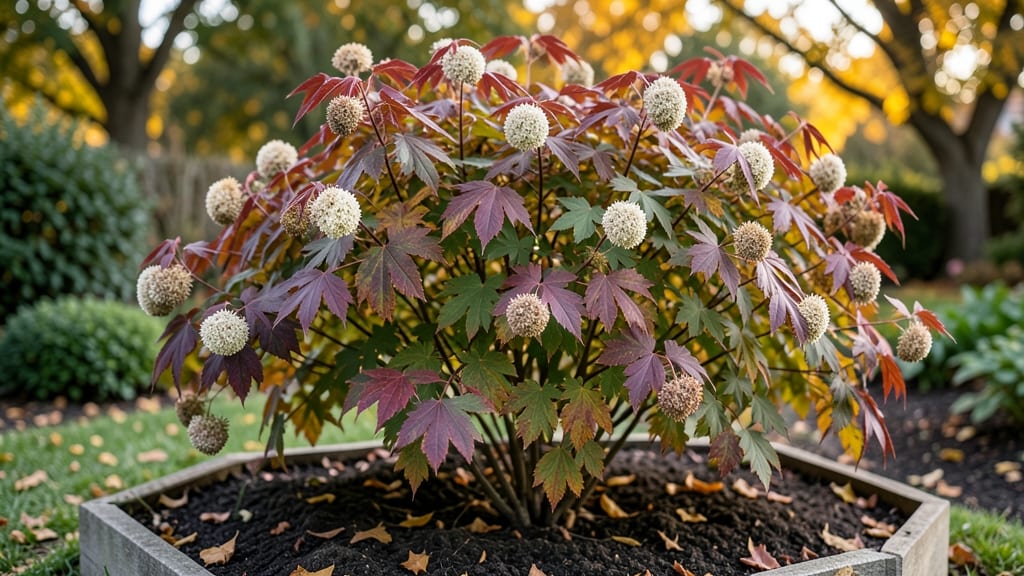
Your snowball bush in fall transforms from summer's star into a textured winter sculpture—if you prune it right. ✨ The secret lies in layered cuts that preserve its natural shape while removing dead growth, and I’ve perfected this method after years of watching my bushes either look ragged or get overpruned into stumps.
The best time to prune is right after the leaves turn but before hard frost, when the plant’s energy shifts underground. You’ll focus on three layers: removing crossing branches first, then thinning dense spots, and finally shaping the outer silhouette.
A sharp pair of pruners and a clear day are all you need—no fancy tools required.
By winter, you’ll have a bush that stands strong against snow and ice, with branches that create natural interest even when bare. The pruning also encourages next year’s dense, snowball-shaped blooms—the ones that make neighbors stop and stare in spring.
This works for both standard and dwarf varieties, though the timing shifts slightly for warmer climates. The key is patience: don’t rush the cuts, and always step back to check the balance. Your bush will thank you with years of effortless beauty.
📚 In This Guide
- What you need
- Instructions
- Tips and common mistakes
- Wrapping up and next steps
What you need
- ● Pruning shears – Bypass pruners (sharp, clean blades) for clean cuts on smaller branches.
- ● Loppers – 8- to 10-inch for thicker branches (up to 1.5 inches in diameter).
- ● Pruning saw – For stubborn, woody branches (20-24 inches long).
- ● Garden gloves – Heavy-duty, cut-resistant to protect your hands from thorns.
- ● Disinfectant (70% isopropyl alcohol or bleach solution) – 1 part bleach to 9 parts water to sterilize tools between cuts.
- ○ Pruning sealant (optional but helpful) – For large cuts to prevent disease entry.
- ● Trash bags or bucket – For collecting pruned branches (10-20 gallons, depending on bush size).
- ● Measuring tape or ruler – 12-inch for marking pruning points.
- ● Notebook & pencil – To sketch your bush’s structure before pruning.
- ● Ladder or step stool – If your bush is over 6 feet tall.
- ● Hand pruners with ratcheting mechanism – For easier cutting on tough branches.
- ● Garden twine or flags – To mark branches for removal before cutting.
- ● Compost bin – If you plan to reuse pruned material for mulch.
- ● Safety glasses – For protection when handling large branches.
Instructions for fall pruning to strengthen your snowball bush
Here’s how to shape your snowball bush for winter resilience—step by step.
✂️ Step 1: Remove Dead or Diseased Branches First
Start by scanning the bush for any branches that are brown, brittle, or showing signs of disease like black spots or fungal growth. These branches won’t recover and will only weaken the plant over winter. Use clean, sharp pruners to cut them back to the main stem or a healthy bud below the damage. I always disinfect my tools with rubbing alcohol between cuts to prevent spreading any potential pathogens.
You’ll notice these branches often cluster at the bottom or in dense areas where airflow is poor. Removing them now opens up the center of the bush, which improves air circulation—a key defense against winter rot. If a branch is completely dead (no green beneath the bark), cut it all the way back to the trunk.
✂️ Step 2: Thin Out Overcrowded Growth
Next, focus on thinning out the interior branches to create a more open structure. Look for branches that are growing inward or crossing over others—they compete for sunlight and nutrients, making the bush weaker. Aim to thin about one-third of the oldest, thickest branches to encourage new growth from the base. This step is crucial for maintaining the bush’s signature rounded shape.
When thinning, cut branches back to a strong outward-facing bud or lateral branch. Avoid leaving stubs—always make clean cuts just above a bud angled away from the center. You’ll see the bush’s natural form emerge as you work, with sunlight reaching all the way to the center. This also reduces the risk of snow buildup in winter, which can break weak branches.
✂️ Step 3: Shape the Outer Canopy
Now, step back and assess the overall shape of the bush. Snowball bushes thrive with a balanced, rounded silhouette, so focus on trimming the outer branches to maintain this form. Cut back any branches that are growing too long or leggy, shortening them by about one-third to encourage bushier growth next spring. Always cut just above a leaf bud or lateral branch to promote new shoots.
Pay special attention to branches that are growing too upright—they can become top-heavy with snow and break under winter storms. Aim to create a gradual taper from the base to the top. If you’re unsure where to cut, imagine the bush as a dome and trim to maintain that shape. This step is where you’ll see the most immediate difference in the bush’s structure.
✂️ Step 4: Lightly Prune for Airflow
Finally, give the bush a final once-over to ensure good airflow throughout. Trim any small branches that are growing too close together or blocking light from reaching the center. Even a few strategic cuts here can make a big difference in winter survival. Avoid heavy pruning now—just enough to keep the bush open and prevent moisture from lingering on the branches.
Once you’re done, step back and admire your work. A well-pruned snowball bush will enter winter stronger, with fewer weak spots for pests or disease. Water the base lightly after pruning to help the plant recover, and apply a 2-3 inch layer of mulch (if using) to protect the roots from freezing temperatures. You’ll thank yourself next spring when the bush bursts back to life with fresh, vibrant blooms.
Tips & tricks for perfect fall pruning of snowball bushes
Here's what I learned after years of pruning snowball bushes—mistakes that'll save you hours of frustration.
Tool Prep is Non-Negotiable: Before you even touch the bush, disinfect your pruners with rubbing alcohol. I can't stress this enough—it prevents spreading disease between cuts. Also, sharpen your blades so they make clean cuts instead of tearing the bark. Ragged cuts heal poorly and invite pests. Grab a small brush too to clean up fallen leaves and debris after pruning—this keeps the base dry and reduces rot risk.
Step 1: The Dead Branch Test: When checking for dead branches in Step 1, do the "scratch test"—scratch the bark with your fingernail. If green shows underneath, it's still alive. If it's brown all the way through, it's dead and needs removal. Pro tip: Cut completely back to the trunk if a branch is dead at the base—this prevents future regrowth that'll just die again next winter.
Thinning Strategy for Step 2: When you're thinning one-third of the oldest branches, focus on the thickest ones first—they're the most competitive for nutrients. I like to work in sections: start at the bottom and move upward. This creates a natural taper from wide at the base to narrower at the top, which helps snow slide off more easily during winter storms. Also, leave the youngest branches—these will carry the bush through next spring.
Shape with Purpose: In Step 3, when shaping the outer canopy, think about how snow will accumulate. Branches growing straight up are trouble—cut them back to create a more gradual slope. Aim for a dome shape that's wider at the bottom than the top. This simple adjustment can prevent winter breakage from heavy snow loads. And remember: you're not just pruning for looks, you're engineering winter resilience.
Pro Tips for Snowball Bush In Fall
- Here's what I learned after years of pruning snowball bushes—mistakes that'll save you hours of frustration.
- Tool Prep is Non-Negotiable: Before you even touch the bush, disinfect your pruners with rubbing alcohol.
- Step 1: The Dead Branch Test: When checking for dead branches in Step 1, do the "scratch test"—scratch the bark with your fingernail.
Frequently asked questions
Got questions about keeping your snowball bush stunning in fall and winter? We’ve got answers!
From pruning timing to color concerns, here’s what you need to know to prep your shrub for the season ahead.
When is the best time to prune a snowball bush for fall?
Prune your snowball bush after it blooms in spring or early summer, but never in fall. Fall pruning can stimulate late-season growth that won’t harden off before winter, risking frost damage. Instead, focus on shaping in late summer (August-September) for a tidy look without sacrificing winter resilience.
Will pruning in fall affect next year’s flowers?
Yes—pruning too late (after August) can reduce next year’s blooms since snowball bushes (Viburnum opulus) set flower buds in late summer. To avoid disappointment, stick to light shaping in fall (removing dead/diseased branches only) and save major pruning for spring. Patience pays off with more dramatic spring flowers!
Why does my snowball bush lose its green color in fall?
Fall color changes are normal! Snowball bushes often turn yellow, orange, or deep red as chlorophyll breaks down. For richer hues, ensure it gets full sun to partial shade and well-draining soil. If leaves turn brown or crispy, it may signal overwatering or fungal issues—check for powdery mildew and adjust care accordingly.
Can I prune a snowball bush to make it more compact?
To encourage a denser shape, prune 1/3 of the oldest stems at ground level in late winter/early spring. This removes crowded branches and redirects energy to younger, bushier growth. For immediate compactness, thin out crossing branches in fall—but avoid heavy cuts that expose bare wood.
How cold-hardy is a snowball bush, and do I need to protect it?
Snowball bushes are hardy to USDA Zones 2–7, thriving in winter with minimal care. However, young plants or those in exposed, windy areas may benefit from a light mulch layer (2–3 inches) around the base. Avoid wrapping in burlap—it traps moisture and invites rot. Let the shrub’s natural structure shield its center!
What’s a good alternative if my snowball bush struggles in fall?
If your snowball bush battles pests, disease, or poor fall color, consider these low-maintenance alternatives with similar winter interest:
- Witch hazel (Hamamelis) – Stunning yellow/orange blooms in late winter and striking exfoliating bark.
- Oakleaf hydrangea (Hydrangea quercifolia) – Vibrant fall foliage (red/purple) and large, textured leaves.
- Winterberry (Ilex verticillata) – Showy red berries in winter (needs a male pollinator plant).
Wrapping up and next steps
Transforming your snowball bush into a stunning winter-ready masterpiece is all about timing, technique, and a little TLC! With the right tools, layered pruning, and seasonal care, you’ll enjoy vibrant blooms and a neat structure for years to come. 🌿✨
Ready to take the next step? Grab your pruners and schedule a late-winter or early-spring pruning session—your bush will thank you with bold new growth and a showstopping fall display. Happy pruning!