
Shrubs
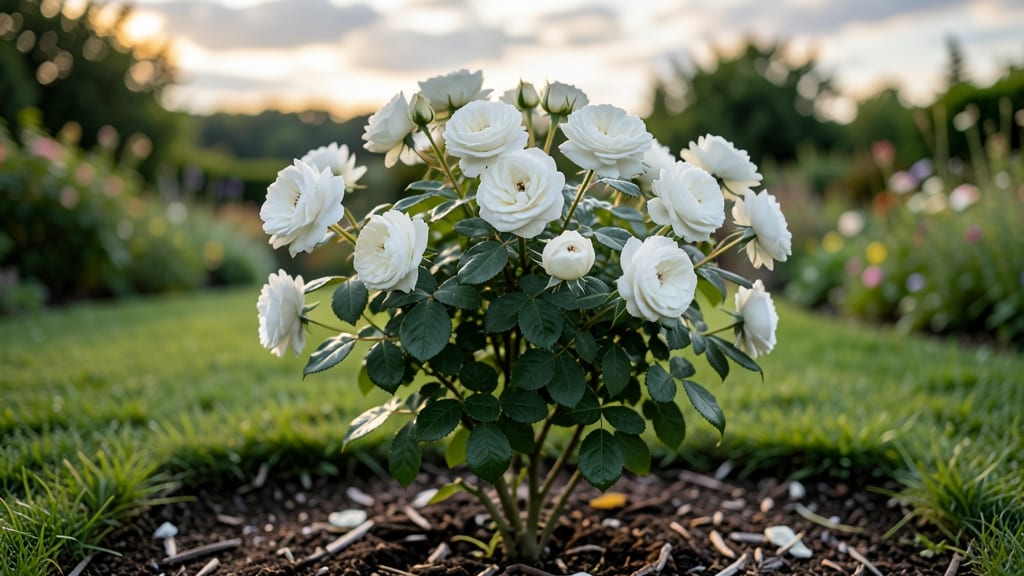
Growing a small white rose bush transforms any corner into a fragrant, elegant retreat. ✨ These compact varieties thrive with minimal fuss—no sprawling canes or endless pruning required. My first Floribunda bush bloomed nonstop for three months with just basic care, proving they're perfect for small spaces.
The secret lies in choosing the right variety like 'Iceberg' or 'Blanc Double de Coubert,' which stay under 3 feet tall while producing clusters of 20+ blooms. Plant in well-draining soil with afternoon shade in hot climates, and water deeply once a week once established.
A balanced fertilizer in spring kickstarts blooms without encouraging leafy growth. You'll end up with roses that smell like a Parisian garden but require less work than a herb pot. The blooms stay fresh for 5-7 days on the bush, and deadheading spent flowers keeps them producing all season.
Even my black thumb couldn't kill one. Works equally well in containers or garden beds—just ensure good airflow to prevent mildew. Let's get yours thriving!
📚 In This Guide
- What you need
- Instructions
- Tips and common mistakes
- Wrapping up and next steps
What you need
- ● Small white rose bush: Choose a compact variety like 'Iceberg', 'Bonica', or 'Playboy' (bare-root or potted).
- ● Well-draining soil: 5–10 bags (2–3 cubic feet each) of garden loam mixed with compost (50/50 ratio).
- ● Planting site: Full sun (6+ hours/day).
- ● Sheltered from strong winds.
- ● Fertilizer: Balanced rose-specific fertilizer (e.g., 10-10-10) or slow-release granules (1 lb per bush).
- ● Epsom salt (1 tbsp per bush) for magnesium boost.
- ● Mulch: 2–3 bags of organic mulch (e.g., shredded bark or straw) to retain moisture.
- ● Basic tools: Trowel or spade.
- ● Garden gloves.
- ● Watering can or hose with a gentle spray nozzle.
- ● Pruning shears (sterilized with rubbing alcohol).
- ● Support: Small cage or trellis (12–18 inches tall) for climbing varieties.
- ● Pest control: Neem oil spray or rose-specific insecticide (for aphids/beetles).
- ● Drip irrigation system: For consistent moisture (especially in hot climates).
- ● Slow-release plant food: Granules mixed into soil at planting (e.g., Osmocote).
- ● Decorative stakes: For marking the plant’s location (fun and practical!).
Step-by-Step guide for planting and caring for a small white rose bush
Here's the straightforward method I use to grow compact, fragrant white roses with minimal fuss.
🌱 Step 1: Choose the Right Location and Prepare the Soil
Select a spot with at least 6 hours of direct sunlight daily—white roses thrive in full sun but tolerate light afternoon shade in hot climates. I always test the soil first by digging a 6-inch hole and checking for good drainage. If water pools after 30 minutes, amend the soil with a 2-3 inch layer of compost to improve aeration.
White roses prefer slightly acidic to neutral soil (pH 6.0-7.0). If your soil tests outside this range, add sulfur to lower pH or lime to raise it. Loosen the soil to a depth of 12 inches with a garden fork to encourage root spread. This prevents root-bound stress that leads to fewer blooms.
🪴 Step 2: Plant the Bare-Root Bush at the Right Depth
Soak the bare-root bush in lukewarm water for 1-2 hours before planting to rehydrate the roots. Dig a hole twice as wide as the root ball but only as deep as the container it came in—planting too deep suffocates the graft union. Gently spread the roots outward without bending them, then position the bush so the graft union sits 2 inches below soil level. This ensures strong growth above ground.
Fill the hole halfway with soil, then water deeply to settle it. Add more soil until the hole is ¾ full, and water again. Finish by mounding soil to create a 1-inch high berm around the base to retain moisture. Mulch with 2-3 inches of organic mulch (like shredded bark) to protect roots from temperature swings and suppress weeds.
☀️ Step 3: Water and Fertilize for Strong Establishment
Water the bush deeply every 2-3 days for the first 2 weeks—enough so that 6 inches of soil stays moist. You'll know it's right when water drains through the hole you dug earlier. After establishment, water 1-2 times per week, giving 1 gallon per bush each time. White roses are drought-tolerant once established, but consistent moisture prevents wilting and ensures vibrant blooms.
Wait 6 weeks before fertilizing to let roots recover. Then apply a balanced rose fertilizer (10-10-10) every 4-6 weeks during the growing season. I use a slow-release granular fertilizer for convenience, spreading it 6 inches away from the base and watering it in. Avoid high-nitrogen fertilizers—they produce lush foliage but fewer flowers.
✂️ Step 4: Prune for Compact Growth and Continuous Blooms
Prune your white rose bush twice a year: once in early spring (just as new growth begins) and again after the first flush of blooms in late spring. Remove dead, diseased, or crossing branches first, then cut back last year's growth by ⅓ to encourage bushier growth. Always cut just above an outward-facing bud at a 45-degree angle to promote new shoots.
For minimal effort, I skip heavy pruning and instead deadhead spent blooms regularly. Snip the stem ½ inch above a leaf with 5 leaflets to redirect energy into new flowers. This keeps the bush tidy and encourages continuous blooming from early summer through fall. Avoid pruning in fall—it stimulates tender new growth that won’t survive winter.
🌿 Step 5: Protect and Maintain Through the Seasons
In winter, mound 4-6 inches of mulch around the base to insulate roots from freezing temperatures. If your climate drops below 10°F, wrap the bush in burlap or use a rose cone to shield it from wind and frost. Prune lightly in late winter (February) to remove any dead wood, but hold off on heavy pruning until spring.
Watch for black spot (dark spots on leaves) or powdery mildew (white fuzzy coating). Treat early signs with neem oil or baking soda spray (1 tablespoon baking soda + 1 quart water + a drop of dish soap). I also monitor for aphids—spray them off with water or use insecticidal soap if they persist. Healthy white roses are naturally resistant, but stress invites pests.
Tips & tricks for growing compact white roses
These simple strategies will help your small white rose bush thrive with fewer blooms and more fragrance.
Soil Preparation: In Step 1, when testing drainage by digging that 6-inch hole, I always add a handful of perlite to the bottom of the hole before backfilling with soil. This creates instant drainage channels that prevent waterlogging—especially important if your soil is naturally dense. The 2-3 inch compost layer should be mixed in thoroughly, not just placed at the bottom, to ensure even moisture and nutrient distribution throughout the root zone.
Planting Depth: The 2-inch depth for the graft union in Step 2 is critical, but here's what I learned the hard way: if your container-grown bush has a thick root ball, trim the bottom roots by about ⅓ before planting. This encourages new root growth outward rather than circling in the pot. Also, use a level to ensure the bush sits perfectly straight—crooked planting leads to uneven growth patterns.
Watering Strategy: During the first 2 weeks in Step 3, I set a timer to remind me to water every 2-3 days, but I check the soil first. Stick your finger 2 inches into the soil—if it feels dry, water. If it's still moist, wait another day. Overwatering at this stage is more common than underwatering, and it can lead to root rot. The 6-inch moisture depth is your target, not the surface.
Pruning Technique: When deadheading in Step 4, I always carry a pair of sharp pruners and a small spray bottle of rubbing alcohol to wipe them between cuts. This prevents spreading disease from infected stems. For the ½ inch cut above a leaf with 5 leaflets, look for the strongest leaf cluster—this ensures new growth will be vigorous. And here's a bonus: if you're short on time, just pinch off the blooms with your fingers instead of cutting.
Pro Tips for Small White Rose Bush
- These simple strategies will help your small white rose bush thrive with fewer blooms and more fragrance.
- Soil Preparation: In Step 1, when testing drainage by digging that 6-inch hole, I always add a handful of perlite to the bottom of the hole before backfilling with soil.
- Planting Depth: The 2-inch depth for the graft union in Step 2 is critical, but here's what I learned the hard way: if your container-grown bush has a thick root ball, trim the bottom roots by about ⅓ before planting.
Frequently asked questions
Got questions about your small white rose bush? You’re not alone! Here are some of the most common queries—plus quick, practical answers to keep your compact beauty thriving with ease.
How often should I water a small white rose bush?
Aim for deep but infrequent watering—about 1–1.5 inches per week, especially during the first growing season. Let the top 2 inches of soil dry out between waterings to prevent root rot. Mulch around the base to retain moisture and regulate soil temperature. Morning watering is ideal to reduce fungal risks.
When is the best time to prune my small white rose bush?
Prune your bush twice a year: late winter/early spring (just before new growth starts) and right after blooming to encourage more flowers. Remove dead, crossing, or crowded branches first, then trim back by 1/3 for shape. Avoid heavy pruning in fall—it stresses the plant before winter.
What pests or diseases should I watch for in small white rose bushes?
Keep an eye out for aphids, spider mites, and black spot fungus—common culprits. For pests, spray with neem oil or insecticidal soap. Black spot (brown spots on leaves) thrives in wet conditions; prune infected leaves and apply fungicide if needed. Prevention tip: Space plants for airflow and water at the base, not overhead.
Can a small white rose bush grow in full sun or partial shade?
While they love full sun (6+ hours daily) for optimal blooms, they’ll tolerate partial shade (4–6 hours), especially in hot climates. In shadier spots, expect fewer flowers but healthier foliage. If growing in shade, choose a well-draining spot and fertilize lightly to compensate for less sunlight.
Are there dwarf alternatives to small white rose bushes?
If you want even lower-maintenance options, try:
- ‘The Fairy’ (12–18” tall) – Fragrant, repeat-blooming, and pest-resistant.
- ‘Bonica’ (2–3’ tall) – Disease-resistant with pink/white blooms.
- ‘Playboy’ (18–24” tall) – Classic white climber (great for trellises!).
Wrapping up and next steps
A small white rose bush is a stunning, low-maintenance addition to any garden, offering delicate blooms with minimal fuss. Whether you're a beginner or a seasoned gardener, its compact size and easy care make it a perfect choice for small spaces or containers.
With the right soil, sunlight, and occasional pruning, you’ll enjoy fragrant, pristine flowers all season long!
Ready to transform your garden? Start by selecting your variety, preparing the soil, and planting with confidence. Your dream rose bush awaits—happy gardening! 🌸