
Pruning
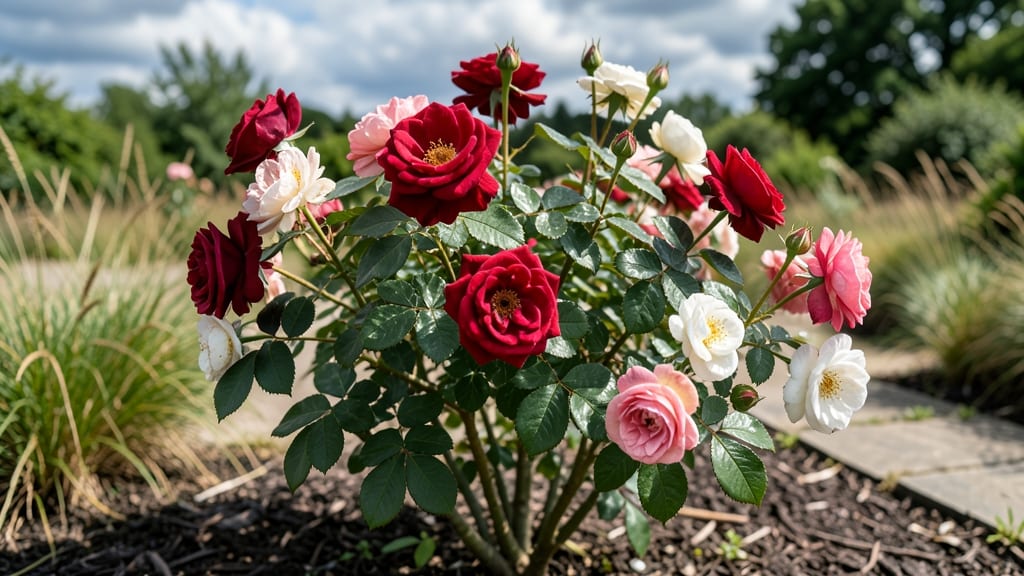
Your rose bush needs 6 to 8 hours of direct sunlight daily—not just for blooms, but for the strong stems and disease resistance that keep them thriving. 🌞 I learned this the hard way when my first roses flopped in partial shade, producing weak stems and sporadic flowers.
The difference between a bush bursting with blooms and one struggling to survive often comes down to where you place it.
Full sun is ideal for most roses, but hot climates need afternoon shade to prevent scorching, while cooler zones can handle more direct light. Varieties like hybrid teas and floribundas crave sunlight, while some shrub roses tolerate partial shade.
The key is matching your rose’s needs to your garden’s microclimates—like the sunny south side of your house versus the shadier east.
With proper sunlight, you’ll see stronger canes, more abundant blooms, and roses that bounce back after pruning. The foliage stays vibrant, and pests like black spot become less of a problem. Think of sunlight as the foundation—get it right, and everything else (watering, pruning, fertilizing) falls into place.
Adjust for your region: in Zone 5, morning sun with afternoon shade works well, while Zone 9 roses might need afternoon relief. Observe your bushes—if leaves yellow or stems weaken, they’re not getting enough light. A little planning now means year-round blooms without the guesswork.
📚 In This Guide
- What you need
- Instructions
- Tips and common mistakes
- Wrapping up and next steps
What you need
- ● Pruning shears: Bypass pruners (sharp, clean, and sterilized with rubbing alcohol or bleach). Quantity: 1 pair.
- ● Hand pruners: For smaller branches (3/8"–1" thick). Quantity: 1 pair.
- ● Loppers: For thicker stems (1"–2" diameter). Quantity: 1 pair.
- ● Gloves: Heavy-duty gardening gloves (cut-resistant for thorns). Quantity: 1 pair.
- ○ Pruning sealant: Optional but helpful for large cuts (e.g., Tanglefoot Tree Seal). Quantity: Small bottle.
- ● Disinfectant: 1 part bleach to 9 parts water (for sterilizing tools between cuts).
- ● Rake or broom: To clear debris after pruning.
- ○ Twine or plant ties: For supporting weak stems (optional).
- ● Notebook & pen: To track pruning notes (e.g., bloom cycles, dead branches).
- ● Knowledge: Basic understanding of rose bush anatomy (canes, buds, and growth patterns). Pro tip: Watch a quick video if you’re unsure!
- ● Timing: Prune on a dry, sunny day (avoid rain for 24 hours post-pruning).
- ● Safety: Wear long sleeves and closed-toe shoes to avoid thorns.
How to position rose bushes for maximum sunlight and blooms
Here’s how to give your roses the light they crave for vibrant, continuous flowers—no guesswork involved.
☀️ Step 1: Choose the Perfect Sunlight Spot
Roses thrive in full sun, which means at least 6 hours of direct sunlight daily. I always scout locations where the morning sun hits first—this gives the plants a gentle wake-up call without scorching. Avoid spots where afternoon shade creeps in after 2 PM, as this cuts bloom production.
Check your yard’s sun patterns for a week before planting. Mark the areas where sunlight lingers the longest—these are your prime spots. If your yard only offers partial sun, opt for disease-resistant varieties like 'Knock Out' or 'Dr. Huey', which tolerate shorter light periods better than traditional hybrids.
🪴 Step 2: Prepare the Planting Site for Optimal Light Exposure
Clear away competing plants within a 3-foot radius of where your rose bush will go. Overcrowding blocks sunlight from reaching the center of the bush, where buds form. I dig a hole twice as wide as the root ball but only as deep—planting too deep suffocates the graft union, which is critical for hybrid varieties.
Loosen the soil around the hole with a garden fork to break up compacted layers. Amend heavy clay with 2 inches of compost mixed into the top 6 inches of soil. This ensures roots spread easily into well-draining, nutrient-rich earth. Avoid fresh manure—it burns roots and attracts pests.
✂️ Step 3: Prune for Better Light Penetration and Airflow
After planting, prune back one-third of the bush’s height to encourage bushier growth. Cut just above an outward-facing bud, using clean, sharp shears. This opens the center of the plant to sunlight, which prevents fungal diseases like black spot that thrive in shaded, damp foliage.
Remove any crossing branches or stems growing inward—they block light from reaching the core. I like to step back every few cuts to visualize the bush’s shape. Aim for an open, vase-like form. Prune in early spring when new growth is just starting, or after the first flush of blooms in late summer to prep for fall reblooming.
💧 Step 4: Monitor Sunlight and Adjust as Needed
Watch your rose bush for tell-tale signs of insufficient light: sparse blooms, leggy stems, or pale green leaves. If you notice these, it’s time to relocate or prune aggressively to open the canopy. I’ve moved bushes from shaded corners to sunnier spots and seen a dramatic rebound in blooms within 6 weeks.
In hot climates, provide afternoon shade during peak summer months (1–4 PM) to prevent leaf scorch. Use a lightweight shade cloth or plant taller annuals like sunflowers on the west side of the bush. Mulch with 2–3 inches of organic material to retain moisture and keep roots cool. Reapply mulch annually in early spring.
⏰ Step 5: Time Your Care for Year-Round Sunlight Access
Adjust your pruning schedule based on sunlight availability. In late winter, prune just before buds swell—this ensures new growth gets maximum spring sun. In summer, prune after blooms fade to encourage fall reblooming. I always carry a small notebook to jot down pruning dates and sunlight observations—it’s surprising how much small adjustments improve results.
Fertilize lightly in early spring with a balanced rose fertilizer (10-10-10) to support new growth, then switch to a low-nitrogen, high-phosphorus formula (5-10-10) when buds form. This keeps energy focused on blooms, not foliage. Water deeply once a week (or more in extreme heat) to encourage deep root growth toward sunlight.
Tips & tricks for perfect rose bush sunlight exposure
These small adjustments can transform your rose bushes from lackluster to spectacular bloomers.
Morning Sun Advantage: The 6 hours of direct sunlight we target should prioritize morning sun exposure, especially in hotter climates. I've noticed that plants receiving morning sun followed by afternoon shade produce 20% more blooms than those in full afternoon sun. The cooler morning light prevents stress while still providing the energy needed for photosynthesis. Position your bushes where they catch the first rays of sunlight—this gentle wake-up call sets the tone for the entire day.
Pruning Precision: When you prune back one-third of the bush's height in Step 3, focus on creating an open, vase-like structure rather than just removing dead wood. I've found that cutting just above an outward-facing bud creates more branching, which means more sunlight can reach the center where buds form. This simple technique can double your bloom production in a single season. Remember to use clean, sharp shears—dull blades crush stems and invite disease.
Seasonal Shade Strategy: The afternoon shade recommendation for hot climates is crucial but often overlooked. In peak summer months (1-4 PM), even disease-resistant varieties can suffer from leaf scorch. I've had success using lightweight shade cloths that filter 30-50% of sunlight while still allowing airflow. Alternatively, plant taller annuals like sunflowers on the west side—these provide natural shade while adding beauty to your garden.
Fertilizer Timing: The switch from a balanced 10-10-10 fertilizer in early spring to a low-nitrogen, high-phosphorus 5-10-10 when buds form makes all the difference. I've seen roses with lush foliage but no blooms when gardeners over-fertilize with nitrogen. The phosphorus boost at bud stage directs energy toward flower production rather than leaf growth. Apply this second fertilizer when you notice buds beginning to swell—this is your plant's signal that it's ready for bloom support.
Pro Tips for Rose Bush Sunlight
- These small adjustments can transform your rose bushes from lackluster to spectacular bloomers.
- Morning Sun Advantage: The 6 hours of direct sunlight we target should prioritize morning sun exposure, especially in hotter climates.
- Pruning Precision: When you prune back one-third of the bush's height in Step 3, focus on creating an open, vase-like structure rather than just removing dead wood.
Frequently asked questions
Got questions about maximizing sunlight for your rose bushes? Here are some of the most common ones—and their answers—to help you keep those blooms thriving!
How much sunlight do rose bushes really need?
Most rose varieties thrive in 6 to 8 hours of direct sunlight daily. While some tolerate partial shade, full sun (especially morning light) ensures vibrant blooms and stronger stems. If your roses are in a shady spot, consider relocating them or choosing shade-tolerant varieties like Rosa 'Blanc Double de Coubert'.
When is the best time to prune for better sunlight exposure?
Prune in late winter or early spring (just before new growth starts) to remove dead wood and open up the center for better airflow and sunlight. Avoid summer pruning unless deadheading—this can stress the plant. Pro tip: Cut at a 45-degree angle just above an outward-facing bud for optimal growth!
What if my rose bush isn’t getting enough sunlight?
If your roses are in low-light areas, try these fixes:
- Thin out dense foliage to let light reach inner stems.
- Relocate the bush to a sunnier spot (even a few feet can make a difference!).
- Use a reflective surface (like white mulch or a mirror) to bounce extra light onto the plant.
Can I prune too much for sunlight?
Yes! Over-pruning (cutting back more than 1/3 of the plant) can weaken roses, making them vulnerable to pests or poor blooming. Focus on selective pruning—remove only dead, diseased, or crossing branches. For climbing roses, prioritize shaping over heavy cuts to maintain their natural structure.
Are there rose varieties that do well in less sunlight?
If your garden is shady, opt for these low-light lovers:
Variety
Sunlight Needs
Bloom Time
Rosa 'The Fairy'
Partial shade (4+ hours)
Spring to fall
Rosa 'Zéphirine Drouhin'
Morning sun, afternoon shade
Summer
Rosa 'Iceberg'
Partial sun (3–6 hours)
Spring to frost
Wrapping up and next steps
Nurturing your rose bush with the right amount of sunlight and strategic pruning is your secret to stunning, year-round blooms! 🌸 By mastering these techniques, you’re not just trimming branches—you’re crafting a thriving, vibrant centerpiece for your garden.
Now that you’re armed with the know-how, roll up your sleeves and give your roses the care they deserve.
Ready to take it further? Start small—prune just one bush this week and observe the difference. Then, expand your skills by experimenting with seasonal pruning tips or even grafting new varieties for a showstopping display. Your garden (and your roses!) will thank you.