
Pruning
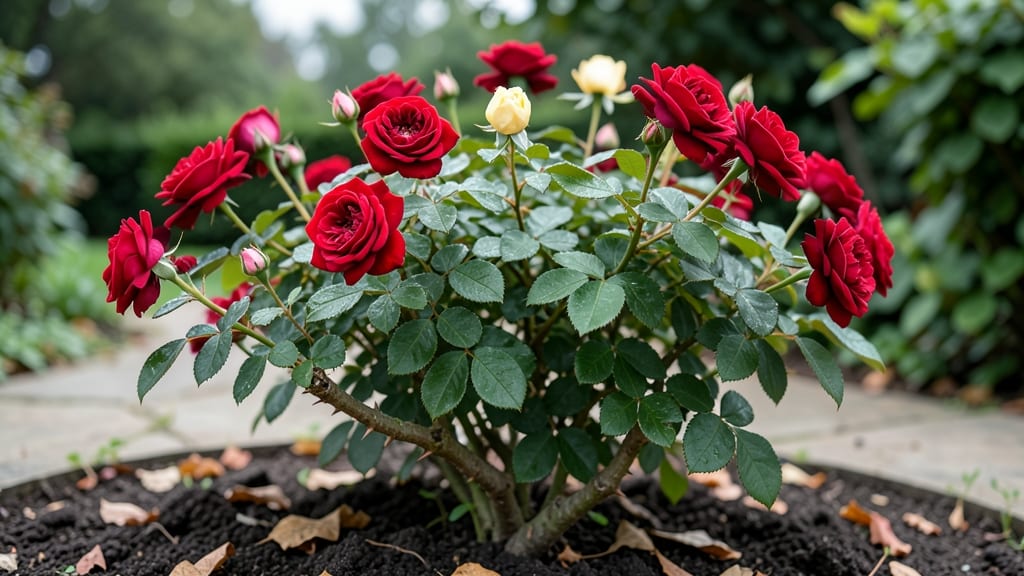
Mastering rose bush identification by their leaf shape and thorn patterns saves you from pruning disasters. 🌹 I’ve spent years confusing hybrid teas with floribundas—until I learned the telltale differences in leaf serrations and thorn clusters.
One set of leaves might mean your roses need heavy pruning, while another signals they’ll bloom all season with minimal cuts. The key traits—leaf shape (narrow vs. broad), thorn size (tiny vs. thick), and bloom form (single vs. cluster)—act like a fingerprint for each variety.
A 5-leaflet arrangement with curved thorns? Probably a hybrid tea. Stiff, straight thorns with 3-5 leaflets? Likely a shrub rose. Fragrance even helps narrow it down—some varieties smell like old books, others like fresh rain.
Once you match the traits to a variety, you’ll know exactly how to prune, when to fertilize, and which pests to watch for. My David Austin roses now thrive because I finally identified them correctly after years of guesswork. The right care makes all the difference in blooms and health.
This guide cuts through the confusion so you can stop second-guessing and start growing. Grab a magnifying glass and let’s get those roses properly identified!
Why it happens
Identifying rose bushes can feel like solving a botanical puzzle—especially when similar species share overlapping traits like leaf shapes or thorn patterns. But why do these misidentifications happen so often? The answer lies in a mix of natural biology, human perception, and even environmental factors.
Let’s break down the key reasons why rose bush identification can be tricky, so you can spot the clues that separate one variety from another.
Roses belong to the Rosa genus, which includes over 300 species and thousands of hybrids. Many of these plants evolved from the same ancestral lines, meaning they share DNA that shapes their physical traits—like leaf serrations, thorn structures, or stem colors. For example:
- Hybrid Teas and Floribundas often have the same five-leaflet arrangement but differ in bloom size and growth habit.
- Wild Roses (e.g., Rosa rugosa) and Climbing Roses (e.g., Rosa wichuraiana) may look alike at a glance but have distinct thorn shapes or leaf textures.
Actionable tip: 🔍 Focus on minor details like leaf undersides (pubescent vs. smooth) or thorn base attachment (some roses have thorns that curve upward, while others are straight). A hand lens can reveal these differences!
Light, soil, and climate can dramatically alter how a rose bush appears, even if its genetic identity stays the same. For instance:
- Sun Exposure: Roses grown in partial shade may develop smaller leaves or fewer thorns as a survival mechanism to conserve energy.
- Nutrient Deficiencies: A lack of phosphorus can cause dark green, leathery leaves—masking the true leaf shape of a species like Rosa gallica.
- Pruning Practices: Over-pruning can stunt thorn growth, making a heavily thorned rose (like Rosa canina) look deceptively mild.
Pro tip: 🌡️ Compare your rose to a reference photo taken in ideal conditions (full sun, well-drained soil). If your plant’s traits don’t match, environmental factors might be the culprit!
Even experienced gardeners can misidentify roses because:
- Partial Views: Looking at a rose from a distance or only at its blooms (not leaves/thorns) ignores critical ID markers.
- Seasonal Changes: New growth in spring may look different from mature foliage in summer.
- Hybridization: Many modern roses are crosses between species, blending traits unpredictably (e.g., a Rosa × odorata hybrid might have tea rose blooms but wild rose thorns).
Actionable fix: 📊 Create a checklist for key traits (e.g., "Does it have stipules?", "Are thorns hooked or straight?"). Use a rose ID app to cross-reference.
Some rose problems aren’t genetic—they’re damage in disguise. For example:
| Issue | How It Affects ID | Real Cause |
|---|---|---|
| Ragged leaf edges | Mistaken for Rosa rugosa’s natural serrations | Japanese beetle larvae or fungal leaf spot |
| Stunted thorns | Looks like a thornless rose (e.g., Rosa ‘Knock Out’) | Over-fertilization with nitrogen or aphid infestation |
| Curling leaves | Resembles Rosa multiflora’s natural leaf shape | Rose slug sawfly larvae or black spot disease |
Solution: 🔥 Inspect the underside of leaves for pests or signs of disease (e.g., black spots, webbing). Healthy roses have consistent traits—damage is the red flag!
Quick Fixes for Rose Bush Confusion
Now that you’ve identified why your rose bush identification feels tricky—whether it’s leaf shape, thorn patterns, or seasonal changes—let’s tackle the solutions. Below, we’ve mapped common issues to practical fixes, plus prevention tips to keep your roses thriving and easy to recognize.
Cause: Misidentification due to hybrid vigor, disease, or environmental stress. Fix:
- 🔍 Examine the entire plant—not just one leaf. Rose leaves vary even on the same bush!
- 📸 Snap a photo of the leaf underside (glandular hairs or lack thereof can be a dead giveaway).
- 🌡️ Check for pests/disease: Yellowing or curling leaves? Treat with neem oil or fungicide if needed.
Prevention: ✔ Label new plants at planting time with the variety name and date. ✔ Prune strategically: Remove odd-looking growth in early spring to encourage healthy regrowth.
Cause: Thornless roses (or nearly thornless) are often confused with hybrid teas or floribundas. Fix:
- 👨🍳 Feel the stems: Hybrid teas have large, curved thorns; floribundas have smaller, straighter ones. Thornless roses (like ‘Knock Out’) feel smooth or mildly prickly.
- 🔪 Compare to a reference chart: Use the American Rose Society’s thorn guide for visuals.
Prevention: ✔ Buy certified roses from reputable nurseries—mislabeling is rare but happens. ✔ Grow a “cheat sheet” rose: Plant one classic hybrid tea (e.g., ‘Mister Lincoln’) nearby for comparison.
Cause: Buds opening differently than catalog photos due to climate or pruning. Fix:
- 📅 Track bloom times: Some roses (like ‘Iceberg’) bloom later in the season—wait until full bloom to ID.
- 🎨 Note petal layers: Single roses have one layer; hybrid teas have 50+ layers. Floribundas cluster tightly.
- 🌿 Check the hips: Rose hips (fruit) after flowering can confirm species—e.g., ‘Rosa rugosa’ has huge, bright red hips.
Prevention: ✔ Prune after blooming (for repeat-flowering roses) to encourage predictable growth. ✔ Deadhead spent blooms to redirect energy to leaf/flower production.
Cause: Suckers (basal shoots) or grafts rejecting. Fix:
- 🔪 Dig carefully: Suckers sprout from the rootstock (often a tougher, less desirable rose). Remove them at the base.
- 🌱 Test graft union: If your rose has a swollen knot near the soil, it’s grafted. Prune above the graft to keep the desired variety.
- 🌿 Propagate correctly: If you’re unsure, take a cutting from a known healthy stem to root and compare.
Prevention: ✔ Mulch heavily (3–4 inches) to suppress sucker growth. ✔ Avoid over-fertilizing nitrogen—it encourages leafy (not floral) growth, making ID harder.
Create a simple chart with these columns for your roses:
| Variety Name | Leaf Shape | Thorn Type | Flower Color/Shape | Notes (e.g., fragrance, disease resistance) |
|---|---|---|---|---|
| ‘Double Delight’ | 5–7 leaflets, glossy | Large, curved | Pink, 30+ petals | Very fragrant; prone to black spot |
Why it works: 💡 Visual cues stick better when organized. 🌡️ Seasonal changes (like fall color shifts) become easier to track. 🎯 Prevents future guesswork—no more “Is this a ‘New Dawn’ or a ‘Blaze’?”
Final Reminder: Roses are resilient—if you’re still stumped, consult your local rose society or post photos in gardening forums like GardenWeb. Happy identifying! 🌹
Frequently asked questions about rose bush identification
What’s the quickest way to tell hybrid teas from floribundas?
Check the bloom clusters—hybrid teas produce single stems with 50+ petals, while floribundas have multiple buds per stem in smaller, flatter clusters. Also, hybrid teas often have stronger fragrance and longer stems.
Can I identify a rose just by its leaves?
Not always, but leaf shape gives big clues! Count the leaflets (5 for hybrid teas, 3-5 for shrub roses) and check the serrations—sawtooth edges suggest Rosa rugosa, while smooth edges might mean Rosa chinensis. Always compare to reference photos.
Why do my rose thorns look different than in catalogs?
Environmental stress (like poor sunlight or over-fertilization) can stunt thorn growth, making them appear smaller or softer. Check for pests/disease first—aphids or black spot can alter natural thorn patterns. Healthy roses maintain consistent thorn traits.
Are there any rose varieties that don’t have thorns?
Yes! Varieties like ‘Knock Out’ roses and ‘Carefree Beauty’ are nearly thornless, bred for low-maintenance gardens. However, they still have tiny prickles—just not the thick, curved thorns of hybrid teas. Always verify with a nursery before planting.
How do I know if my rose is a wild species or a cultivated hybrid?
Wild roses (like Rosa rugosa) often have larger, more robust thorns, single-layer blooms, and bright red hips. Cultivated hybrids usually have more petals, darker foliage, and less fragrance than their wild ancestors. Check the stem color too—wild roses often have red stems.