
Pruning
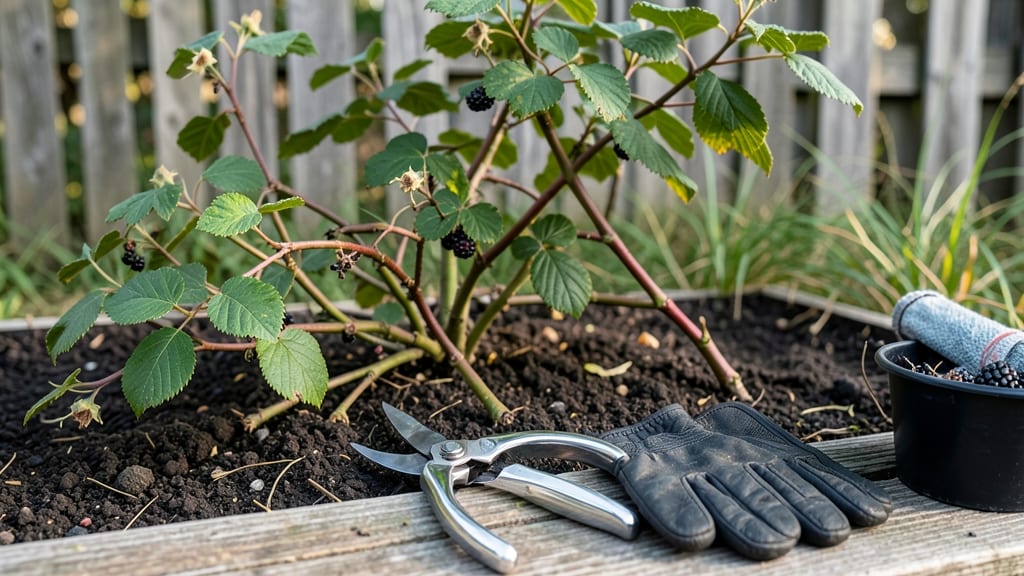
Fall pruning transforms your blackberry bushes into powerhouses for next year’s harvest. 🌿 I’ve pruned mine for five seasons now, and the difference between a neglected thicket and a thriving patch comes down to a few sharp cuts at the right time.
The goal? Stronger canes, better airflow, and fewer winter woes.
Start by removing any dead, diseased, or weak canes—these are the ones that won’t bounce back. Then, thin out the thickest canes to about 6-8 strong ones per plant, leaving room for new growth.
This isn’t just about aesthetics; it’s about preventing fungal issues and giving your berries space to ripen properly. Grab your pruners, gloves, and a clear day—this won’t take long.
What you’ll end up with is a well-aerated bush that’s ready to handle winter’s chill. The remaining canes will store energy efficiently, and come spring, you’ll see vigorous new shoots where last year’s harvest was.
Plus, fewer canes mean easier picking and less tangled mess when the berries start swelling in early summer.
Works for both floricane (summer-bearing) and primocane (fall-bearing) varieties, though the timing tweaks slightly. If you’re in a colder zone, wait until after the first hard frost to avoid stressing the plant. Here’s how to do it right—no guesswork, just stronger bushes.
📚 In This Guide
- What you need
- Instructions
- Tips and common mistakes
- Wrapping up and next steps
What you need
- ● Pruning shears or loppers: Choose bypass pruners (sharp, clean-cut blades) for smaller canes. For thicker stems (over ½ inch), opt for loppers with 6–8-inch handles for leverage.
- ● Pruning saw: A curved-tooth pruning saw (8–10 inches) for cutting through woody, mature canes—1–2 saws recommended if you have dense bushes.
- ● Gloves: Wear heavy-duty gardening gloves (leather or reinforced) to protect against thorns and abrasions.
- ● Disinfectant: Rubbing alcohol (70%+) or a 10% bleach solution (1 part bleach to 9 parts water) to sterilize tools between cuts and prevent disease spread.
- ● Garden twine or zip ties: For temporarily securing canes if staking is needed (10–20 feet, depending on bush size).
- ● Rake or broom: A stiff-bristle rake to clear debris and fallen leaves after pruning.
- ● Safety glasses: Protect your eyes from flying debris or sap.
- ● Knee pads: For comfort if you’re working on the ground.
- ● Marking spray or flags: To label canes you’re unsure about (e.g., pink spray paint for “keep” canes).
- ● Compost bin or bag: For collecting pruned canes (if not leaving them on-site for mulch).
Step-by-step guide to pruning blackberry bushes in fall
Here's the method I use every autumn to prepare my blackberry bushes for winter and boost next year's harvest.
✂️ Step 1: Identify and Remove Dead or Diseased Canes
Start by examining each cane from base to tip. Dead canes will be brown, brittle, and hollow when you snap them—these provide no value and should go. Diseased canes often have black spots, mold, or unusual growths. Grab your pruners and cut these canes at the base, removing them entirely from the plant.
I always wear gloves for this step—blackberry thorns are no joke, and the sap can irritate skin. As you work, toss the cuttings into a trash bag or burn pile immediately. Never leave diseased material near healthy plants, or you’ll risk spreading problems next season.
✂️ Step 2: Prune Weak or Overcrowded Canes
Next, focus on the remaining canes. Look for thin, spindly growth that never produced berries—these are weak canes that drain energy from stronger stems. Also, remove any canes growing too close together, leaving at least 6 inches of space between them. Overcrowding leads to poor air circulation, which invites disease.
Make clean cuts at the base using sharp pruners. Avoid leaving stubs—cut just above a bud or the main stem. I like to step back occasionally to visualize the plant’s structure. You’re aiming for an open, airy shape that lets sunlight reach the center canes.
🌱 Step 3: Thin Out Old Primocanes
Blackberries produce two types of canes: primocanes (current year’s growth) and floricanes (last year’s canes that bore fruit). In fall, focus on primocanes. Keep only the 6-8 strongest, healthiest primocanes—these will fruit next summer. Cut the rest at the base to redirect the plant’s energy into fewer, more productive stems.
Here’s the thing—if you leave too many primocanes, the plant will spread itself thin, resulting in smaller berries and weaker growth. I usually err on the side of fewer canes, especially in younger bushes still building their structure.
⏰ Step 4: Apply a Light Cleanup Cut
After removing dead, weak, and excess canes, give the remaining stems a final inspection. Look for any crossing or rubbing canes—these can create wounds where disease enters. Trim back any branches that are growing inward or overlapping. This step ensures the plant’s shape stays open and healthy.
Once you’re satisfied with the structure, give the area a quick cleanup. Rake up fallen leaves and debris around the base—this reduces overwintering pests and diseases. A light layer of mulch (if you’re in a colder climate) helps protect the roots from freezing temperatures.
☀️ Step 5: Prepare for Winter and Next Season
With the pruning complete, your blackberry bushes are now ready for winter. If you’re in a region with harsh winters, consider wrapping younger canes in burlap or using frost cloth to protect them from windburn. In milder climates, simply leave the pruned bushes as-is—they’ll enter dormancy naturally.
Real talk: The best time to prune is right after harvest, but fall cleanup ensures your bushes start next season strong. Mark the location of each remaining cane with a small stake if needed—this helps you identify which canes are primocanes (new growth) and floricanes (fruit-bearing) come spring.
Tips & tricks for pruning blackberry bushes in fall
Here's what nobody tells you about fall pruning that'll make all the difference for next year's harvest.
Safety First: I can't stress this enough—blackberry thorns are sharp enough to draw blood, and the sap can irritate sensitive skin. Always wear heavy-duty gardening gloves with long sleeves, and consider using pruning shears with a loop handle to keep your hands farther from the thorns. A small first-aid kit nearby is never a bad idea either.
Tool Prep Matters: Before you start, sharpen your pruners and clean them with rubbing alcohol or a bleach solution. Dull blades tear plant tissue instead of making clean cuts, which slows healing and invites disease. I like to wipe down my tools between each cut when dealing with diseased canes to prevent cross-contamination.
Visualize the Structure: Step back frequently to assess your work from a distance. In Step 2, when you're spacing canes 6 inches apart, imagine sunlight filtering through the center of the bush. The goal is an open, vase-like shape that allows air circulation and sunlight penetration. This isn't just about aesthetics—proper airflow prevents fungal diseases that can devastate your harvest.
Labeling System: In Step 5, when you mark your remaining canes, consider using colored flags or paint dots instead of stakes. I use red flags for primocanes (this year's growth) and green for floricanes (next year's fruit producers). This color-coding makes spring identification instant—no more guessing which canes to keep or remove when new growth appears.
Pro Tips for Pruning Blackberry Bushes In Fall
- Here's what nobody tells you about fall pruning that'll make all the difference for next year's harvest.
- Safety First: I can't stress this enough—blackberry thorns are sharp enough to draw blood, and the sap can irritate sensitive skin.
- Tool Prep Matters: Before you start, sharpen your pruners and clean them with rubbing alcohol or a bleach solution.
Frequently asked questions
Got questions about pruning blackberry bushes in the fall? You’re not alone! Here are answers to the most common concerns to help you tackle this task with confidence.
When is the exact best time to prune blackberry bushes in fall?
Prune after the first hard frost (when leaves turn brown and drop) but before winter dormancy sets in—typically late October to November. This timing ensures canes are dormant but still sturdy enough to handle cuts. Avoid pruning too early (like summer), as new growth may not harden off before winter.
What if I miss fall pruning? Can I still prune in early spring?
Yes! If you skip fall pruning, prune in early spring (before buds swell) to remove dead or weak canes. However, fall pruning is ideal because it reduces winter diseases and pests by eliminating old canes where they hide. Think of it as a “cleanup crew” for your bushes!
How do I tell the difference between old and new canes for pruning?
Old canes are grayish-brown, woody, and often hollow (they fruited last year). New canes are green, flexible, and thicker at the base (they’ll fruit next season). Cut old canes to the ground and leave new ones—this keeps your bush productive and tidy.
Will pruning blackberries in fall reduce next year’s harvest?
Not at all! Pruning in fall boosts next year’s harvest by removing old canes (which drain energy) and improving airflow. New canes grow stronger, leading to bigger, healthier berries. Just avoid over-pruning—leave at least 10–15 healthy new canes per plant.
Do I need to disinfect my pruners after cutting blackberry canes?
Blackberries are prone to bacterial and fungal diseases like cane blight. Wipe pruners with rubbing alcohol or a 10% bleach solution between cuts. This simple step prevents spreading pathogens to healthy canes—like giving your bushes a disease-proof shield!
Wrapping up and next steps
Fall pruning is your secret weapon for healthier blackberry bushes and a bountiful harvest next year! By removing dead, weak, or overcrowded canes, you’re giving your plants the space and energy they need to thrive. Don’t let this task overwhelm you—just a little effort now means big rewards later!
Ready to take action? Grab your pruners and schedule your pruning session before the first hard frost hits. Your blackberries will thank you with stronger canes, better fruit production, and a well-maintained garden. 🌱✨