
Pests and Diseases
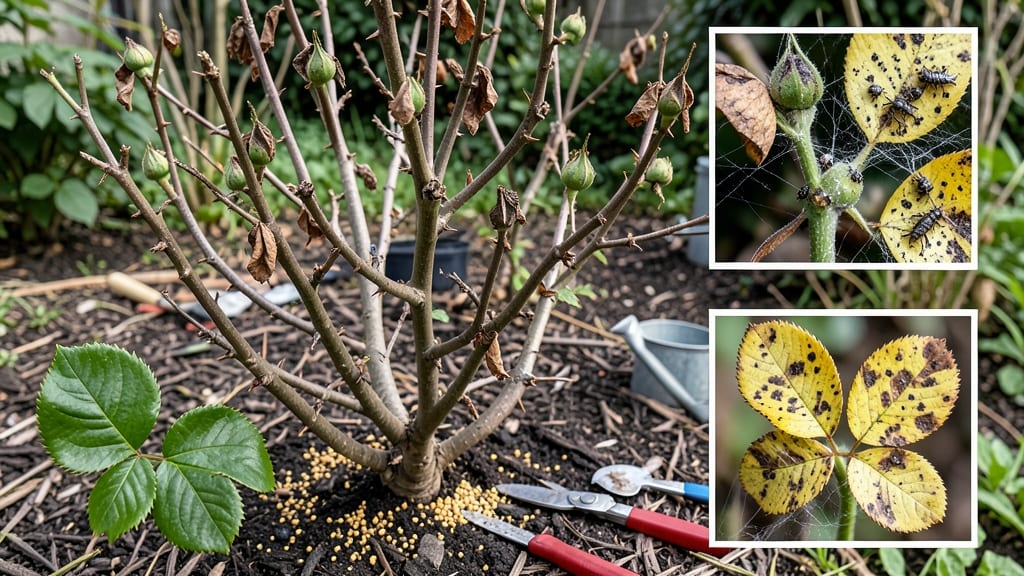
Your rose bushes look like they’ve been stripped bare overnight—no leaves, just bare stems. 🌿 This is your fast-track guide to diagnosing the real culprit (it’s rarely what you first think) and getting those canes back in action before next season.
Start by checking the undersides of leaves (if any remain) for tiny webs or specks—those are spider mites or aphids. Then inspect the stems and buds: black spots or fuzzy white patches mean fungal infections like black spot or powdery mildew. Drought stress?
The soil will be bone-dry and cracked. Pruning too late? You might’ve cut off next year’s blooms. The fix depends on the cause: neem oil sprays for pests, fungicide treatments (organic or chemical) for disease, or deep watering + mulch for drought.
Most roses bounce back in 4-6 weeks with the right care—just don’t wait until winter to act. Prevention is easier than cleanup: space plants for airflow, prune in early spring, and water at the base (not overhead).
Here’s how to spot the problem before it strips your bushes bare again.
Root Causes Of Bare Rose Bushes
When your once-lush rose bushes suddenly sport bare branches or dropping leaves, it’s often a sign of deeper stress. Understanding the why behind this issue is the first step to revival.
Below, we break down the most common culprits—from environmental factors to hidden pests—and explain the science behind their damage. 🌱🔍
Roses are hardy, but extreme cold—especially when combined with winter winds or freeze-thaw cycles—can cause leaf drop or even branch dieback. The damage happens when:
- Cell membranes rupture: Water inside plant cells expands when frozen, physically breaking cell walls. This disrupts nutrient flow, leading to browning and leaf loss.
- Dormancy disruption: Roses enter dormancy to survive winter, but sudden temperature swings (e.g., a warm spell followed by a hard freeze) can trick them into growing before they’re ready—only to be killed by the next frost.
- Desiccation: Cold, dry winds evaporate moisture faster than roots can replace it, causing leaves to crisp and fall.
Actionable fix: Mulch heavily (4–6 inches of straw or wood chips) in late fall to insulate roots. Wrap young bushes in burlap or frost cloth in regions with below-zero temps. Avoid pruning in late winter—wait until after the last frost when new growth signals safety. ⏳
Roses hate "wet feet." When soil stays soggy for days, roots suffocate from lack of oxygen, while fungal pathogens like Phytophthora move in to feast on the plant. Here’s how it plays out:
- Root rot: Fungi and bacteria thrive in waterlogged soil, clogging root pores and blocking water/nutrient uptake. Leaves yellow (chlorosis) and drop as the plant starves.
- Nutrient leaching: Excess water washes away essential minerals (like nitrogen and potassium), weakening the plant’s ability to sustain foliage.
- Compaction: Heavy, clay soils hold too much water, smothering roots and reducing aeration.
Actionable fix:
- Test soil drainage: Dig a hole, fill it with water, and time how long it takes to drain. If it’s more than 6 hours, amend with compost or perlite.
- Water deeply but infrequently—aim for 1–1.5 inches per week (including rain). Use a soaker hose to deliver water at the base.
- Raise beds: If your soil is naturally waterlogged, consider mounding soil or planting roses in raised beds with well-draining mix.
While roses love sunlight, intense heat waves (especially in arid climates) can scorch leaves and halt growth. The science:
- Photosynthesis shutdown: High temperatures denature enzymes in chloroplasts, reducing the plant’s ability to convert sunlight into energy. Leaves wilt and drop to conserve moisture.
- Transpiration overload: Hot, dry air increases water loss through stomata (leaf pores) faster than roots can replenish it, leading to crispy, brown edges.
- Sun scald: Young, tender leaves can blister or turn white when exposed to direct afternoon sun after a cool morning.
Actionable fix:
- Provide afternoon shade (30–50%) during heatwaves using shade cloth or a lightweight row cover.
- Mulch with 3–4 inches of organic mulch (like straw) to retain soil moisture and cool roots.
- Water early in the morning to reduce evaporation. Avoid wetting leaves to prevent fungal issues.
Some insects and mites are leaf vampires, sucking sap and injecting toxins that cause leaves to yellow, curl, and drop. Here’s the breakdown:
| Pest | Damage Signs | How They Attack |
|---|---|---|
| Japanese Beetles 🐞 | Skeletonized leaves (only veins remain), black fecal droplets. | Adults chew leaf tissue while larvae eat roots, starving the plant. |
| Spider Mites 🕷️ | Fine webbing on undersides, stippled or bronze-colored leaves. | Tiny mites pierce cells to suck sap, causing chlorosis and leaf drop. |
| Aphids 🐜 | Sticky honeydew, curled or puckered leaves, ants (they farm aphids!). | Clustered aphids inject toxins while feeding, disrupting growth hormones. |
| Rose Slugs (Sawfly Larvae) 🐛 | Leaves rolled into tubes, black frass (poop) inside. | Caterpillar-like larvae skeletonize leaves, often defoliating entire branches. |
Actionable fix:
- Handpick beetles or large larvae, then drown them in soapy water.
- Spray neem oil or insecticidal soap (especially for mites/aphids). Reapply every 5–7 days.
- Introduce beneficial predators: Ladybugs (for aphids), lacewings (for mites), or parasitic wasps (for sawflies).
- Use row covers early in the season to block adult beetles from laying eggs.
Fungi like Botrytis (gray mold) or Powdery Mildew don’t just spot leaves—they strangle rose health by blocking nutrient transport. Here’s the fungal playbook
Quick fixes for rose bushes losing leaves
If your rose bushes are looking bare, don’t panic! The good news is that most causes of leaf loss are reversible with the right care.
Below, we’ve broken down practical, step-by-step solutions tailored to the most common culprits—plus tips to keep your roses lush and healthy for years to come. 🌿💪
Fungal infections thrive in damp, shaded conditions and can strip leaves faster than you’d think. Here’s how to tackle them:
🍳 Clean Up the Area
Remove all infected leaves immediately (gloves recommended!). Drop them in a sealed bag or burn them—never compost—to prevent spores from spreading. Trim back any branches with severe damage to improve airflow.
👨🍳 Apply Fungicide
Use a copper-based fungicide or a neem oil solution (1 tbsp neem oil + 1 tsp mild soap per quart of water) every 7–10 days until the problem clears.
For organic gardens, baking soda spray (1 tsp baking soda + 1 quart water + a few drops of soap) works too. Spray early in the morning to avoid burning leaves in sunlight.
⏰ Adjust Watering Habits
Water at the base of the plant (not overhead) and avoid evening watering to keep foliage dry. Space watering sessions to let leaves dry between sessions—fungi love moisture!
🌡️ Boost Air Circulation
Prune roses to open up the center, and consider staking or trellising if branches are crowded. If your garden is naturally humid, a small fan on low near the bushes (during the day only) can help.
Pests suck the life out of leaves, leaving them yellowed, curled, or completely stripped. Act fast with these fixes:
🔪 Blast Off Pests with Water
For aphids or spider mites, spray leaves with a strong stream of water to knock them off. Do this every 2–3 days until they’re gone. Japanese beetles? Handpick them into soapy water (they’re messy but effective!).
🥘 Use Natural Repellents
Mix 1 tsp dish soap + 1 quart water in a spray bottle and target the undersides of leaves where pests hide. For spider mites, rubbing alcohol (70% isopropyl) + water (1:1 ratio) works as a quick kill. Reapply after rain.
🎯 Introduce Beneficial Insects
Ladybugs, lacewings, and parasitic wasps devour pests naturally. Buy them online or attract them with neem oil or dill plants nearby.
✨ Prevent Future Attacks
Apply kaolin clay (a natural barrier) or diatomaceous earth around the base of the plant to deter chewing insects. Yellow sticky traps can also catch flying pests like whiteflies.
Yellowing leaves often signal a hunger for key nutrients. Feed your roses the right way:
📊 Test Your Soil
Use a DIY soil test kit (available at garden centers) to check pH and nutrient levels. Roses prefer slightly acidic soil (6.0–6.5). If the test shows deficiencies, amend with:
- Nitrogen (for green leaves): Use a balanced fertilizer (10-10-10) or compost in spring.
- Iron (for yellowing between veins): Apply iron sulfate or chelated iron according to package instructions.
- Magnesium (for yellow edges): Sprinkle Epsom salt (1 tbsp per gallon of water) at the base monthly.
🥗 Feed with Organic Matter
Work well-rotted manure or worm castings into the top 6 inches of soil in early spring. Avoid fresh manure—it can burn roots!
🍎 Mulch Like a Pro
Spread 2–3 inches of organic mulch (straw, shredded leaves, or pine needles) around the base to retain moisture and slowly release nutrients. Keep mulch away from the stem to prevent rot.
Sometimes, the problem isn’t pests or disease—it’s the weather. Here’s how to adjust:
💧 Master Watering
Roses need 1–1.5 inches of water per week, but drought stress and overwatering both cause leaf drop. Check soil moisture by sticking your finger 2 inches deep—if it’s dry, water deeply; if soggy, hold off until it dries.
🌡️ Shield from Extreme Temps
If your roses are in a hot, dry climate, provide afternoon shade with a lightweight shade cloth. In cold regions, mulch heavily and cover young plants with burlap if frost is forecasted.
🌿 Improve Drainage
If water pools around the base, your roses are sitting in soggy soil. Amend the area with sand or perlite to improve drainage, or plant on a slight mound.
If your rose bush is severely defoliated, don’t wait—take these steps to nurse it back to health:
- Prune aggressively: Cut back all dead or diseased branches to the nearest healthy bud. This encourages new growth.
- Fertilize lightly: Use a low-nitrogen fertilizer (5-10-10) to support recovery without overwhelming the plant.
- Protect from stress: Avoid heavy pruning or transplanting until new leaves appear.
- Monitor closely: Watch for pests or disease resurgence—early action is key!
Once your roses bounce back, prevent future leaf loss with these habits:
- 🌿 Prune regularly: Remove dead or crossing branches in late winter or early spring to improve airflow.
- 🌡️ Choose the right location: Plant roses in full sun (6+ hours/day) with well-draining soil.
- 💧 Water consistently: Stick to a schedule (e.g., every 3–4 days in summer) rather than sporadically.
- 🍄 Rotate fungicides: If you use chemicals, alternate types to prevent resistance.
- 🐞 Inspect weekly: Check undersides of leaves for early signs of pests or disease.
With these fixes, your rose bushes should regain their vibrant leaves in no time. Patience and consistency are key—roses reward dedicated care with stunning blooms and lush foliage! 🌹
Frequently asked questions
Why are my rose bushes suddenly bare with no leaves at all?
This is usually caused by one of four main issues: severe pest infestations (like spider mites or Japanese beetles), fungal diseases (such as black spot or powdery mildew), environmental stress (like drought or extreme heat), or pruning mistakes (cutting too late in the season). Start by inspecting stems and soil moisture to narrow it down.
Can I save my rose bushes if they've lost all their leaves?
Yes! Most roses recover well when you address the root cause. For pests, use neem oil or insecticidal soap immediately. For fungal issues, prune infected branches and apply copper fungicide. Even severely defoliated bushes can regrow leaves in 4-6 weeks with proper care. Just avoid heavy pruning until new growth appears.
How do I tell if my rose bushes are dying vs just dormant?
Check for green buds at the base of canes—if they're still alive, your roses are dormant. If buds are blackened or mushy, the plant may be dead. Also look for new shoots in spring; if none appear after 2-3 weeks of warm weather, the bush likely won't recover.
What's the best time to prune bare rose bushes?
Wait until late winter or early spring (just before new growth starts) to prune. Never prune in fall or winter—this can stimulate new growth that will die in cold weather. Cut back to healthy buds (about 1/4 inch above) to encourage strong regrowth.
Will my roses bloom again if they've lost all leaves?
Roses are resilient. Once you've addressed the cause (pests, disease, or stress), they'll typically produce new leaves within 4-6 weeks, followed by blooms. Focus on balanced fertilization (like 10-10-10) and consistent watering to support recovery. Some varieties may bloom later than usual, but they'll catch up!