
Plants
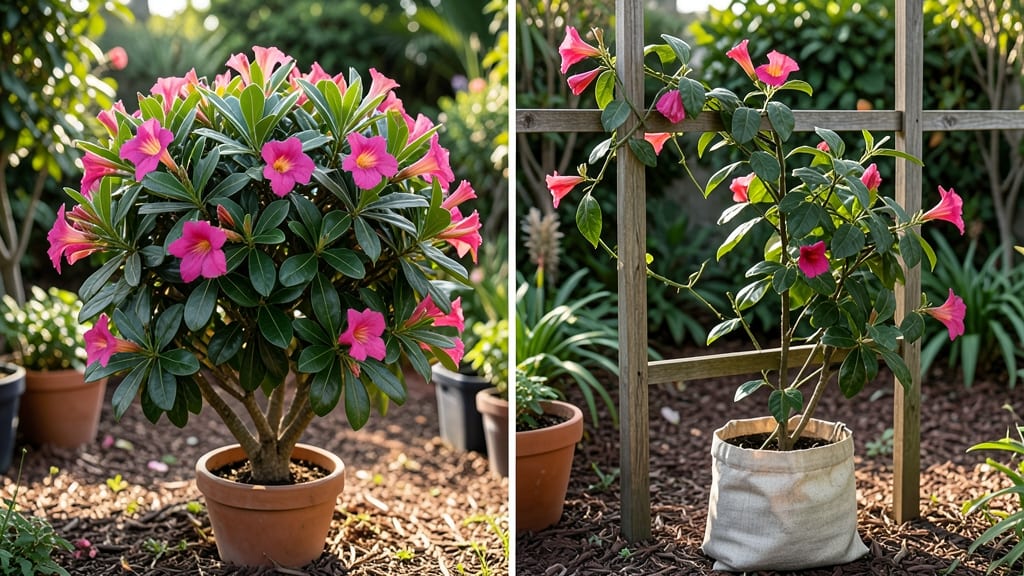
Mandevilla bush vs vine isn't just about looks—it's about how you prune them. 🌿 I've spent years training both types, and the difference comes down to two simple choices: whether you want a compact shrub or a trailing cascade.
Bush varieties like 'Alice du Pont' stay neat with minimal shaping, while vines like 'La Belle' need regular pinching to control their sprawl.
The biggest mistake? Treating them the same. Bush mandevillas thrive in containers with just occasional trimming to maintain their rounded shape, while vine types need sturdy trellises or obelisks to guide their growth upward.
Both love full sun and well-draining soil, but vines will outgrow their space fast without direction—literally climbing over fences if left unchecked.
Here's the secret: prune bush types after blooms fade to encourage new growth, while vine types benefit from a mid-summer haircut to prevent legginess. You'll end up with either a lush, compact plant perfect for patios or a dramatic vertical display that turns heads at your front door.
Need to grow a vine in a pot? Choose dwarf varieties like 'Sun Parasol' and prune aggressively to keep it contained. The key is understanding their natural growth habits—then working with them, not against them. Let's get those shears ready!
The first product explained
Meet the Mandevilla 'Alice du Pont'—a stunning hybrid that’s taking the gardening world by storm! 🌸 Whether you’re growing it as a bush or training it as a vine, this beauty delivers year-round color with its glossy, deep green leaves and clusters of trumpet-shaped blooms in shades of pink, red, or white.
Let’s dive into what makes this plant a must-have for your garden.
🌿 Specs & Features
- Growth Type: Semi-evergreen perennial (hardy in USDA Zones 9-11; often grown as an annual in cooler climates). Thrives as both a bush (compact, 3-5 ft tall) or a vine (can climb 10+ ft with support).
- Bloom Season: Spring through frost (with proper care, some blooms may persist year-round in warm climates!).
- Light Needs: Full sun to partial shade (6+ hours of sunlight daily for optimal flowering).
- Soil Preference: Well-draining, slightly acidic to neutral soil (pH 6.0-7.0). Amend heavy soil with compost or sand.
- Drought Tolerance: Once established, it’s surprisingly resilient—water deeply 1-2 times per week during dry spells.
- Fragrance: Delicate, sweet scent that attracts hummingbirds and butterflies!
🎯 Target Users
This Mandevilla is perfect for:
- 🌱 Beginner gardeners: Low-maintenance yet dramatic results.
- 🏡 Urban gardeners: Thrives in containers, balconies, or small yards.
- 🌿 Landscape designers: Adds tropical flair to patios, trellises, or as a focal-point bush.
- 🌞 Sun-loving plant enthusiasts: Loves heat and humidity but adapts to milder climates.
💰 Price Point & Availability
Pricing varies by retailer and size, but here’s a general range:
| Product Form | Price Range | Where to Buy |
|---|---|---|
| 6-inch potted plant | $15–$25 | Local nurseries, Home Depot, Lowe’s, or online (Etsy, Amazon, Planters.com) |
| Gallon container (mature plant) | $30–$50 | Specialty garden centers, Plant catalogs (e.g., Fast-Growing-Trees.com) |
| Bulk or wholesale (for landscapers) | $20–$40 per plant | Wholesale suppliers like Proven Winners or local growers |
Pro tip: 💡 Check for dormant-season sales (fall/winter) when prices drop for bare-root or over-wintered plants!
The second product explained
If you're looking for a bold, fast-growing Mandevilla that thrives in both container gardens and landscapes, the Mandevilla 'Alice du Pont' vine is a showstopper. 🌺 Known for its vibrant blooms and vigorous growth, this variety is a favorite among gardeners who want color and drama without the fuss of constant pruning.
Let’s break down what makes this vine a top contender in the Mandevilla showdown!
🌿 Key Specs & Features
- Growth Habit: Vigorous vine (can climb up to 15–20 feet with support or trail gracefully in containers).
- Bloom Time: Spring through fall, with bright pink, trumpet-shaped flowers that attract hummingbirds.
- Sunlight Needs: Full sun to partial shade (6+ hours of sunlight for optimal blooms).
- Hardiness: USDA Zones 9–11 (often grown as an annual in cooler climates).
- Soil Preference: Well-draining, slightly acidic soil (amend with compost for best results).
- Watering: Regular watering (keep soil moist but not soggy); drought-tolerant once established.
🎯 Who’s It For?
This vine is perfect for:
- 🏡 Homeowners with trellises, arbors, or pergolas who want a dramatic vertical display.
- 🌆 Urban gardeners using containers to add color to patios or balconies.
- 🐦 Wildlife enthusiasts eager to attract pollinators like hummingbirds and butterflies.
- 🌿 Intermediate gardeners looking for a low-maintenance plant with high rewards.
💰 Price Point & Availability
The Mandevilla 'Alice du Pont' vine typically costs between $15–$30 per plant, depending on the retailer and pot size. You’ll find it at:
- 🌱 Local nurseries (spring/summer seasons).
- 🛒 Online plant shops (e.g., Fast-Growing-Trees, Nature Hills Nursery).
- 🌿 Garden centers (often sold as bare-root or potted plants).
Pro Tip: 💡 Buy in early spring to give your vine plenty of time to establish roots and bloom before summer heat sets in!
🔥 Pruning Perks
Unlike bush varieties, this vine benefits from strategic pruning to encourage fuller growth and more flowers. Here’s why it’s a winner:
- ✂️ Easy to shape—trim back leggy stems to promote bushier growth.
- 🌸 Encourages more blooms by removing spent flowers (deadheading).
- 🏗️ Ideal for training on structures like trellises or fences.
Head-to-head comparison
Choosing between a Mandevilla bush and a Mandevilla vine isn’t just about aesthetics—it’s about understanding how each grows, thrives, and responds to pruning. Below, we break down the key differences in a side-by-side comparison to help you decide which form suits your garden (or container!) best. 🌿🌸
🌱 Growth Habit & Form
The most obvious difference between the two is their natural shape, which directly impacts how you’ll prune them.
- Mandevilla Bush:
- Grows as a compact, rounded shrub (typically 3–5 feet tall and wide).
- Branches are denser and more upright, creating a bushy, full appearance.
- Ideal for foundation plantings, borders, or container gardens where a structured shape is desired.
- Pruning tip: Focus on shaping the outer edges to maintain symmetry and encourage inward growth.
- Mandevilla Vine:
- Grows as a long, trailing vine (can reach 10–20 feet or more if unchecked!).
- Branches are thinner and more sprawling, perfect for climbing trellises, arbors, or fences.
- Thrives in vertical spaces or as a cascading accent in hanging baskets.
- Pruning tip: Prune to guide growth along a structure or trim back leggy stems to promote bushier vines.
🌞 Sunlight & Exposure Needs
Both varieties love the sun, but their forms influence how they handle light.
| Factor | Mandevilla Bush | Mandevilla Vine |
|---|---|---|
| Ideal Sunlight | Full sun (6+ hours/day) for best flowering; tolerates partial shade (4–6 hours). | Full sun (6+ hours/day) for maximum vine length and blooms; may become leggy in shade. |
| Shade Tolerance | More forgiving—retains bushy shape even in partial shade. | Can become spindly or weak without enough light; prune aggressively to encourage denser growth. |
| Best for Low-Light Areas? | ✅ Yes! Holds its shape better in dappled light. | ❌ No. Needs bright light to thrive; may require supplemental support. |
💧 Water & Maintenance Requirements
Pruning frequency and watering needs vary based on form—here’s how to keep them happy.
- Mandevilla Bush:
- Watering: Moderate—soil should dry slightly between waterings. Overwatering can cause root rot.
- Pruning frequency: 2–3 times per year (spring, summer, and light touch-ups).
- Fertilizer: Balanced, slow-release fertilizer every 4–6 weeks during growing season.
- Mandevilla Vine:
- Watering: Consistent moisture—vines grow faster and need more hydration, especially in containers.
- Pruning frequency: More frequent—trim leggy growth throughout the season to encourage bushiness.
- Fertilizer: Higher nitrogen in early spring to fuel vine growth; switch to bloom-boosting fertilizer in summer.
💡 Pro Tip: Both varieties benefit from mulching to retain moisture and reduce pruning stress. Use organic mulch like bark or straw!
🌡️ Cold Hardiness & Longevity
If you’re in a cooler climate, form matters when it comes to survival.
| Factor | Mandevilla Bush | Mandevilla Vine |
|---|---|---|
| Cold Tolerance | Hardy to USDA Zones 9–11; may die back in frost but can regrow from roots. | Also Zones 9–11, but vines are more vulnerable to wind damage in exposed areas. |
| Overwintering | Cut back to 1/3 of size before winter; mulch heavily. | Trim vines to 6–12 inches from base; protect with burlap or frost cloth. |
| Lifespan | Can live 5–10+ years with proper care and pruning. | Long-lived but requires more aggressive pruning to prevent decline. |
🎨 Flowering & Aesthetic Impact
Both Mandevillas are showstoppers, but their blooms behave differently.
- Mandevilla Bush:
- Produces clusters of vibrant flowers (pink, red, white) along branches.
- Flowers are more evenly distributed due to dense growth.
- Best for: Colorful hedges, specimen plants, or mixed borders.
- Mandevilla Vine:
- Flowers dangle from long stems, creating a dramatic trailing effect.
- May have fewer but larger blooms per vine if not pruned properly.
- Best for: Vertical gardens, pergolas, or as a cascading focal point.
🌸 Pro Tip: Deadhead spent blooms on both varieties to encourage continuous flowering throughout the season!
💰 Cost & Availability
Price varies based on form, size, and whether you’re buying a plant or seeds.
| Factor | Mandevilla Bush | Mandevilla Vine |
|---|---|---|
| Average Price (Nursery) | $15–$30 per plant (smaller, compact varieties). | $20–$
Which one should you choose?So, which one should you choose—Mandevilla as a bush or a vine? The answer depends on your space, style, and willingness to prune! Here’s a quick verdict to help you decide: 🌿 Pick a Mandevilla Bush If...
🪴 Choose a Mandevilla Vine If...
💡 Pro Tip for Both:No matter which you choose, pruning is key! For bushes, focus on light shaping and deadheading to encourage fullness. For vines, prune aggressively in early spring to direct growth where you want it. Both styles reward patience with vibrant blooms and lush foliage—so pick what excites you most! Final Thought: There’s no wrong choice—just what fits your vision (and your green thumb’s comfort level)! 🌱✨ |