
Shrubs
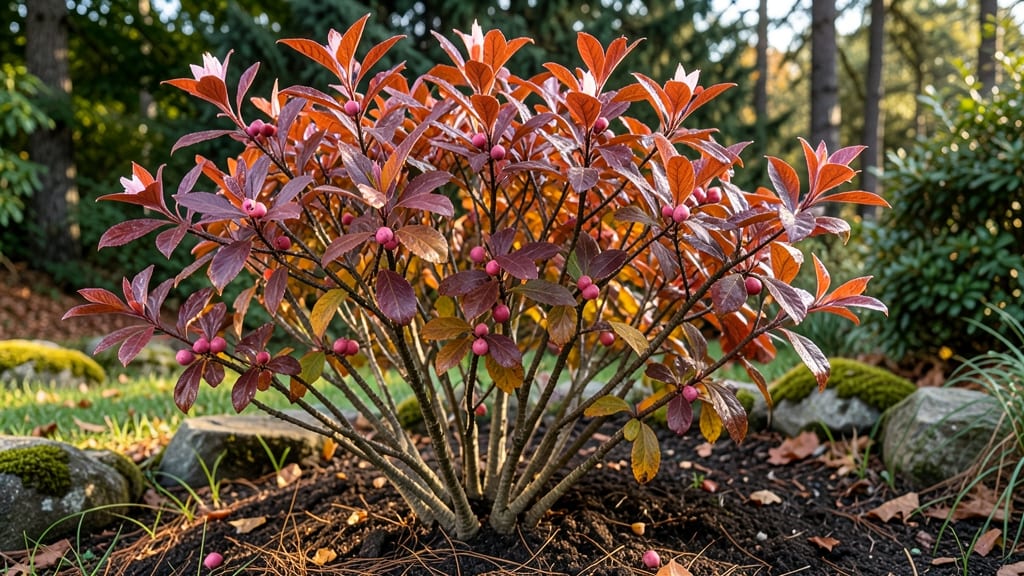
Burning bush is not evergreen—its leaves turn brilliant red in fall and drop in winter, though some cold-hardy varieties retain sparse foliage. Only in mild climates (USDA Zones 5-9) does it stay partially green year-round, but true evergreens it is not.
At its core, burning bush (Euonymus alatus) is a deciduous shrub, meaning it naturally sheds leaves annually.
The stunning red foliage in autumn is its signature, but this seasonal change is hardwired into its biology—cooler temperatures trigger chlorophyll breakdown, revealing the brilliant pigments. 🌿 In colder regions (Zones 3-4), even the hardiest varieties will lose most leaves by winter, though some may cling to a few bronze or green stems.
The confusion often comes from how certain cultivars like 'Cavalcade' or 'Compactus' retain a few leaves longer than others, but these are exceptions, not the rule.
What truly sets burning bush apart is its dramatic seasonal transformation. While it won't stay lush and green like holly or boxwood, the winter interest it provides—through persistent stems, berries, and occasional leaf retention—makes it a standout in winter landscapes.
For full-year greenery, consider pairing it with evergreens like inkberry or dwarf yew, which maintain their foliage without the seasonal spectacle.
💡 In This Article
- Why Burning Bush Loses Leaves in Winter
- Best Cold-Hardy Burning Bush Varieties for Year-Round Interest
Why burning bush loses leaves in winter
Burning bush (Euonymus alatus) follows a biological cycle tied to temperature cues. As days shorten and temperatures drop below 50°F in fall, the plant's cells release ethylene gas—a natural hormone that signals leaf senescence (aging).
This triggers chlorophyll breakdown, revealing the red anthocyanin pigments that give burning bush its iconic color. Unlike evergreens, which conserve water and nutrients year-round, burning bush prioritizes energy storage in its roots and stems during winter dormancy.
The leaf drop isn't random—it's a survival strategy. Each leaf contains 50-70% of the plant's annual water supply, and retaining them in freezing conditions would risk dehydration. The stems, which remain woody and often greenish-brown, act as the plant's lifeline until spring.
In USDA Zone 5, where winters average 10-20°F, even the hardiest varieties will shed most leaves by December, though some may retain a few bronze-tinged leaves until late winter.
What makes burning bush semi-evergreen is its ability to regrow leaves rapidly in spring—often by early May—using stored nutrients. This rapid regrowth contrasts with true evergreens like boxwood (Buxus spp.), which maintain foliage year-round through specialized needle-like leaves that minimize water loss.
The trade-off? Burning bush's dramatic seasonal change creates a visual spectacle that evergreens simply can't match.
Climate plays a critical role in leaf retention. In Zone 7 (average winters of 10-15°F), some burning bush cultivars like 'Compactus' may retain 10-20% of their leaves through winter, while in Zone 9 (mild winters above 20°F), varieties like 'Cavalcade' might keep 30-40% of foliage.
However, these percentages are deceptive—what remains is often sparse and prone to winter burn from freezing winds.
Here's what's actually happening at the cellular level: As temperatures drop, the plant's abscission layer—a specialized tissue at the leaf stem—forms and weakens, causing leaves to detach cleanly. This process is triggered by a 50% reduction in photosynthesis in fall, as shorter daylight limits the plant's energy production.
The remaining stems enter a state of dormancy, their bark often developing a papery texture that protects against cold.
For gardeners seeking year-round interest, this seasonal behavior explains why burning bush thrives as a specimen plant rather than a hedge. Its winter stems, often with persistent red berries, provide structure when most deciduous shrubs are bare.
The trade-off? True evergreens like Ilex glabra (inkberry) or Taxus media (yew) offer denser foliage but lack burning bush's seasonal drama.
Understanding this cycle helps explain why burning bush won't survive as an evergreen in harsh climates.
In Zone 4 (average winters below 0°F), even the hardiest varieties will lose all but the most protected leaves, while in Zone 6, some may retain 25% of foliage through winter—though this is more about delayed senescence than true evergreenness.