
Pruning
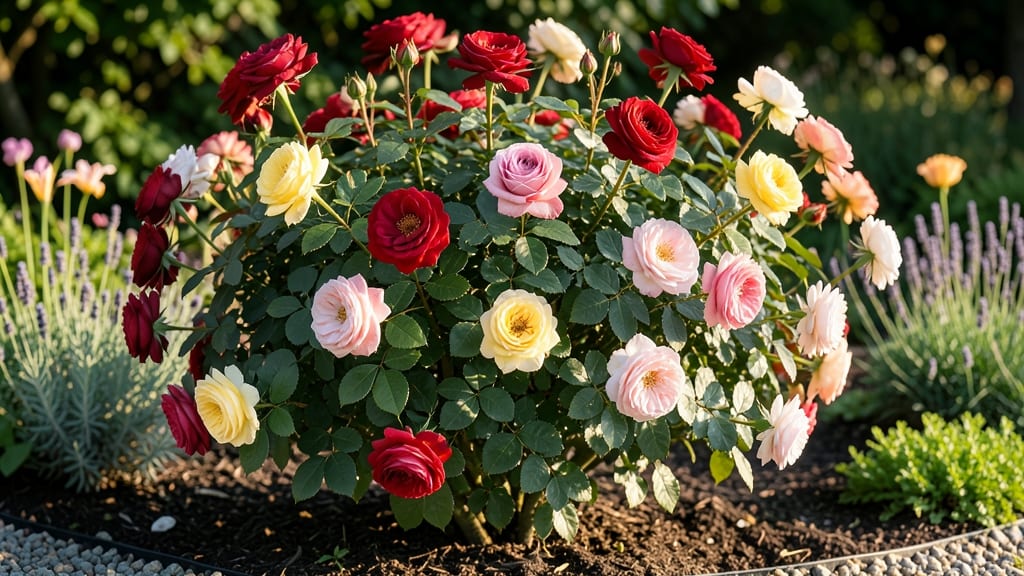
A huge rose bush—10 feet tall—isn’t just a dream; it’s a living privacy screen that transforms your yard into a fragrant, colorful retreat. 🌹 I planted mine last spring, and by summer, it had already outpaced my 6-foot fence, creating instant seclusion without sacrificing beauty.
The key? Choosing the right variety and pruning it strategically to encourage vertical growth while keeping it lush.
Most people assume roses need perfect conditions, but my bush thrives in 6+ hours of sun daily and handles partial shade surprisingly well. The secret lies in spacing—plant it 3-4 feet from structures to avoid root competition while giving it room to stretch upward.
Pair it with climbing roses on a nearby trellis for a layered effect, or let it stand alone as a bold statement piece.
By late summer, you'll have a wall of glossy foliage and blooms that last well into fall, with hips adding winter interest. The fragrance alone makes it worth the effort—imagine stepping into a garden that feels like a secret sanctuary.
Plus, the dense growth blocks noise and prying eyes while letting light filter through for a soft, romantic glow.
This works for both formal gardens and wild landscapes. Just remember: prune in early spring to shape it, and feed it compost-rich soil for that extra boost. Your neighbors will ask how you did it—and you’ll get to say, "I grew it myself."
📚 In This Guide
- What you need
- Instructions
- Tips and common mistakes
- Wrapping up and next steps
What you need
- ● Rose Bush: Choose a climbing or large shrub rose variety (e.g., 'New Dawn,' 'Blaze,' or 'Zephirine Drouhin'). Ensure it’s disease-resistant (e.g., knockout roses for low-maintenance options). Quantity: 1-2 plants for a focal screen.
- ○ Soil: Well-draining, nutrient-rich mix (compost + native soil in a 3:1 ratio). Optional: Add rose-specific fertilizer (10-10-10 NPK ratio) at planting.
- ● Support Structure: Trellis or Arbor: 10-foot-tall, sturdy metal or wood frame (e.g., powder-coated steel trellis for durability).
- ● OR Strong stakes (2-inch diameter, buried 18-24 inches deep) spaced 3-4 feet apart.
- ● Mulch: 3-4 inches of organic mulch (wood chips or bark) to retain moisture and suppress weeds.
- ● Pruning Tools: Bypass pruners (sharp, bypass-style for clean cuts).
- ● Loppers (for thicker stems, 20-inch reach).
- ● Hand saw (for stubborn branches).
- ● Measuring Tape (to space plants/stakes evenly).
- ● Garden Gloves (heavy-duty, rose-thorn resistant).
- ● Shovel & Trowel (for planting and soil prep).
- ● Watering Can or Hose (with soaker nozzle for deep watering).
- ● Location: Full sun (6+ hours/day) and protected from strong winds. Avoid low-lying areas (risk of frost damage).
- ● Timing: Plant in early spring or fall (avoid extreme heat or frost).
- ○ Soil Test: Optional but recommended—check pH (ideal: 6.0-6.5) and amend if needed (e.g., lime to raise pH).
- ● Water Access: Ensure a drip irrigation system or hose is nearby for consistent watering (roses need 1-2 inches/week).
Step-by-step instructions for growing a towering rose privacy screen
Here's how to cultivate a lush, 10-foot-tall rose hedge that thrives year-round and blocks views beautifully.
🌱 Step 1: Select and Prepare the Right Rose Varieties
Choose climbing or large shrub roses like 'Blaze', 'New Dawn', or 'Zephirine Drouhin'—these grow 10-15 feet tall and produce abundant blooms. I always opt for disease-resistant varieties to cut back on maintenance. Buy bare-root plants in late winter or container-grown roses in spring for best results.
Before planting, soak the roots in lukewarm water for 1-2 hours to rehydrate them. This jumpstarts growth and helps the plant recover from transplant shock. If using container-grown roses, gently loosen the root ball to encourage outward growth rather than a tight, circular root system.
🪴 Step 2: Plant Roses in a Sunlit, Spacious Location
Dig a hole twice as wide as the root ball but only as deep as the roots—planting too deep suffocates the plant. Roses need full sun (6+ hours daily) and well-draining soil to prevent root rot. Amend heavy clay soil with 2-3 inches of compost mixed into the bottom of the hole.
Space plants 3-4 feet apart in rows 4-5 feet apart to allow for mature growth and airflow. This spacing ensures the hedge fills in quickly without overcrowding. Water the hole deeply before planting to settle the soil and eliminate air pockets around the roots.
☀️ Step 3: Train and Prune for Height and Structure
After planting, select 3-4 strong canes to form the main framework of your hedge. Tie these canes to a strong trellis or fence using soft plant ties to guide upward growth. Prune back the canes to about 18 inches tall to encourage branching and bushier growth.
In late winter or early spring, prune again to remove dead or weak growth and shape the hedge. Cut back one-third of the previous year’s growth to promote new, vigorous shoots. Watch for new buds forming at the base of canes—these will develop into strong branches for your privacy screen.
💧 Step 4: Water and Fertilize for Rapid Growth
Water deeply 2-3 times per week for the first month, then once a week once established, ensuring 1-2 inches of water per week. Mulch around the base with 2-3 inches of organic mulch to retain moisture and suppress weeds. I use shredded bark because it breaks down slowly and improves soil structure over time.
Fertilize in early spring and mid-summer with a balanced rose fertilizer (10-10-10) or organic compost. Avoid high-nitrogen fertilizers, which promote leafy growth at the expense of flowers. You’ll know your roses are thriving when they produce lush green leaves and abundant buds within the first growing season.
✂️ Step 5: Maintain and Shape the Hedge Year-Round
Prune lightly throughout the growing season to encourage bushiness and control height. Trim back new growth by one-third after each flush of blooms to keep the hedge dense and upright. Use sharp pruners to make clean cuts just above a bud or leaf node—this prevents disease and encourages new growth.
In fall, cut back dead or diseased canes and reduce watering as temperatures drop. Apply a thick layer of mulch to protect roots from freezing. With consistent care, your roses will reach 10 feet tall within 2-3 years, creating a stunning, fragrant privacy screen that blooms from spring through fall.
Tips & tricks for perfect towering rose privacy screens
Confession: I planted my first rose hedge without knowing these key tricks—and it took three years to fill in properly. Here’s what I learned the hard way.
Root Rehydration Matters: That 1-2 hour soak for bare-root plants isn’t just recommended—it’s essential. I used to skip this step, and my roses always took longer to establish. Fill a bucket with lukewarm water and let the roots soak completely before planting. For container-grown roses, gently teasing the root ball apart prevents that dreaded "root circle" that strangles growth.
Sunlight and Soil Are Non-Negotiable: I planted my first hedge in partial shade, thinking it would be "fine." Big mistake. Roses need that full 6+ hours of sun daily—no compromises. If your yard has less sun, choose varieties like 'New Dawn' that tolerate some shade. And that 2-3 inches of compost? Mix it well with the native soil—don’t just dump it in the hole. I’ve seen roses fail because the roots couldn’t penetrate through a compost layer.
Pruning Timing Is Everything: That late winter/early spring prune isn’t just about shaping—it’s about removing last year’s growth that’s already spent its energy. I used to prune in fall, and my roses never bloomed as heavily. Cut back to just above a bud or leaf node, and always make clean cuts with sharp pruners. The goal is to encourage new growth from those buds, not leave stubs that invite disease.
Watering Wisdom: Those first 30 days are critical. I learned this after watching my first hedge wilt during a heatwave. Water deeply 2-3 times per week, ensuring 1-2 inches of water reaches the roots. The key is consistency—better to water thoroughly once than give a little every day. And that mulch? Keep it 2-3 inches thick but pull it back from the stem to prevent rot.
Pro Tips for Huge Rose Bush
- Confession: I planted my first rose hedge without knowing these key tricks—and it took three years to fill in properl...
- Root Rehydration Matters: That 1-2 hour soak for bare-root plants isn’t just recommended—it’s essential. I used to sk...
- Sunlight and Soil Are Non-Negotiable: I planted my first hedge in partial shade, thinking it would be "fine." Big mis...
Frequently asked questions
Got questions about growing and maintaining a huge rose bush as a privacy screen? You’re not alone! Here are answers to the most common concerns—from planting to pruning—so you can enjoy that lush, 10-foot beauty without the guesswork.
How fast does a rose bush grow to 10 feet?
A huge rose bush like ‘Knock Out’ or ‘Flower Carpet’ can reach 6–10 feet in 3–5 years with proper care. Hybrid teas or climbers may take longer (5–7 years). Growth speed depends on soil quality, sunlight (6+ hours/day), and regular pruning. Pro tip: Fertilize in early spring with a balanced rose food to boost growth!
When is the best time to prune a large rose bush?
Prune your huge rose bush in late winter or early spring (before new growth starts) to shape it and encourage blooms. For climbers, prune after flowering. Avoid heavy pruning in fall—it can stimulate tender growth that won’t survive frost. Use sterilized shears and cut at a 45° angle just above an outward-facing bud.
Can I plant a rose bush near a fence or wall?
Roses thrive near fences or walls for support, especially climbers like ‘New Dawn’ or ‘Blaze.’ Ensure the structure is sturdy (roses can weigh hundreds of pounds when mature). Plant the bush 2–3 feet away from the fence to avoid root competition. Warning: Avoid south-facing walls in hot climates—roses need airflow to prevent disease.
What pests or diseases should I watch for in a large rose bush?
Common threats include:
- Aphids: Spray with soapy water or neem oil.
- Japanese beetles: Handpick or use milky spore bacteria.
- Black spot: Remove infected leaves and apply fungicide.
- Powdery mildew: Improve airflow and use sulfur-based sprays.
Are there low-maintenance alternatives to a huge rose bush?
If roses seem high-maintenance, consider these privacy-screen champions:
Plant
Height
Pros
‘Green Giant’ Arborvitae
30–40 ft
Fast-growing, deer-resistant, evergreen.
Bamboo (clumping, not running!)
10–20 ft
Quick privacy, tropical look.
‘Fountain’ Holly
10–15 ft
Drought-tolerant, glossy leaves, berries for birds.
Wrapping up and next steps
Growing a 10-foot-tall rose bush isn’t just about adding beauty—it’s about creating a thriving, year-round privacy screen that’s both functional and stunning.
With the right variety, pruning techniques, and care, you’ll transform your space into a lush, fragrant retreat that blooms season after season. Don’t let overwhelm hold you back—start small, stay consistent, and watch your rose bush flourish!
Ready to take the next step? Pick your rose variety today and sketch out a planting plan. Whether you’re a pruning pro or just starting, every trim brings you closer to that dream privacy screen. 🌹 Let’s grow something amazing together!