
How To
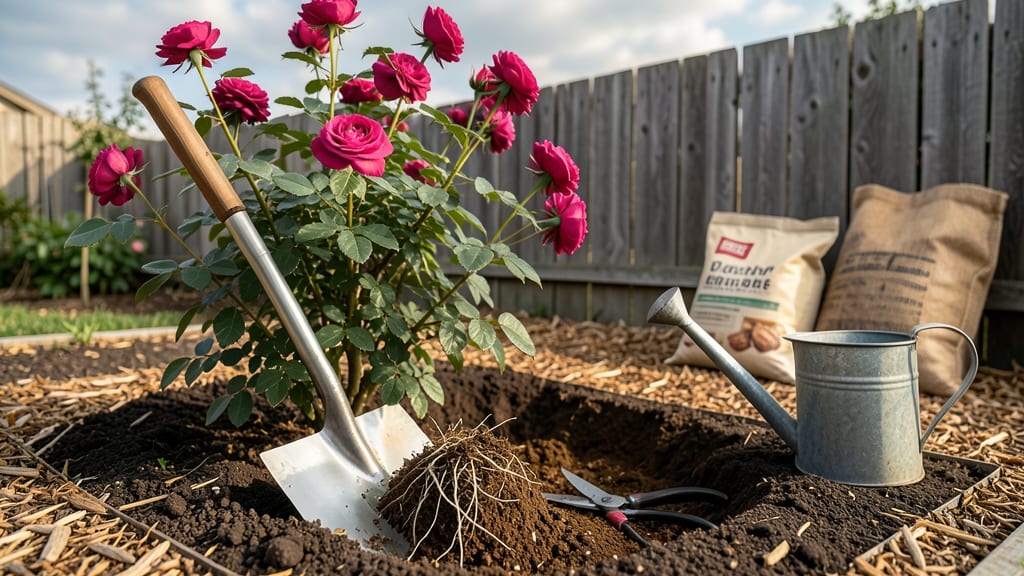
Transplanting rose bushes in August works—if you time it right and prepare properly. 🌹 I've moved roses in late summer without losing a single plant, and the secret lies in understanding when the heat lets up and how to protect those delicate roots.
Start by choosing a cool evening when temperatures dip below 80°F, and water the bush deeply 2-3 days before moving. Dig a hole twice as wide as the root ball but no deeper, then loosen the roots gently and set the plant in place.
Backfill with native soil mixed with compost, and water thoroughly to settle everything into position.
The real magic happens in the weeks after transplanting: mulch heavily to keep roots cool, water deeply every 3-4 days, and avoid fertilizing until new growth appears in spring. Roses transplanted this way often bloom next year with stronger stems and healthier canes than spring-moved plants.
📚 In This Guide
- What you need
- Instructions
- Tips and common mistakes
- Wrapping up and next steps
What you need
- ● Rose bushes: Healthy, well-watered plants (1–3 per hole, depending on spacing needs).
- ● Garden trowel or spade: A sharp, medium-sized (12–18") shovel for digging clean holes.
- ● Pruning shears: Sterilized shears to trim damaged roots or stems (if needed).
- ● Compost or aged manure: 2–3 gallons per bush (for nutrient-rich soil).
- ● Slow-release fertilizer: Balanced (10-10-10 or 20-20-20), 1–2 tbsp per bush.
- ● Mulch: 2–3 inches of organic mulch (straw, wood chips, or pine bark).
- ● Watering can or hose: With a gentle spray nozzle for post-transplant hydration.
- ● Garden gloves: Durable, waterproof to protect your hands.
- ● Root stimulator: Powder or liquid to encourage root growth (follow label instructions).
- ● Soil test kit: To check pH (ideal: 6.0–6.5) before amending soil.
- ● Staking system: 3–4 ft bamboo stakes + soft ties for tall/unstable roses.
- ● Epsom salt: 1 tbsp per gallon of water for magnesium boost (if soil is deficient).
- ● Shade cloth: Lightweight fabric to protect newly transplanted roses from hot August sun for 1–2 weeks.
Step-by-Step instructions for transplanting rose bushes in August
Here's how to move your roses without shocking their roots—even in late summer's heat.
🌱 Step 1: Choose the Right Time and Prepare the New Location
Select a cool, overcast day in August to minimize stress on the roots. Early morning or late afternoon transplanting gives the plant time to recover before evening temperatures drop. The new site should receive full sun (at least 6 hours daily) and have well-draining soil with a pH between 6.0 and 6.5. Roses hate soggy roots, so avoid low spots where water pools.
Before digging, loosen the soil in the new location with a garden fork to a depth of 12-18 inches. Mix in 2-3 inches of compost or aged manure to replenish nutrients lost during transplant shock. If your soil is heavy clay, blend in sand or perlite to improve drainage. The goal is to create a welcoming environment where roots can establish quickly.
🪴 Step 2: Dig and Prepare the Rose Bush for Moving
Water the rose bush deeply 1-2 days before transplanting to encourage root growth toward the outer edges of the root ball. Dig a trench around the bush 12-18 inches from the stem, following the natural curve of the roots. Use a sharp spade to cut vertically, then gently rock the bush back and forth to loosen the soil. Lift the root ball carefully, keeping as much soil attached as possible—the more roots you preserve, the faster recovery.
Inspect the roots for any that are dried, broken, or circling tightly. Trim these with clean pruners to encourage outward growth in the new location. Wrap the root ball in burlap or a damp towel if you can't replant immediately, and store it in a shaded, cool spot. Never let the roots dry out—this is the #1 cause of transplant failure in August.
☀️ Step 3: Plant the Rose Bush at the Correct Depth and Water Thoroughly
Dig a hole twice as wide as the root ball but no deeper than it was originally planted. The graft union (the bump near the base of the stem) should sit 2-3 inches above soil level—this prevents rot and ensures strong regrowth. Place the rose in the hole, spreading roots outward naturally, and backfill with the native soil mixed with compost or slow-release fertilizer. Tamp gently to remove air pockets but don’t compact the soil.
Water deeply and slowly until the soil is evenly moist to a depth of 12 inches. You’ll know it’s right when water drains freely from the bottom of the hole. Mulch the base with 2-3 inches of organic mulch (like shredded bark), keeping it 6 inches away from the stem to prevent rot. This conserves moisture and regulates soil temperature—critical in August’s heat.
✂️ Step 4: Prune and Protect for Post-Transplant Recovery
After transplanting, trim back one-third of the bush’s height to reduce stress. Focus on removing weak, crossing, or damaged branches—this encourages new growth and improves airflow. Sterilize your pruners with rubbing alcohol between cuts to prevent disease spread. Avoid heavy pruning in late summer, but light shaping helps the rose redirect energy to root establishment.
Install a stake or support if needed, tying the main stems loosely with soft plant ties. Shield the bush from direct afternoon sun for the first 7-10 days using shade cloth or a temporary screen. Monitor soil moisture daily—water when the top 2 inches feel dry—but avoid overhead watering, which can spread fungal diseases. A root stimulator (like mycorrhizal fungi) applied to the soil can also boost survival rates.
⏰ Step 5: Monitor and Maintain Through Late Summer
Watch for signs of stress: wilting, yellowing leaves, or new growth stalling are normal for the first 2-3 weeks. If leaves yellow, it’s often due to transplant shock, not failure. Avoid fertilizing for 6-8 weeks—new roots need time to establish before taking up nutrients. Instead, focus on consistent watering and mulch maintenance to keep roots cool and hydrated.
By September, you should see new leaf growth—this is your signal the roots have begun to adapt. If the bush struggles, apply a balanced, water-soluble fertilizer (like 10-10-10) at half strength to give it a gentle boost. With proper care, your rose will rebound and bloom beautifully next spring. The key in August is patience and consistency—rush the process, and you’ll lose the battle before it begins.
Tips & tricks for thriving rose transplants in late summer
These hard-won lessons will help your rose bushes establish strong roots even when August's heat tries to sabotage them.
Timing is Everything: The 7-10 days of shade protection after transplanting is non-negotiable in August's intense sun. I've seen roses wilt dramatically in direct sunlight during this critical recovery window—think of it as their post-surgery recovery period. Set up your shade cloth before you even start digging, so you're not scrambling later. A simple pop-up garden shade tent works perfectly for this purpose.
Root Ball Preservation: When lifting the root ball in Step 2, resist the urge to rush—the more soil you keep attached, the faster recovery will be. I've learned this the hard way after watching roses struggle when their roots were exposed to air. If you must transport the bush, wrap it in damp burlap and keep it in a cool, shaded spot. Never let roots dry out during this process, as that's when transplant shock becomes irreversible.
Soil Preparation Secret: That 12-18 inch deep soil loosening in Step 1 isn't just about making it easier to dig—it's creating a root-friendly environment where new growth can spread outward. For clay soils, I recommend mixing in 1 part sand to 3 parts soil to prevent compaction. This simple adjustment can mean the difference between a struggling transplant and one that thrives. The goal is to mimic the natural aeration roots crave.
Watering Wisdom: The deep watering to 12 inches in Step 3 requires patience—don't just give it a quick drink. I use a garden hose with a slow watering attachment to let the water penetrate gradually. You'll know it's right when water emerges from the bottom of the hole. This thorough hydration helps establish roots quickly, especially in August's dry conditions. Consider installing a drip irrigation system for the first few weeks to maintain consistent moisture.
Pro Tips for Transplant Rose Bushes In August
- These hard-won lessons will help your rose bushes establish strong roots even when August's heat tries to sabotage them.
- Timing is Everything: The 7-10 days of shade protection after transplanting is non-negotiable in August's intense sun.
- Root Ball Preservation: When lifting the root ball in Step 2, resist the urge to rush—the more soil you keep attached, the faster recovery will be.
Frequently asked questions
Got questions about transplanting roses in August? You’re not alone—late-summer moves can be tricky! Here’s what you need to know to keep your roses happy and healthy.
Can I transplant roses in August, or is it too late?
August is technically late for transplanting, but roses can still thrive if you act fast and follow best practices. Choose early August (before 90°F heat sets in) and prioritize established, non-flowering bushes. Avoid transplanting after mid-August in hot climates—roots need time to recover before winter.
How long does it take for transplanted roses to recover?
Recovery time varies, but most roses take 4–6 weeks to establish new roots. Watch for new growth (shoots or leaves) as a sign of success. Pro tip: Avoid fertilizing for 6–8 weeks post-transplant—focus on water and mulch instead!
How often should I water a newly transplanted rose in August?
Water deeply 2–3 times per week (or daily in extreme heat). Aim for 1–2 inches of water per session, soaking the root zone. Morning watering (before 10 AM) reduces evaporation and fungal risks. Use a soaker hose to avoid wetting foliage.
What if my transplanted rose leaves look wilted or yellow?
Wilting/yellowing can mean stress, overwatering, or shock. Check soil moisture (roots should be damp, not soggy). If leaves are crispy, it’s heat stress—provide afternoon shade for a week. For yellowing, test for nutrient deficiency (e.g., iron) or pests (like spider mites).
Are there alternatives if transplanting in August seems risky?
Yes! If your roses aren’t urgent, wait until early spring (March–April) for ideal conditions. For August, consider container-grown roses (easier to handle) or bare-root divisions (smaller plants recover faster). Bonus: Prune spent blooms now to redirect energy to root growth!
Wrapping up and next steps
Transplanting rose bushes in August might seem tricky, but with the right prep, patience, and care, your roses can thrive even in late summer! 🌹 The key is timing, hydration, and protection—water deeply, trim wisely, and shield your plants from heat stress.
Remember, a little extra love now means stunning blooms next season.
Ready to give it a try? Start by marking your new planting spot, gathering your tools, and scheduling a cool, overcast day for the move. Your garden—and your roses—will thank you!