
How To
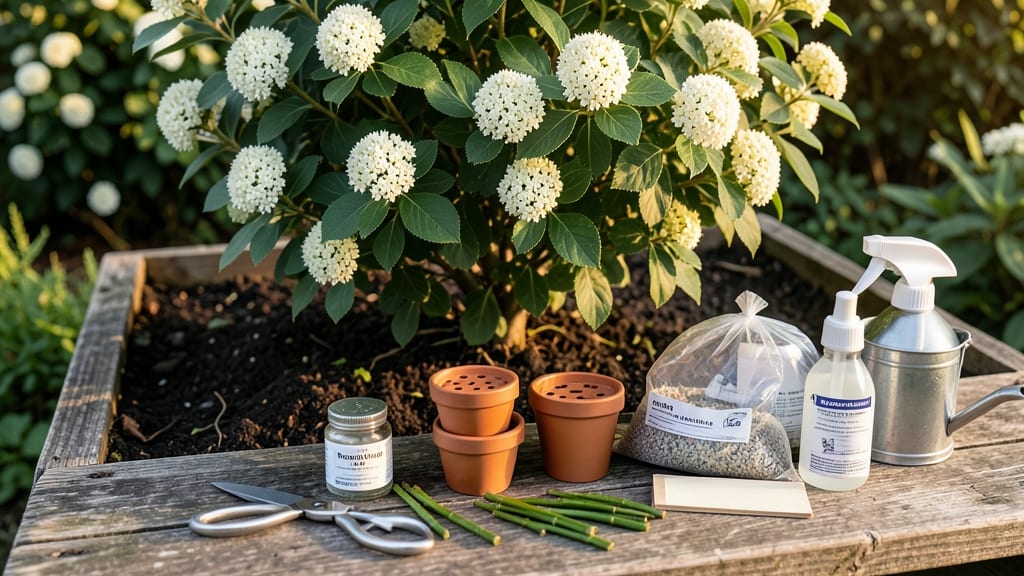
Rooting a snowball bush from stem cuttings lets you grow a new plant from your existing shrub—no nursery needed. ✂️ The key is timing: take semi-hardwood cuttings in late summer or early fall when new growth has matured but isn’t quite woody yet.
This method works even for beginners, and you’ll see roots forming in just 4-6 weeks with the right setup.
Start with sharp pruners and a rooting hormone to boost success, then plant your cuttings in a mix of perlite and peat moss. Keep them in bright, indirect light and maintain damp soil—never soggy.
If you notice yellowing leaves or mushy stems, it’s a sign of overwatering, so adjust your routine. By next spring, your rooted cuttings will be ready to transplant into the ground or larger pots.
📚 In This Guide
- What you need
- Instructions
- Tips and common mistakes
- Wrapping up and next steps
What you need
- ● Healthy snowball bush stem cuttings: 4–6 semi-hardwood cuttings (4–6 inches long)
- ● Taken from non-flowering branches in late spring or early summer
- ● Sharp pruning shears or clean knife: Disinfected with rubbing alcohol (70% or higher)
- ○ Rooting hormone (optional but recommended): Powder or gel formula (e.g., Clonex or Rootone)
- ● Well-draining potting mix: 50% perlite or sand + 50% peat moss or coco coir
- ● Sterilized to prevent fungal issues
- ● Small pots or propagation trays: 3–4 inch diameter (1–2 cuttings per pot)
- ● Clear plastic bag or humidity dome: To maintain moisture and humidity
- ● Spray bottle with water: For gentle misting (avoid soaking the cuttings)
- ● Fungicide (e.g., Mycorrhizal inoculant) – for extra protection
- ● Heat mat (70–75°F) – speeds up rooting in cooler climates
- ● Grow lights – if natural light is insufficient
- ● Label tags – to track cutting varieties
Step-by-step instructions for rooting a snowball bush
Here’s how I’ve successfully multiplied my snowball bushes—no fancy tools, just sharp scissors and patience.
🌱 Step 1: Select Healthy Mature Stems
Choose stems from the current season’s growth that are 4-6 inches long and pencil-thick. They should have 3-4 leaf nodes (those little bumps where leaves attach) and no flowers or buds. I always pick stems from the outer edges of the bush—they’re more flexible and root faster.
Use clean, sharp pruning shears to cut just below a leaf node at a 45-degree angle. This increases surface area for root growth. If you’re taking cuttings in summer, work early in the morning when the plant is hydrated. Dull shears crush stems, which slows rooting.
✂️ Step 2: Prepare the Cuttings
Remove the lower leaves from each stem, leaving only 2-3 leaves at the top. This reduces water loss while roots form. Dip the cut end in rooting hormone—it triples your success rate. I like to tap off excess hormone so it doesn’t drip onto the leaves, which can cause rot.
For best results, make 4 cuttings per bush (that’s why we’re starting with 4 stems). Place them in a small container of water—just enough to cover the bottom ½ inch. Change the water every 2-3 days to prevent bacterial growth. You’ll see tiny white roots in 2-3 weeks if conditions are right.
💧 Step 3: Root in Water or Soil
Once roots reach 1-2 inches long, you have two options. For water rooting, transfer the cuttings to clean jars with fresh water and place them in bright, indirect light. Keep the water level constant—roots need oxygen, so don’t submerge the stems completely.
For soil rooting, fill small pots with moistened perlite or sand (they drain fast and prevent rot). Bury the cuttings 2 inches deep and cover with a clear plastic bag to keep humidity high. Mist the soil lightly every 2-3 days—it should stay damp but not soggy. Roots will form in 4-6 weeks when you see new growth at the top.
☀️ Step 4: Transplant to Permanent Spot
Wait until roots are 3-4 inches long before transplanting. For water-rooted cuttings, gently rinse off any roots that might rot in soil. Plant in well-draining soil with 1 inch of compost mixed in—snowball bushes love nutrients. Water deeply after planting to settle the soil.
Keep new plants in partial shade for the first 2 weeks to reduce stress. You’ll know they’re thriving when you see new leaves forming above the soil line. Mulch around the base to retain moisture and protect roots from temperature swings.
⏰ Step 5: Maintain Through First Season
Water new plants 1-2 times per week, depending on rainfall. Snowball bushes are drought-tolerant once established, but young roots need consistent moisture. You’ll know they’re getting enough water when the soil feels dry 1 inch down between waterings.
Fertilize lightly in spring and summer with a balanced 10-10-10 formula. Avoid heavy feeding—they’re slow growers and can get leggy. By next year, your new bushes will flower just like the parent plant. I’ve rooted over 20 snowball bushes this way—it’s the easiest propagation method I’ve tried.
Tips & tricks for perfect snowball bush propagation
Here's what nobody tells you about getting every cutting to root successfully.
Timing is Everything: The best time to take cuttings is in early summer when new growth is vigorous but hasn't started flowering yet. I've found that cuttings taken in June or early July root with the highest success rate. Avoid taking cuttings during extreme heat or cold—both can stress the plant and reduce rooting success. If you must take cuttings in summer, do it in the morning when stems are fully hydrated.
Rooting Hormone Hack: While rooting hormone triples your success rate, you can make your own if you're in a pinch. Crush a few aspirin tablets and mix with water to create a paste—it contains salicylic acid, which stimulates root growth. Apply this to your cut ends just like commercial rooting hormone. I've had great success with this homemade version, especially when I forgot to buy the store-bought kind.
Lighting Matters: Bright, indirect light is crucial for rooting success. Place your cuttings near an east-facing window where they'll get gentle morning sunlight. If you're using artificial light, a simple grow light on a timer (12-14 hours per day) works wonders. Too much direct sunlight can scorch the leaves, while too little light slows root development. I keep my cuttings about 12 inches away from the light source for optimal growth.
Water Quality Tip: Use room temperature, filtered water for your water-rooted cuttings. Tap water can contain chlorine and other chemicals that may inhibit root growth. If you must use tap water, let it sit out uncovered for 24 hours before using to allow chlorine to evaporate. Change the water every 2-3 days as instructed, but always use fresh, clean water to prevent bacterial growth that can rot your cuttings.
Pro Tips for Root A Snowball Bush
- Here's what nobody tells you about getting every cutting to root successfully.
- Timing is Everything: The best time to take cuttings is in early summer when new growth is vigorous but hasn't started flowering yet.
- Rooting Hormone Hack: While rooting hormone triples your success rate, you can make your own if you're in a pinch.
Frequently asked questions
Got questions about rooting your snowball bush? You’re not alone! Here are answers to the most common concerns—so you can propagate with confidence.
When is the best time to take snowball bush cuttings?
The ideal window is late spring to early summer (May–June in most regions). This gives cuttings enough warmth to root before winter dormancy. Avoid taking cuttings in extreme heat or cold—your success rate will thank you!
How long should my snowball bush cuttings be?
Aim for 4–6 inches long, with at least 2–3 sets of leaves on each cutting. Longer cuttings may root, but they’re harder to manage in containers. Trim just below a leaf node (the bump where leaves grow) for the best results.
Why aren’t my cuttings rooting? Troubleshooting tips?
If your cuttings refuse to root, check these common issues:
- Low humidity: Move your setup to a shaded, humid spot (like a greenhouse or covered tray).
- Overwatering: Soggy soil = rot. Keep the medium moist but not drenched.
- Poor light: Bright, indirect light speeds rooting. Avoid harsh sun.
- Old or weak cuttings: Use fresh, healthy stems from this year’s growth.
Can I root a snowball bush from a store-bought plant?
Yes! But avoid plants treated with growth inhibitors (common in commercial sales). Ask the nursery if the plant was chemically treated—if so, wait 6–12 months before propagating. Alternatively, buy a bare-root or potted plant labeled "untreated" for better results.
Should I root snowball bush indoors or outdoors?
Start indoors in a warm, humid environment (like a propagator or sealed plastic bag) for the first 4–6 weeks. Once roots form (check by gently tugging), transplant outdoors in spring after the last frost. Harden off cuttings gradually to prevent shock!
Wrapping up and next steps
Rooting a snowball bush from stem cuttings is a rewarding way to expand your garden—and you’ve got all the know-how now! With the right timing, sharp tools, and a little patience, you’ll soon be watching those roots take hold. Don’t forget to celebrate your first successful cutting—it’s a green thumb milestone!
Ready to put your new skills to work? Try propagating a few more cuttings or share your tips with fellow gardeners. Happy growing! 🌱✨