
Watering
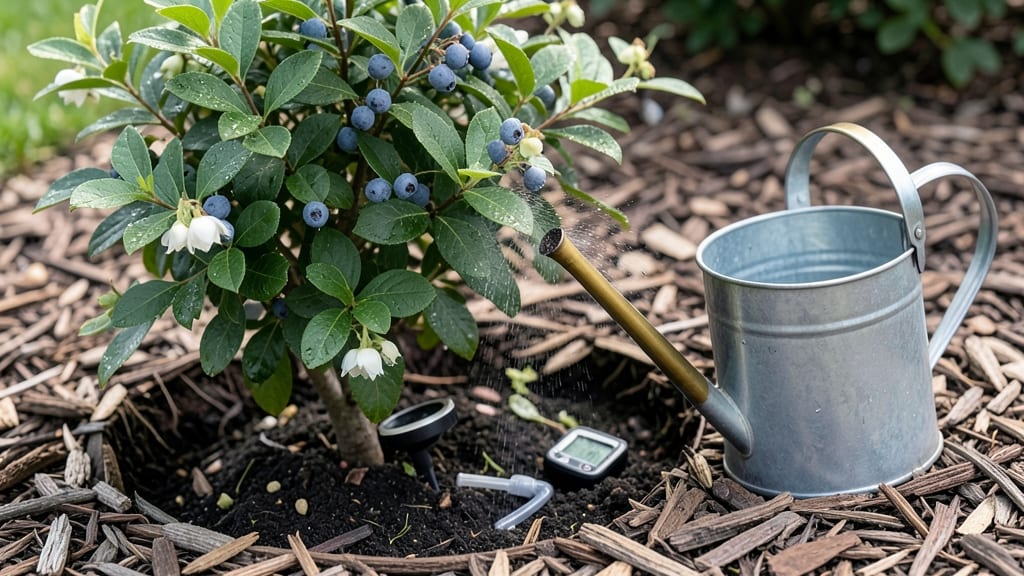
A blueberry bush needs about 1-2 inches of water per week to thrive, but getting it right is the difference between a bountiful harvest and struggling plants.
Picture this: you’ve spent months nurturing your 🫐 blueberry bush, and now it’s flowering—but the berries refuse to set, or worse, the leaves wilt despite your best efforts. The culprit? Too much or too little water, both of which can stress the plant and cut your yield in half.
Watering isn’t just about frequency; it’s about depth and timing. A shallow sprinkle won’t reach the roots where they need moisture most, while drowning the soil can suffocate them. In Zone 6a, where many gardeners grow blueberries, summer heat demands extra attention, while winter dormancy means cutting back dramatically.
Below, I’ll break down the exact watering schedule for every stage—from seedlings to mature bushes—and how to adjust for rain, drought, or your soil type. You’ll learn when to water, how deep to go, and the telltale signs your blueberry bush is thirsty or waterlogged.


Blueberry watering requirements by growth stage: seedling to mature bush
Getting the watering schedule right for your blueberry bushes depends entirely on their growth stage. Seedlings need gentle care, while mature bushes demand deep, consistent hydration. Understanding these differences ensures your plants grow strong roots, produce abundant flowers, and yield sweet berries.
Let’s break down the exact watering needs at each stage—from tiny seedlings to towering mature bushes.
Blueberries are shallow-rooted plants, so they rely on frequent, even moisture. However, their roots also hate soggy soil, which can lead to root rot. The key is deep watering that reaches 6-12 inches below the surface while avoiding waterlogged conditions.
Adjust your approach based on your soil type (sandy vs. clay) and climate zone (humid vs. arid).
| Growth Stage | Weekly Water Needs | Frequency | Soil Moisture Goal |
|---|---|---|---|
| Seedling (0-1 year) | ½ gallon per plant | Every 2-3 days | Consistently moist (not soggy) |
| Young Plant (1-3 years) | 1-2 gallons per plant | Every 3-5 days | Deeply moist (6" down) |
| Mature Bush (3+ years) | 2-4 gallons per plant | Every 4-7 days (adjust for heat) | Evenly moist (12" deep) |
| Flowering/Fruiting | 3-5 gallons per plant | Every 2-3 days (daily in heatwaves) | Never let soil dry out |
| Winter Dormancy | Minimal (1 gallon/month) | Bi-weekly | Lightly moist (prevents desiccation) |
For seedlings, focus on keeping the soil consistently moist but never waterlogged. Use a spray bottle or small watering can to deliver ½ gallon per plant every 2-3 days.
Seedlings have delicate roots, so avoid overhead watering, which can spread disease. Instead, water at the base of the plant to encourage deep root growth.
When your blueberries reach the young plant stage (1-3 years old), increase water to 1-2 gallons per plant every 3-5 days. At this stage, roots are expanding, and the plant needs more moisture to support new growth.
Use a soaker hose or drip irrigation to deliver water slowly and evenly, ensuring it penetrates 6 inches deep into the soil.
Mature blueberry bushes (3+ years old) require the most water—2-4 gallons per plant every 4-7 days, depending on your climate. During flowering and fruiting seasons, increase water to 3-5 gallons per plant every 2-3 days.
This ensures your bushes have enough energy to produce abundant berries. Always water in the early morning to reduce evaporation and fungal risks.
Adjust your watering schedule based on your soil type. Sandy soil drains quickly, so you may need to water daily during heatwaves, while clay soil retains moisture longer and may only need watering every 5-7 days.
Always check soil moisture by sticking your finger 2 inches deep—if it’s dry, it’s time to water.
In hot climates, blueberries can dry out faster. Monitor your plants closely and water daily during heatwaves if the soil feels dry. In cooler climates, reduce watering slightly to prevent over-saturation. Always prioritize deep watering over frequent shallow watering, as this encourages strong root development and disease resistance.
One of the biggest mistakes gardeners make is overwatering blueberries, especially in containers. Potted blueberries dry out faster but also suffer from root rot if overwatered. Ensure pots have drainage holes and use a well-draining potting mix.
If you notice yellowing leaves or mushy stems, your plant may be waterlogged—reduce watering immediately and improve drainage.
To keep your blueberries thriving, mulch around the base of the plant with 2-3 inches of organic mulch, such as pine straw or wood chips. Mulch helps retain moisture, regulate soil temperature, and suppress weeds.
Replenish mulch annually to maintain its effectiveness. With the right watering routine, your blueberry bushes will reward you with years of delicious harvests.
🌱
Seasonal watering schedule for blueberry bushes: spring, summer, and fall adjustments
Adjusting your blueberry bush watering schedule by season is key to preventing stress and maximizing fruit production. In spring, focus on consistent moisture to support new growth, while summer heatwaves demand deeper, more frequent watering.
Fall prep involves tapering water to encourage dormancy, and winter care shifts to minimal hydration. Each season brings unique challenges—let’s break down the exact adjustments you need.
Your blueberry bushes require 1–2 inches of water weekly during active growth, but this changes dramatically with temperature shifts. For example, a 90°F heatwave might require daily watering, while fall’s cooler temps can stretch intervals to every 5 days.
Understanding these rhythms ensures your plants stay hydrated without drowning in soggy soil or struggling through drought.
Watch for signs of overwatering, like yellowing leaves or moldy soil, and underwatering, such as wilting or dry, crispy edges. In summer heat, early morning watering minimizes evaporation and fungal risks. For post-harvest care, reduce water slightly in late summer to harden off bushes before dormancy.
Pro tip: Use a moisture meter to check soil depth (aim for 60% moisture in the top 6 inches). Adjust your schedule based on your local climate—coastal areas may need less water than inland regions. Consistency is key to avoiding berry splitting or poor yields.
Mulching with organic matter like wood chips helps regulate soil temperature and moisture. In fall, add a 3-inch layer to protect roots during winter. This simple step can reduce your watering needs by up to 30% yearly while keeping your bushes healthy.
By tailoring your watering to the season, you’ll ensure your blueberry bushes stay productive and resilient. Pay attention to their growth cues, and don’t hesitate to adjust—your bushes will thank you with sweeter, juicier berries next season! 🫐