
Blooming
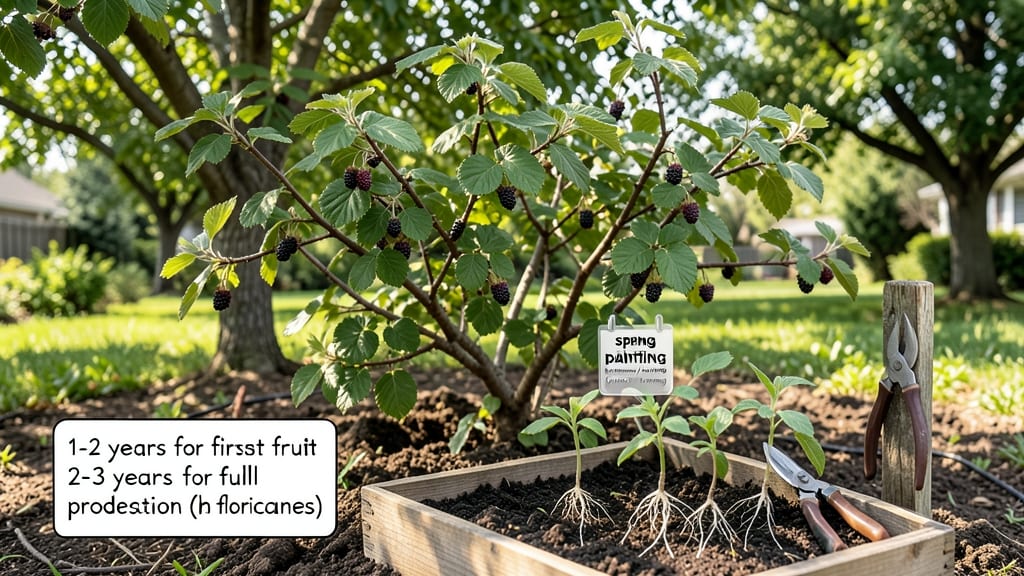
How long before blackberry bushes produce fruit? Typically, it takes 1 to 3 years after planting, depending on variety, care, and climate—but you can cut that wait by choosing the right type and giving them a few key advantages.
Picture this: You’ve just planted your 🫐 blackberry canes, dreaming of summer baskets overflowing with ripe berries. But the first year? Crickets. No fruit. No berries. Just a wall of thorns and disappointment—unless you know the tricks to speed things up.
The biggest factor is the variety: primocane types (like 'Prime-Ark Freedom') can fruit in their first year, while floricane varieties (like 'Natchez') wait until year two. Soil, sunlight, and pruning also play a huge role—skip these, and you might be staring at bare canes for years.
In this guide, I’ll break down the exact timeline for your zone, the fastest varieties to grow, and 5 proven tips to get those berries sooner—without sacrificing quality. Let’s turn that "waiting game" into a fast harvest.
Blackberry fruit production timeline: how long until harvest?
If you’ve ever planted blackberry canes with high hopes, only to stare at bare branches for what feels like forever, you’re not alone. The truth is, blackberry fruit production timelines vary wildly—from as little as 1 year to 3+ years—depending on the variety and growing conditions.
Most gardeners assume fruiting happens in the first year, but that’s rarely the case. Let’s break down the real stages and what you can do to speed up the process.
The key to understanding blackberry timelines lies in two major types: floricane-fruiting (traditional) and primocane-fruiting (modern). Floricane varieties (like 'Triple Crown') produce fruit on second-year canes, meaning you’ll wait 2 years for your first harvest.
Meanwhile, primocane varieties (like 'Natchez') fruit on first-year canes, cutting that wait to just 1 year. Climate also plays a huge role—cooler regions may delay fruiting by an extra year or more.
| Stage | Timeframe | Key Actions | Notes |
|---|---|---|---|
| Planting | Spring (after last frost) | Space canes 4-6 ft apart, amend soil with compost | Primocanes grow 1-2 ft first year |
| First Year Growth | 6-8 months | Water deeply, fertilize lightly in spring/summer | Floricanes won’t fruit this year |
| Winter Dormancy | 3-4 months | Prune dead canes, mulch heavily | Cold hardiness affects regrowth speed |
| Second Year (Floricane Fruiting) | 12-18 months total | Remove old canes, support new growth | First fruit appears late spring |
| Primocane Fruiting (1st Year) | 9-12 months | Prune lightly, ensure full sun | Harvest fall of planting year |
The first critical milestone happens in your blackberry’s first growing season.
Whether you planted floricane or primocane varieties, your canes will focus on establishing roots and foliage. Primocane types (like 'Cheyenne' or 'Arapaho') will surprise you by producing fruit on those same canes by late summer or fall of the first year.
Meanwhile, floricane varieties will just grow taller, storing energy for next year’s fruit. This is why many gardeners mistake their first-year canes for failures—when they’re actually just doing their job.
Here’s where climate becomes a game-changer: In USDA Zone 7 or warmer, primocanes often fruit in their first year, while in Zone 5 or cooler, the same varieties might wait until year 2 due to shorter growing seasons. Cold damage can also reset the clock, forcing your blackberries to start over.
For example, a late spring frost might kill off early flowers, delaying fruiting by another 3-6 months. That’s why I always recommend planting primocane varieties in cooler climates—they’re far more forgiving.
The flowering stage is where things get interesting. For floricane varieties, flowers appear in early spring on last year’s canes (now called floricanes).
These canes are 2-3 years old by the time they fruit, which is why patience is key. Primocane varieties, however, flower and fruit on current-year growth, making them ideal for impatient gardeners. The trade-off? Primocanes often produce smaller berries compared to floricanes, but the speed advantage is undeniable.
Once flowers appear, count on 60-90 days until harvest, depending on temperature. Warmer climates (like Zone 8+) may see fruit ripen in 7-8 weeks, while cooler regions (Zone 6 or below) might stretch it to 10-12 weeks.
This is why I always advise checking your local last frost date and planting primocane varieties early—those extra weeks of growth can mean the difference between a first-year harvest and a second-year disappointment.
Don’t forget: soil health and watering consistency can shave weeks—or even months—off your blackberry’s timeline. Poor soil (low in organic matter) forces plants to divert energy to root growth instead of fruiting. My rule of thumb? Amend your soil with compost
Fastest blackberry varieties for quick fruit production (ranked by speed)
If you’re dreaming of blackberry jam or fresh snacks, you’ll love these early-producing varieties that deliver fruit in record time. The fastest options—like primocane-fruiting types—can bear fruit as early as 1 year after planting, while traditional floricane varieties often wait 2–3 years.
For cooler climates, thornless varieties like 'Natchez' are game-changers, producing fruit on new canes (primocanes) instead of old ones.
Your location and care routine also play a huge role. In USDA Zone 6 or warmer, you can expect faster fruiting, but even in cooler areas, the right variety and a little extra TLC can shave months off the wait.
Let’s dive into the top performers and how to maximize their speed.
'Natchez' is the undisputed champion for speed, producing fruit on primocanes (new growth) by the first season. It’s a thornless variety, making harvesting a breeze, and thrives in Zones 5–9. Pair it with 'Arapaho' for a second flush of late-summer berries—both are primocane-fruiting, so you’ll get two harvests in one year!
For floricane types, 'Ouachita' is a reliable pick, though it takes 2–3 years to mature. Its berries are large and sweet, but the wait is longer. If you’re in a cool climate, opt for 'Chester' or 'Apache'—they fruit on floricanes but adapt better to shorter growing seasons.
The trade-off? Smaller berries but earlier production than traditional varieties.
To accelerate fruiting, focus on soil prep and pruning. Amend your soil with compost before planting, and prune old canes in late winter to redirect energy to new growth.
In cool climates, use black plastic mulch to warm the soil and extend the growing season. Avoid over-fertilizing with nitrogen—it boosts foliage but delays fruit production.
Pro tip: If you’re impatient, plant a mix of primocane and floricane varieties. This way, you’ll get early fruit from the primocanes while the floricanes build up for future harvests. Just remember, consistent watering and full sun are non-negotiable for speedy results.
With the right variety and a little strategy, you could be feasting on homegrown blackberries in as little as 6–12 months**. Start with 'Natchez' or 'Arapaho' for the fastest payoff, and don’t forget to protect your bushes from birds—they’ll spot those ripe berries before you do! 🫐