
How To
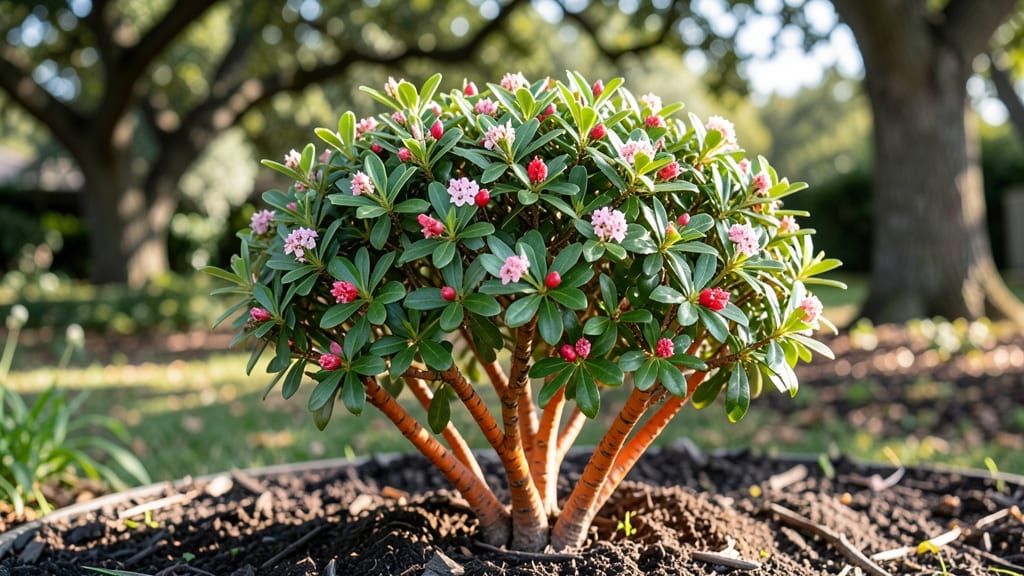
A dwarf burning bush grows to a mature height of 3 to 6 feet—making it the perfect fit for small gardens, borders, or even containers.
If you’re dreaming of vibrant fall foliage without sacrificing precious garden space, the dwarf burning bush (Euonymus alatus 'Compactus') could be your perfect solution—but first, you need to know exactly how big it grows.
Unlike its larger cousins, this compact shrub stays well-behaved, rarely exceeding 4 feet wide at maturity. That means you can tuck it into tight spots, pair it with perennials, or even plant multiple bushes in a row for a striking hedge.
Below, I’ll cover the exact dimensions you can expect, how its growth rate changes over time, and the simple pruning tricks to keep it looking its best—so you can plan your garden with confidence.
Mature size of dwarf burning bush: exact dimensions and growth habits
The dwarf burning bush (Euonymus alatus 'Compactus') is a game-changer for small gardens, offering vibrant fall foliage without the sprawling size of its standard counterpart. Unlike the 6–15 ft standard burning bush, this cultivar stays compact and manageable, making it ideal for borders, containers, or tight spaces.
But how big does it really get? Let’s break down the exact dimensions and growth patterns so you can plan your garden with confidence.
At maturity—typically 3–5 years after planting—the dwarf burning bush reaches a height of 3–5 feet and a width of 3–4 feet. This makes it roughly half the size of a standard burning bush, which can grow up to 15 feet tall.
The key to its compact nature lies in its slow-to-moderate growth rate and naturally dense branching habit. Unlike faster-growing shrubs, it adds only 6–12 inches per year, giving you predictable, low-maintenance growth.
| Growth Stage | Height (ft) | Width (ft) | Spread (ft) | Seasonal Notes |
|---|---|---|---|---|
| Year 1 | 1–2 ft | 1–1.5 ft | 1–1.5 ft | Slow initial growth; focus on root establishment. |
| Year 2–3 | 2–3 ft | 2–2.5 ft | 2–3 ft | Moderate growth; prune to encourage bushiness. |
| Mature (3–5 yrs) | 3–5 ft | 3–4 ft | 3–5 ft | Peak foliage in fall; minimal height increase after Year 4. |
| Standard Burning Bush (Comparison) | 6–15 ft | 5–10 ft | 5–12 ft | Requires regular pruning to control size. |
The width and spread of a dwarf burning bush are just as important as its height. While it may only reach 3–4 feet wide, its spreading habit means it can fill out a 3-foot diameter area over time.
This makes it perfect for foundation plantings or as a privacy screen in narrow spaces. Unlike its standard cousin, which can become unruly, the dwarf variety stays neatly contained, even in container gardens with proper root pruning.
Seasonal variations play a role in its growth habits. In spring and summer, expect 6–12 inches of new growth annually, with the most vigorous growth occurring in early summer. However, by late summer, growth slows as the plant shifts focus to developing its iconic fall foliage.
The bright red berries and orange-red leaves appear in September–October, adding year-round interest without altering its compact form.
One of the biggest misconceptions about dwarf burning bushes is that they stay tiny forever. While growth slows significantly after Year 4–5, they can still add 1–2 inches per year in ideal conditions.
To maintain its desired size, I recommend light pruning in late winter to remove any overly long branches or crossing stems. This not only keeps it neat but also encourages a fuller, bushier shape.
If you’re planting multiple dwarf burning bushes, aim for 3–4 feet of spacing between plants. This gives each shrub room to reach its full width without crowding, while also allowing for easy maintenance and airflow.
In container gardens, choose pots that are at least 18–24 inches wide and deep to accommodate its root system. The key is to match the pot size to the plant’s mature dimensions, not its current size.
For those concerned about aggressive spread, rest assured—the dwarf burning bush is non-invasive and won’t take over your garden like some other shrubs. Its slow growth rate and contained root system make it a low-maintenance choice for even the busiest gardeners.
That said, it’s worth noting that it can self-seed if berries are left on the plant, so remove them if you want to prevent volunteers in unwanted areas.
When comparing the dwarf burning bush to other compact shrubs, its height and spread make it a standout for small gardens and urban landscapes.
How dwarf burning bush compares to other compact shrubs for small gardens
If you love the idea of a low-maintenance shrub that delivers stunning fall color without overwhelming your space, you’re not alone. The dwarf burning bush (Euonymus alatus 'Compactus') is a favorite, but it’s not your only option.
Let’s compare it to three other compact shrubs—Ilex crenata, Viburnum bodnantense, and Abelia grandiflora—to help you decide which fits your garden best.
Each of these shrubs offers year-round interest and minimal pruning needs, but their mature sizes, sunlight preferences, and seasonal highlights vary. For example, the dwarf burning bush tops out at 3–5 feet tall and wide, making it ideal for small borders or container gardening.
But how does it stack up against the others?
Key differences include foliage color, growth rate, and winter hardiness. Let’s break it down in this comparison table to help you visualize how each shrub could fit into your landscape.
| Shrub | Mature Size | Sunlight Needs | Seasonal Interest | Best For |
|---|---|---|---|---|
| Dwarf Burning Bush (Euonymus alatus 'Compactus') | 3–5 ft tall, 3–4 ft wide | Full sun to part shade | Vibrant red-orange fall foliage; exfoliating bark in winter | Small borders, containers, foundation plantings |
| Boxwood (Ilex crenata) | 2–4 ft tall, 2–3 ft wide | Part shade to full shade | Evergreen foliage; dense, glossy leaves | Hedges, topiary, shady areas |
| Viburnum (Viburnum bodnantense) | 4–6 ft tall, 4–5 ft wide | Full sun to part shade | Pink spring blooms; fragrant flowers; winter interest | Privacy screens, mixed borders, wildlife gardens |
| Abelia (Abelia grandiflora) | 3–5 ft tall, 3–4 ft wide | Full sun to part shade | White summer flowers; red fall foliage; semi-evergreen | Foundation plantings, butterfly gardens, containers |
While the dwarf burning bush steals the show with its bold fall colors, the boxwood (Ilex crenata*) wins for year-round structure and low-light tolerance. If you crave spring blooms and winter interest, the Viburnum bodnantense is a showstopper.
Meanwhile, the Abelia grandiflora offers a longer bloom season and butterfly magnet qualities.
For small gardens or urban landscapes, consider pairing the dwarf burning bush with Abelia for a mix of fall color and summer blooms