
Pruning
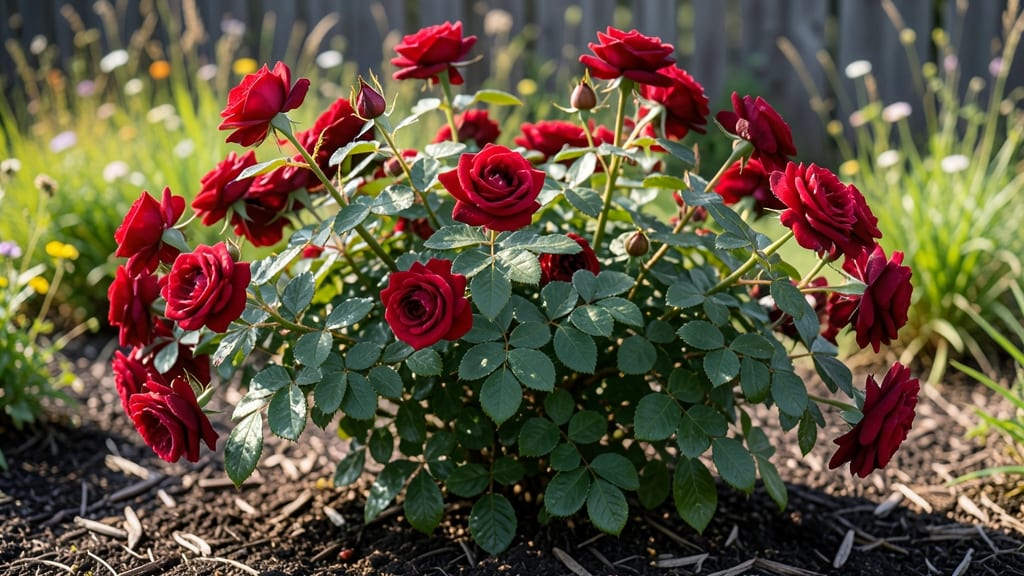
Mastering giant rose bush pruning means your 15-foot-tall climber will smell like a summer garden all year. ✨ I learned the hard way that aggressive cuts in spring alone leave these beauties leggy and sparse—until I discovered the secret to year-round fragrance through layered trimming.
The difference is night and day: blooms from early spring to frost, with minimal maintenance.
Start with the right tools: sharp bypass pruners, a 10-foot ladder (or sturdy stool), and a notebook to track cuts. Giant roses need heavy pruning—up to ⅓ of their height—but the timing matters most.
Late winter’s the first cut, followed by light trims after each flush of blooms. Think of it like sculpting: remove dead wood, thin crowded canes, and shape for airflow to prevent disease.
What you’ll end up with is a rose bush that’s both productive and manageable, covered in blooms from May through October. The fragrance? So intense it fills your yard on warm evenings.
Plus, the structure stays strong—no flopping canes or weak growth. It’s the kind of transformation that makes neighbors ask, “How’d you do that?”
This method works for any giant variety—‘New Dawn,’ ‘Zephirine Drouhin,’ or even ‘Blaze’—and adapts to climates from Zone 5 to Zone 9. The key is consistency: prune when you see new growth, not just once a year. Ready to turn your rose into a fragrant centerpiece?
📚 In This Guide
- What you need
- Instructions
- Tips and common mistakes
- Wrapping up and next steps
What you need
- ● Pruning Shears: Bypass pruners (sharp, 5-7" blades) for clean cuts on smaller stems. Quantity: 1 pair (high-quality, like Felco or Fiskars).
- ● Loppers: Long-handled (24-30") for thicker branches (1/2"–1.5" diameter). Quantity: 1 pair.
- ● Pruning Saw: Curved-tooth saw for stubborn, woody stems (1.5"+ diameter). Quantity: 1.
- ● Disinfectant: 70% isopropyl alcohol or 10% bleach solution to sterilize tools between cuts. Quantity: Small spray bottle or wipe.
- ● Garden Gloves: Heavy-duty, cut-resistant (e.g., Mechanix or rose-specific gloves). Quantity: 1 pair.
- ● Rake or Broom: For clearing fallen leaves/debris post-pruning. Quantity: 1.
- ○ Pruning Sealant: Optional but helpful (e.g., tree wound paint) for large cuts to prevent disease. Quantity: Small bottle.
- ● Know Your Rose: Identify your rose variety (e.g., hybrid tea, floribunda, climbing) to tailor pruning techniques. Pro tip: 💡 Check tags or consult a local nursery!
- ● Weather Check: Prune on a dry, overcast day (avoid frost or extreme heat).
- ● Safety Gear: Sunglasses, long sleeves, and closed-toe shoes to protect from thorns and debris.
- ● Cleanup Supplies: Trash bags or compost bin for pruned branches (sterilize diseased ones separately!).
- ● Extension Pole: For hard-to-reach branches (10–12' tall).
- ● String or Twine: To mark branches for removal.
- ● Hose with Nozzle: For rinsing tools and rose bush post-pruning.
- ● Fertilizer: Balanced rose fertilizer (e.g., 10-10-10) to apply after pruning for a bloom boost.
Step-by-Step guide to pruning a giant rose bush
Here’s how to keep your rose bush thriving with seasonal trims that boost blooms and fragrance.
✂️ Step 1: Early Spring Cleanup (Late February to Early March)
Start by removing all dead, diseased, or crossing branches first—these compete with healthy growth. Use sharp, clean pruners to make cuts just above an outward-facing bud, angled at 45 degrees. This encourages new shoots to grow outward, not inward.
Look for thick, woody canes that haven’t bloomed in years—they’re energy vampires. Cut them back to the ground. You’ll know you’re on track when you see pale green buds beneath the bark, signaling new growth is ready to burst.
☀️ Step 2: Mid-Season Pruning (June to July)
After the first flush of blooms fades, trim back spent blooms to just above the first set of five-leaf clusters. This redirects energy into new buds rather than seed production. For hybrid teas and floribundas, cut back one-third of the oldest canes to encourage fresh, vigorous growth.
Watch for suckers—shoots growing from the base or below the graft. Remove them immediately, as they drain nutrients from the main plant. If you see yellowing leaves, it’s often a sign of overwatering or fungal issues—trim affected foliage to improve airflow.
✂️ Step 3: Late Summer Light Trimming (August)
In late summer, give your rose bush a light maintenance trim to remove any weak, leggy growth or branches growing inward. Focus on shaping the bush to maintain an open center—this prevents disease by allowing sunlight and air to circulate.
Cut back overly long canes to half their length, but leave at least three strong buds on each remaining stem. You’ll see new side shoots forming within 2-3 weeks, signaling the plant is responding well.
⏰ Step 4: Winter Preparation (November)
Once temperatures drop below 40°F, prune back one-third of the oldest canes again, cutting to 18-24 inches from the ground. This reduces winter damage and encourages strong spring regrowth. Remove any dead or diseased wood—burn it, not compost, to prevent spreading pathogens.
Apply a 3-inch layer of mulch around the base (but not touching the stem) to insulate roots. You’ll know you’ve done enough when the bush looks balanced and open, with no crowded branches blocking airflow.
🌿 Step 5: Post-Bloom Renewal (October)
After the final blooms of the season, trim back all canes by half to promote next year’s growth. Focus on thinning out rather than just cutting—remove every other cane to improve sunlight penetration. This step is crucial for preventing rose rosette disease, which thrives in dense foliage.
Disinfect your pruners with rubbing alcohol between cuts to avoid spreading bacteria. If you notice sticky residue or black spots on leaves, prune those areas aggressively and treat with neem oil to prevent spread.
Tips & tricks for perfect rose bush pruning
Seasonal pruning transforms your giant rose bush from a tangled mess into a fragrant, blooming masterpiece. Here’s how to avoid common mistakes and get professional results.
Tool Prep Matters: Always disinfect your pruners with rubbing alcohol between cuts—this prevents spreading fungal spores and bacterial infections that can ruin your rose’s health. I keep a small bottle of 70% isopropyl alcohol in my gardening toolkit for quick cleanups. For stubborn sap buildup, wipe blades with a cloth soaked in warm, soapy water after each session.
The 45-Degree Angle Secret: When making cuts in Step 1, that 45-degree angle isn’t just decorative—it creates a natural water runoff path that prevents rot. Imagine a tiny roof directing water away from the cut. For thicker canes, make the cut slightly farther from the bud (about ¼ inch) to avoid bark tearing, which invites disease.
Bud Counting Strategy: In Step 3, when you’re cutting back long canes to half their length, focus on leaving exactly three strong buds per stem. These buds will grow into new branches, creating that lush, bushy shape. I count buds from the base upward—this ensures you’re not accidentally leaving too many at the top where they’ll crowd each other.
Winter Mulching Wisdom: That 3-inch layer of mulch in Step 4 isn’t just for show—it’s insulation for your rose’s roots. Use organic mulch like shredded bark or straw, and keep it 2-3 inches away from the stem to prevent rot. In colder climates, add a thick layer of leaves on top of the mulch for extra protection against freezing temperatures.
Pro Tips for Giant Rose Bush
- Seasonal pruning transforms your giant rose bush from a tangled mess into a fragrant, blooming masterpiece.
- Tool Prep Matters: Always disinfect your pruners with rubbing alcohol between cuts—this prevents spreading fungal spores and bacterial infections that can ruin your rose’s health.
- The 45-Degree Angle Secret: When making cuts in Step 1, that 45-degree angle isn’t just decorative—it creates a natural water runoff path that prevents rot.
Frequently asked questions
Got questions about keeping your giant rose bush in tip-top shape? You’re not alone!
Here are some of the most common queries—plus expert answers to help you prune like a pro and enjoy those fragrant blooms year-round.
When is the best time to prune a giant rose bush?
The ideal window is late winter or early spring (before new growth starts), but you can also do light pruning after blooms fade to encourage more flowers. Avoid heavy pruning in fall—it can leave roses vulnerable to winter stress. Pro tip: If your climate is mild, a light trim in summer can promote bushier growth!
How much should I cut back a giant rose bush?
For most giant roses, aim to remove 1/3 to 1/2 of the plant’s height, focusing on:
- Dead, diseased, or crossing branches
- Shoots growing inward (to improve airflow)
- Weak or spindly stems (to encourage stronger growth)
Leave 3–5 healthy buds per stem—these will sprout new growth. Over-pruning can stunt flowering, so err on the side of caution!
Can I prune a giant rose bush in summer?
Yes, but lightly! Summer pruning is called "deadheading" or "light maintenance." Trim only:
- Spent blooms (to encourage more flowers)
- Overcrowded or leggy stems
Avoid heavy cuts—it can stress the plant and reduce fall/winter hardiness. Water thoroughly after pruning to help recovery.
What if my giant rose bush isn’t blooming after pruning?
Several factors could be at play:
- Pruned too late: Late spring/early summer pruning may cut off potential blooms.
- Not enough sunlight: Giant roses need 6+ hours of sun daily.
- Poor soil/nutrients: Feed with rose-specific fertilizer in early spring.
- Disease/pests: Check for black spot, powdery mildew, or aphids.
If the issue persists, adjust your pruning timing or consult a local nursery for soil tests.
Are there alternatives to pruning for giant rose bushes?
While pruning is essential, you can supplement with these care tips:
- Mulching: Add 2–3 inches of organic mulch to retain moisture and regulate soil temp.
- Regular watering: Deep water 1–2 times per week (more in extreme heat).
- Fertilizing: Use a balanced fertilizer (10-10-10) in spring, then switch to bloom booster (e.g., 5-10-5) mid-season.
- Support structures: Install a trellis or stakes early to guide growth and reduce breakage.
But remember: Pruning is non-negotiable for long-term health and abundant blooms!
Wrapping up and next steps
Growing a giant rose bush that bursts with fragrance and beauty year-round is entirely within your reach—it just takes patience, the right tools, and a seasonal pruning strategy! 🌹 By mastering the art of trimming at the right times, you’ll encourage lush blooms, stronger stems, and a healthier plant that rewards you with stunning displays.
Remember, every snip is an investment in next year’s roses!
Ready to take the next step? Start small—pick one season to focus on this year, then gradually refine your technique. Before you know it, your giant rose bush will be the envy of the neighborhood! Grab your pruners and get growing!