
Pruning
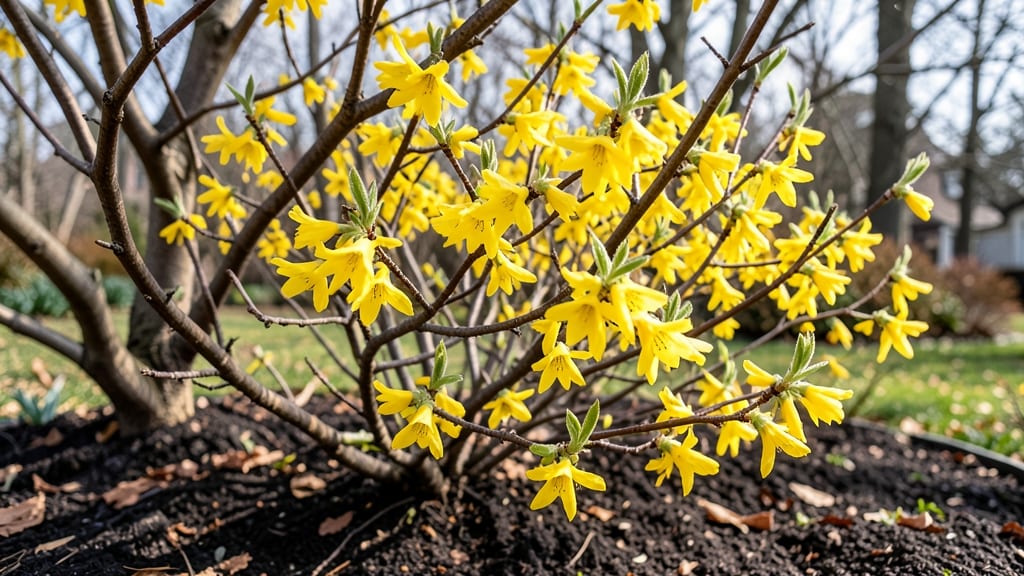
Your forsythia bush in winter isn’t just surviving—it’s setting the stage for next year’s bright yellow blooms with the right care. ✨ I’ve watched mine stand tall through 20-degree nights and still burst into color come spring, and the secret lies in understanding exactly when and how to prune during dormancy.
The key is timing: prune right after blooming in late spring or early summer, but never in winter. Forsythia flowers on old wood, so cutting back now removes next year’s buds. Instead, focus on shaping lightly in late winter if needed—just enough to open the center to sunlight and air.
Mulch around the base with 2-3 inches of organic matter to insulate roots from freeze-thaw cycles.
What you’ll end up with is a bush that looks neat and healthy through the cold months, with strong stems ready to support next season’s flowers. The branches stay sturdy, the foliage sheds cleanly, and you avoid the common mistake of over-pruning, which weakens the plant.
This method works for any forsythia variety, from compact ‘Spring Glory’ to sprawling ‘Northern Gold’. Even in Zone 4, where winters are harsh, these tips keep forsythia thriving year after year—with minimal effort and maximum impact.
📚 In This Guide
- What you need
- Instructions
- Tips and common mistakes
- Wrapping up and next steps
What you need
- ● Pruning shears: Sharp, bypass-style shears (for clean cuts on thinner branches). Pro tip: Disinfect with rubbing alcohol before and after use! 💡
- ● Loppers: For thicker branches (1–2 inches in diameter). Look for long handles (24–36 inches) for leverage.
- ● Pruning saw: Heavy-duty, with a curved blade, for branches over 2 inches thick.
- ● Garden gloves: Cut-resistant (e.g., leather or reinforced fabric) to protect hands from thorns and debris.
- ● Ladder or step stool: If your forsythia is 6+ feet tall. Safety first! Use a stable, non-slip model.
- ○ Disposable pruning bags or bucket: To collect clippings (optional but handy for composting or cleanup).
- ● Rubbing alcohol (70% or higher): 1 small bottle for sterilizing tools between cuts.
- ● Hand pruners with a bypass blade: For precision trimming on small branches (if you don’t already own shears).
- ● Garden twine or zip ties: To temporarily secure branches if you’re doing major structural pruning.
- ● Plant food or compost: Balanced 10-10-10 fertilizer (1–2 lbs) to nourish the bush post-prune.
- ● Mulch (shredded bark or straw): 2–3 inches thick to insulate roots after winter cuts.
- ● Camera or phone: Snap before/after pics—you’ll want to track your progress! 📸
Instructions for pruning forsythia bushes in winter
Here's how to keep your forsythia thriving year after year with simple winter cuts.
✂️ Step 1: Time Your Pruning for Maximum Bloom
Prune your forsythia immediately after it finishes flowering in late spring—usually around May or early June. This timing ensures you don’t cut off next year’s blooms, which develop on old wood. If you prune too early, you risk removing flower buds before they’ve formed.
Look for spent blooms that have turned brown and dried up—this is your cue. I always wait a full 2 weeks after the last flowers fade to be safe. The bush will look a little ragged, but that’s just nature’s way of telling you it’s ready for a trim.
✂️ Step 2: Cut Back Old Wood to Encourage New Growth
Use sharp, clean pruners to remove one-third of the oldest stems at the base. These are the thickest, woody branches that have already bloomed. Cut just above a bud or outward-facing branch to promote healthy regrowth. Avoid leaving stubs—this invites disease and weakens the plant.
You’ll notice the bush has a mix of thick, mature stems and thinner, newer growth. The newer stems are where next year’s flowers will appear, so don’t cut them back. Focus on the 3-4 year old wood—it’s time to make way for fresh growth.
✂️ Step 3: Shape the Bush for Balance and Airflow
Step back and assess the bush’s shape. Forsythias naturally grow in an open, multi-stemmed form, so avoid turning it into a tight, dense hedge. Remove any crossing branches or stems growing inward—they block sunlight and air circulation, which can lead to fungal issues.
Cut back any overly long or leggy branches by one-third to encourage bushier growth. Aim for a natural, rounded shape. If a branch is dead or diseased (look for brown, brittle wood), cut it out completely. This keeps the bush healthy and prevents pests from moving in.
✂️ Step 4: Light Winter Pruning for Maintenance
If your forsythia looks unruly in late winter (around February), do a light cleanup. Remove any dead, broken, or weak branches—these are easy to spot because they’re bare or have split wood. Avoid heavy pruning now, as it can stimulate too much growth before spring.
Focus on sanitizing your tools between cuts. Wipe pruners with rubbing alcohol to prevent spreading disease. A quick wipe takes 10 seconds but saves your bush from infections that could linger through winter.
✂️ Step 5: Mulch and Protect for Winter Resilience
After pruning, spread a 2-3 inch layer of mulch around the base of the bush, keeping it 6 inches away from the trunk. This protects roots from freezing and thawing cycles. I use shredded bark or pine needles—they break down slowly and improve soil over time.
If you’re in a Zone 5 or colder, consider wrapping the base with burlap for extra protection. Forsythias are hardy, but young plants or harsh winters can stress them. Water deeply before the ground freezes to ensure roots stay hydrated through dormancy.
Tips & tricks for pruning forsythia bushes in winter
Let me save you from the common mistakes I made while pruning my own forsythia over the years—these tricks will keep your bush healthy and blooming beautifully.
Timing is Everything: The 2-week wait after flowering in late spring is crucial because forsythia blooms develop on old wood. I learned this the hard way when I pruned too early and nearly lost next year's flowers. Mark your calendar for May or early June, and watch for those brown, dried-up blooms—they're your signal to start.
Tool Prep Prevents Problems: Before you make a single cut, sharpen your pruners and wipe them with rubbing alcohol. That 10-second sanitizing step between cuts is what keeps fungal diseases from spreading. I keep a small bottle of alcohol in my gardening toolbox for this exact purpose—it's a habit that's saved my bushes from infections.
Visual Cues for Better Cuts: When cutting back old wood, look for the outward-facing buds—they're your guides for future growth. I like to imagine I'm drawing an invisible line from the base of the bush outward, making sure each cut follows that direction. This open shape lets sunlight and air circulate, which is key for preventing fungal issues.
Mulch Matters More Than You Think: That 2-3 inch layer of mulch isn't just decoration—it's insulation for your forsythia's roots. I use shredded bark because it breaks down slowly and improves soil quality over time. Just remember to keep it 6 inches away from the trunk to prevent rot. In colder zones, add burlap as extra protection—it's worth the effort for those first few winters.
Pro Tips for Forsythia Bush In Winter
- Let me save you from the common mistakes I made while pruning my own forsythia over the years—these tricks will keep your bush healthy and blooming beautifully.
- Timing is Everything: The 2-week wait after flowering in late spring is crucial because forsythia blooms develop on old wood.
- Tool Prep Prevents Problems: Before you make a single cut, sharpen your pruners and wipe them with rubbing alcohol.
Frequently asked questions
Got questions about keeping your forsythia bush thriving through winter? Here are some common concerns—and their solutions—to help you prune with confidence:
Do forsythia bushes die in winter, or can they survive the cold?
Forsythia bushes are highly cold-hardy and typically survive winter just fine in USDA zones 5–9. Their bare branches are normal—they’ll burst into vibrant yellow blooms in early spring! The key is strategic pruning in late winter to encourage healthy regrowth. Pro tip: Mulch around the base for extra protection in harsh climates.
When is the best time to prune forsythia for winter prep?
The ideal window is late winter to early spring (just after the last hard freeze but before buds swell). This timing ensures you remove dead wood while preserving next year’s blooms. Avoid pruning in fall—it can stimulate late growth that’s vulnerable to frost damage. Mark your calendar: February–March is prime for most regions!
How much can I cut back a forsythia bush in winter without harming it?
You can safely prune up to one-third of the bush’s height, but avoid over-pruning—this can reduce flowering. Focus on:
- Removing dead, diseased, or crossing branches first.
- Thinning out older wood (3+ years) to encourage younger, more vigorous growth.
- Avoiding "lion’s tail" cuts—shape the bush open at the center for airflow.
Will pruning my forsythia in winter affect its spring blooms?
Yes—but strategically! Forsythia blooms on old wood, so prune after flowering to preserve next year’s buds. If you prune too late (after buds form), you’ll delay or reduce blooms. For maximum flowers:
- Prune right after the spring bloom fades.
- Avoid heavy cuts—stick to light shaping and deadwood removal.
What are some winter-friendly alternatives to forsythia for year-round interest?
If you love forsythia’s early-season color but want more winter structure, consider:
Plant
Winter Feature
Care Level
Winter Honeysuckle (Lonicera fragrantissima)
Fragrant white flowers + evergreen-like foliage.
Low (drought-tolerant).
Mahonia (Mahonia aquifolium)
Spiky holly-like leaves + yellow winter blooms.
Moderate (needs well-drained soil).
Dwarf Fothergilla (Fothergilla gardenii)
Showy bottlebrush blooms in late winter.
Low (great for small spaces).
Wrapping up and next steps
Even in winter, your forsythia bush can be a stunning focal point with the right care! Strategic pruning not only keeps it healthy but also encourages vibrant blooms for seasons to come. Remember: timing, sharp tools, and patience are your best allies.
Now that you’re armed with the know-how, grab those shears and give your forsythia the TLC it deserves! Ready to transform your garden? Start small—prune one bush at a time—and watch your winter landscape bloom with confidence. 🌿✨