
Size
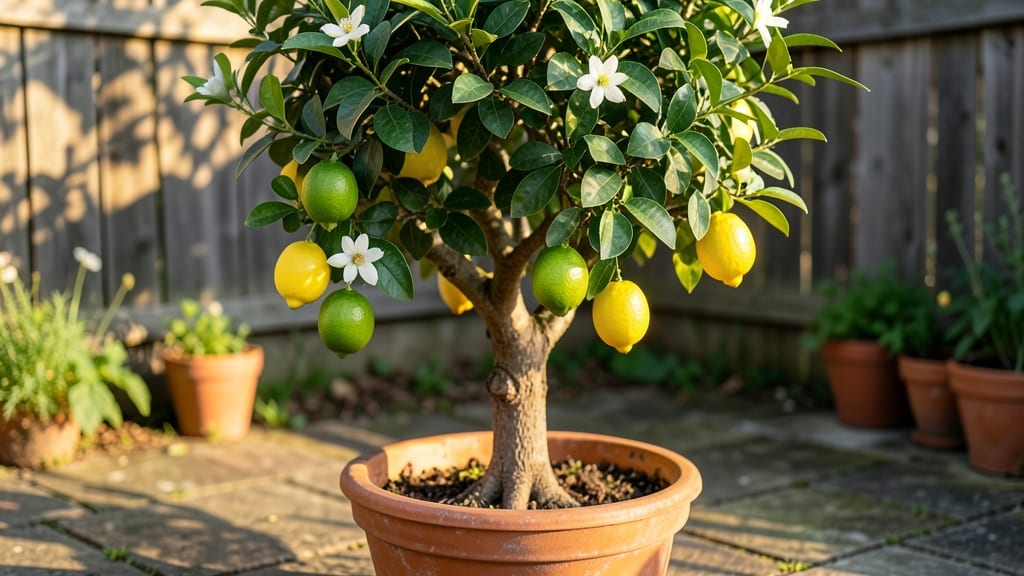
Lemons grow on trees, not bushes, as evergreen citrus trees like Citrus limon that naturally reach 8–15 feet tall. While they can be pruned into compact shapes, their woody trunks and sprawling branches identify them as trees requiring full sun and well-drained soil.
Lemons belong to the Rutaceae family, where they thrive as woody perennials with thick bark and layered branches—classic tree characteristics. 🌿 The confusion often comes from dwarf varieties or heavily pruned specimens, which might look bush-like but still grow from a single trunk.
Unlike true shrubs, lemon plants develop a central leader (main stem) that dominates their structure unless intentionally shaped otherwise.
For fruit production, this tree form matters: branches need sunlight exposure to bear lemons, and their deep root systems help them access nutrients in well-drained soil. Pruning can reshape them into smaller forms, but their biological identity as trees remains unchanged.
💡 In This Article
- Citrus Tree vs. Bush: How Lemon Plants Grow Naturally
- Growing Lemon Trees Indoors vs. Outdoors: Care Tips
Citrus tree vs. bush: how lemon plants grow naturally
Lemon plants (Citrus limon) are classified as trees within the Rutaceae family, not bushes, because they develop a single, woody trunk that can grow 8–15 feet tall in ideal conditions.
This central trunk is a defining feature of trees, distinguishing them from shrubs, which typically have multiple stems emerging from the base. The bark on lemon trees thickens over time, forming a rough, textured surface that protects the plant's vascular system and supports its height.
The natural growth habit of lemon trees includes a spreading canopy with branches that angle outward to capture sunlight—a critical adaptation for photosynthesis. These branches often bear thorns, another tree characteristic that helps deter pests and animals.
The root system extends deep into the soil, typically reaching 3–5 feet below the surface, allowing the tree to access water and nutrients efficiently. This deep-rooted nature makes lemon trees more drought-resistant than many bush varieties.
Pruning plays a major role in shaping lemon plants. While heavy pruning can create a bush-like appearance, the plant's biological structure remains that of a tree.
For example, removing the central leader (main trunk) encourages multiple stems to grow, but the plant still retains its tree-like root system and growth patterns. 🌿 In commercial orchards, growers often prune lemon trees to 6–10 feet to make harvesting easier, but the plant's inherent tree form is never truly altered.
One key difference between lemon trees and bushes lies in their fruiting habits. Lemon trees produce fruit on branches that require sunlight exposure, which is why their natural tree form maximizes fruit production.
Bush-like pruning can reduce fruit yield if too many branches are removed, as the plant's energy shifts toward maintaining a compact shape rather than producing lemons. The tree's height also allows for better air circulation, reducing the risk of fungal diseases that can affect densely packed bush forms.
The Rutaceae family, which includes oranges, limes, and grapefruits, shares this tree growth pattern. Even dwarf varieties—like the Meyer lemon, which typically grows 6–10 feet tall—maintain their tree structure unless heavily pruned.
This is why you'll often see lemon plants described as "small trees" rather than bushes, even when they're grown in containers or greenhouses.
For home gardeners, understanding this natural growth habit is crucial. Planting a lemon tree in the ground allows it to reach its full potential, while container growing requires careful pruning to manage its size.
The tree's height also affects its cold tolerance—taller trees may need winter protection in colder climates, while dwarf varieties can handle slightly lower temperatures.