
Size
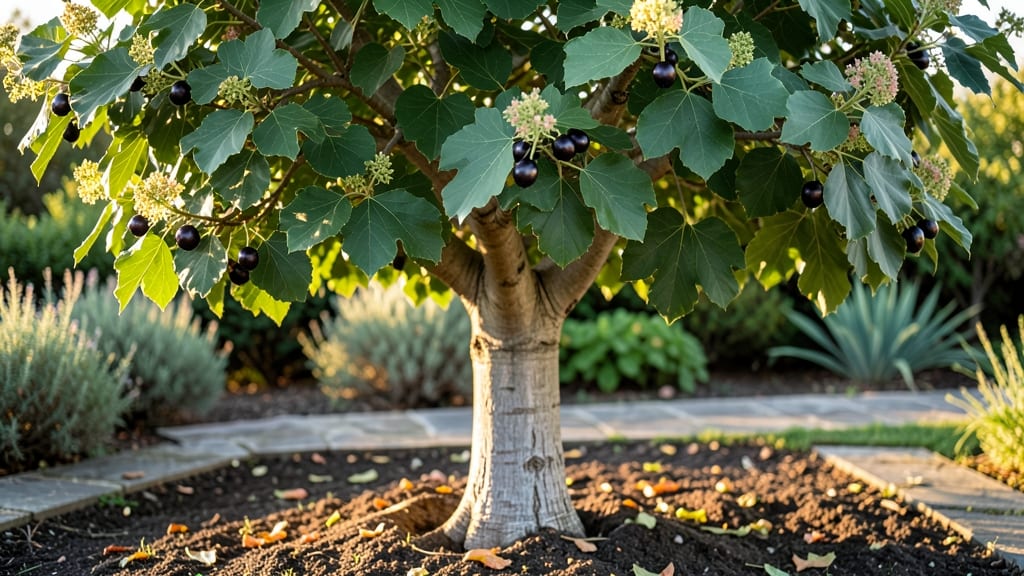
Mulberries grow on mulberry trees, which are fast-growing deciduous plants that typically reach 20–30 feet tall, though certain dwarf varieties grow in compact, bush-like forms. Their sturdy trunks and layered branching structure set them apart from shrubs, though strategic pruning can encourage a more shrub-like appearance.
Mulberries thrive on woody plants called mulberry trees, which botanically qualify as trees due to their height and single-trunk growth pattern. 🌳 However, some cultivated varieties—like the 'Illinois Everbearing'—stay under 10 feet tall, making them look more like large shrubs.
The key difference lies in their stems: true mulberry trees develop thick, woody trunks, while pruned or dwarf types may sprout multiple slender stems resembling bushes. This flexibility makes them adaptable to both large landscapes and small urban gardens.
For home growers, choosing the right variety matters. Dwarf mulberries offer the convenience of bush-like growth without sacrificing fruit production, while standard trees provide shade and classic ornamental appeal. Pruning young trees early can also help control their shape, blending the best of both worlds.
💡 In This Article
- Mulberry Tree vs. Bush: Botanical Classification Explained
- Best Mulberry Varieties for Small Gardens and Landscapes
Mulberry tree vs. bush: botanical classification explained
Mulberries belong to the Morus genus, which is botanically classified as trees because of their growth habits. The defining feature is their stem diameter—true mulberry trees develop trunks that exceed 2 inches in diameter at maturity, a key threshold that separates them from shrubs.
Their height typically ranges from 20-30 feet for standard varieties, with some reaching 40 feet under ideal conditions, while their layered, spreading branches create a classic tree canopy.
What sets mulberries apart from shrubs is their single-trunk structure when young, though they often develop multiple trunks as they age. This growth pattern contrasts with shrubs, which usually have several stems from the base.
The bark texture also differs—mulberry trees develop rough, furrowed bark as they mature, while shrubs maintain smoother stems. 🌿 For example, the white mulberry (Morus alba) grows as a tree, while its red mulberry cousin (Morus rubra) can develop a more shrub-like appearance in dense forests due to crowding.
The confusion arises with dwarf varieties like 'Illinois Everbearing', which stay under 10 feet tall but still qualify as trees because they maintain woody trunks. These smaller types are often pruned to resemble bushes, but their internal structure remains tree-like.
This adaptability makes them versatile for both large landscapes and small gardens, where space is limited.
Botanists use three key criteria to classify plants as trees versus shrubs:
- Height: Trees exceed 6 meters (20 feet) at maturity
- Trunk diameter: Trees develop trunks ≥ 2 inches in diameter
- Lifespan: Trees typically live decades longer than shrubs
Interestingly, mulberry trees exhibit layering—a natural propagation method where branches touch the ground and develop roots.
This creates a multi-stemmed appearance that can mimic shrubs, especially in wild settings. 🌱 In cultivated gardens, however, growers often remove these layers to maintain a single-trunk tree structure, which improves fruit production and aesthetic appeal.
The wood itself provides another clue: mulberry wood is hard and dense, similar to oak, with a specific gravity of 0.65-0.75. This density supports taller growth and distinguishes it from lighter shrub wood.
Understanding these botanical details helps gardeners select the right mulberry type for their space while appreciating the plant's natural growth versatility.